VIETNAM CHAMBER OF COMMERCE AND INDUSTRY
Liên Đoàn Thương Mại Và Công Nghiệp Việt Nam
Fri, Oct 03, 2025, 07:33:00
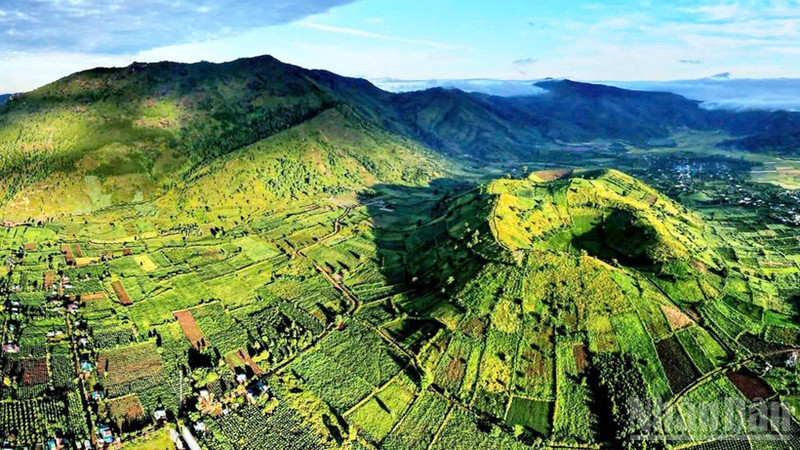 The beauty of Chu Dang Ya volcano attracts many visitors.
With its unique terrain stretching from the Central Highlands to the blue coastal waters, the province is vigorously building an inter-regional tourism brand. This effort, already yielding encouraging initial results, is being driven by close coordination among authorities, businesses and local communities. Together, they are generating fresh momentum to establish Gia Lai as a major regional tourism hub.
From the highlands to the sea: unlocking potential, connecting identities
A landmark event took place on July 1 when Gia Lai officially merged with Binh Dinh, forming a new administrative and economic entity encompassing both highlands and coastline. More than just an administrative boundary change, this is a once-in-a-lifetime opportunity to craft a sustainable development strategy, with tourism identified as the primary growth pillar.
Immediately after the merger, the province staged the “Essence of the Highlands - Convergence of the Blue Sea” Festival, a large-scale cultural and tourism event promoting East-West connectivity and harmonising Central Highlands and South Central Coastal identities. The festival not only served as an impressive showcase but also opened up a vast tourism landscape rich in products, services and experiences.
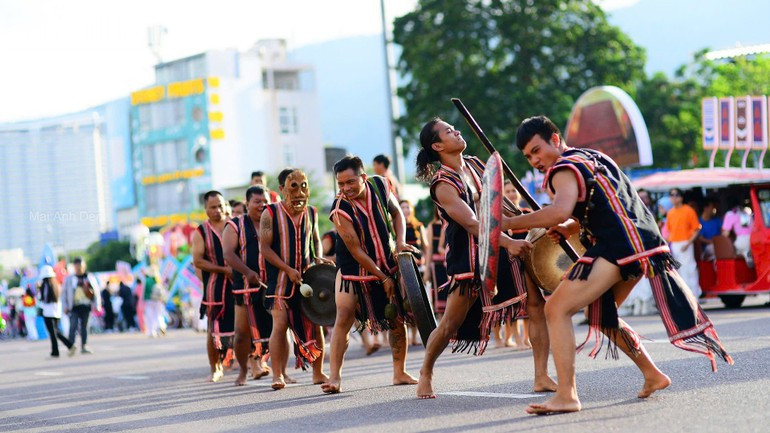 Gong performance on Quy Nhon beach.
At the event, young artisan Rcom Bus from Pleiku performed gong music for the first time on Quy Nhon beach and was visibly moved: “The festival is so diverse and exciting. We come from the mountainous part of Gia Lai, and here the highlands blend with the sea, making our performance even more vibrant and distinctive.”
The fusion of Central Highlands gong culture with traditional coastal martial arts, of grilled chicken and bamboo rice with ocean tuna, offers vivid proof of a tourism strategy rooted in cultural identity. From this foundation, unique tourism products spanning culture, ecology, history and the sea are being created.
Recognising the opportunities, travel businesses have quickly adapted.
Hoang Thi Thu Sen, Director of Vietravel’s Binh Dinh branch, said the company had opened a new office in Pleiku and was designing “forest-to-sea” tourism products, taking advantage of the contrasting climates of the eastern and western slopes of the Truong Son range to offer year-round journeys.
“We can quickly develop new products to attract visitors. Between the sea and the forest, our focus will be on cultural-historical products. Gia Lai’s destinations need more investment. For instance, the road to Chu Dang Ya volcano currently only allows one-way traffic and should be expanded for large tour buses. We will prioritise building distinctive cultural-historical tourism products,” Sen said.
 Gia Lai designs “forest-to-sea” tourism products to attract travellers.
For the business community, the Gia Lai-Binh Dinh merger is not only about geographic restructuring but also about reshaping tourism development thinking.
Nguyen Tan Thanh, Chairman of the former Gia Lai Tourism Association, remarked: “The merger allows us to expand the market year-round. When the former Binh Dinh was in its low season, Gia Lai was at its peak, and vice versa. Visitors can now enjoy two distinct ecosystems in one journey, which broadens the range of tourism offerings.”
In practice, enterprises are actively surveying routes, linking tours and investing in tourism infrastructure and facilities. Their strong engagement is fostering regional tourism linkages, maximising resources and boosting service competitiveness.
Towards an ecological and cultural tourism hub of the Central Highlands and Central Coast
Less than three months after the merger, Gia Lai has demonstrated decisive action: organising large-scale cultural events, encouraging tour operators to explore new routes, supporting local communities to enhance community-based tourism models, and mapping out long-term, comprehensive development strategies. These moves reflect both the initiative and creativity of provincial leaders and their alignment with the Politburo’s Resolution 08 on making tourism a spearhead economic sector.
Gia Lai is on the right track by placing tourism at the core of its growth strategy, not only because of its inherent potential but also because of its capacity to generate positive spillover effects in agriculture, transport, trade, education and culture. Gia Lai is emerging not only as a tourist destination but also as a destination of opportunities, linking past, present and future, people, nature and culture.
The tourism wave is spreading beyond government and enterprises to every village in the province. Community-based and agricultural tourism models are being upgraded to serve international visitors.