VIETNAM CHAMBER OF COMMERCE AND INDUSTRY
Liên Đoàn Thương Mại Và Công Nghiệp Việt Nam
Thu, Apr 23, 2026, 15:51:00
In response to Official Dispatch No. 4554/BTC-CST dated April 11, 2026 of the Ministry of Finance regarding comments on the Draft Resolution of the National Assembly related to extending the special consumption tax rates for battery-powered vehicles with fewer than 24 seats, the Vietnam Chamber of Commerce and Industry (VCCI) submitted a written response expressing its agreement with the proposal.
According to VCCI, extending preferential tax rates for electric vehicles brings multiple overall benefits to the economy, society, and the public.
VCCI noted that road transport is currently one of the major sources of CO₂ emissions and fine particulate matter in Vietnam’s urban areas. Citing research by the National Economics University, the organization stated that air pollution causes economic losses amounting to tens of billions of USD annually, equivalent to about 5% of GDP, mainly through healthcare costs, reduced labor productivity, and declining quality of life.
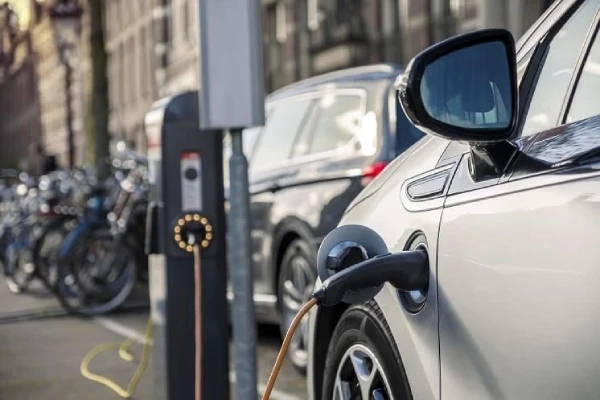 Illustrative image.
In this context, the continued application of preferential tax rates will create momentum to promote the restructuring of transport towards lower-emission vehicles, contributing to improved air quality, reduced disease burden, and savings in social resources for healthcare.
According to VCCI, this policy is also aligned with major State orientations such as Resolution No. 158/2024/QH15, Decision No. 876/QĐ-TTg on the Green Energy Transition Action Program, and Decision No. 43/2025/QĐ-TTg on the emissions control roadmap.
VCCI assessed that Vietnam still relies heavily on imported petroleum, making the economy vulnerable to fluctuations in global energy prices. Promoting electric vehicles will help shift energy consumption in transport from fossil fuels to domestically produced electricity, particularly from renewable sources such as wind and solar power.
Accordingly, the policy not only helps reduce import pressure and improve the energy trade balance but also enhances the economy’s resilience to oil price shocks, serving the goal of national energy security.
According to VCCI, many countries have implemented tax and fee incentives to promote the development of clean energy vehicles and have achieved positive results.
Specifically, China applies exemptions and reductions on electric vehicle purchase taxes and offers corporate income tax incentives for 5–8 years for electric vehicle manufacturing projects. Thailand has reduced the special consumption tax from 8% to 2% and cut import taxes by up to 40%. Norway exempted 25% value-added tax on electric vehicles during the period 1996–2021, and afterward only applies tax to the portion exceeding a certain value threshold. The Netherlands also applies registration tax exemptions and reductions in ownership tax for electric vehicles.
From international experience, VCCI believes that tax incentives in the early stages are an effective tool to promote green transition in transport, bringing long-term benefits to society.
VCCI acknowledged that extending tax incentives may reduce state budget revenues in the short term. However, the organization emphasized that the overall benefits outweigh the costs.
Specifically, reducing air pollution will lead to lower healthcare costs and economic losses caused by diseases. At the same time, reducing fossil fuel imports helps improve the balance of payments. The development of the electric vehicle market also promotes the formation of a supporting industrial ecosystem such as battery manufacturing, charging stations, and maintenance services, thereby creating jobs and expanding the tax base in the medium and long term.
According to VCCI, the reduction in budget revenue during the incentive period can be viewed as an investment in a greener, more sustainable, and more energy self-reliant economy.