VIETNAM CHAMBER OF COMMERCE AND INDUSTRY
Liên Đoàn Thương Mại Và Công Nghiệp Việt Nam
Thu, Apr 23, 2026, 15:57:00
Speaking at the Forum “Improving policies on renewable energy and storage – a stable green energy foundation for enterprises” organized by Business Forum Magazine on April 21, 2026, Mr. Hoang Quang Phong, Vice President of the Vietnam Chamber of Commerce and Industry (VCCI), stated that in recent years, Vietnam has demonstrated strong determination in its energy transition process, aiming to develop clean and renewable energy sources while ensuring sufficient electricity supply for socio-economic development.
Existing challenges
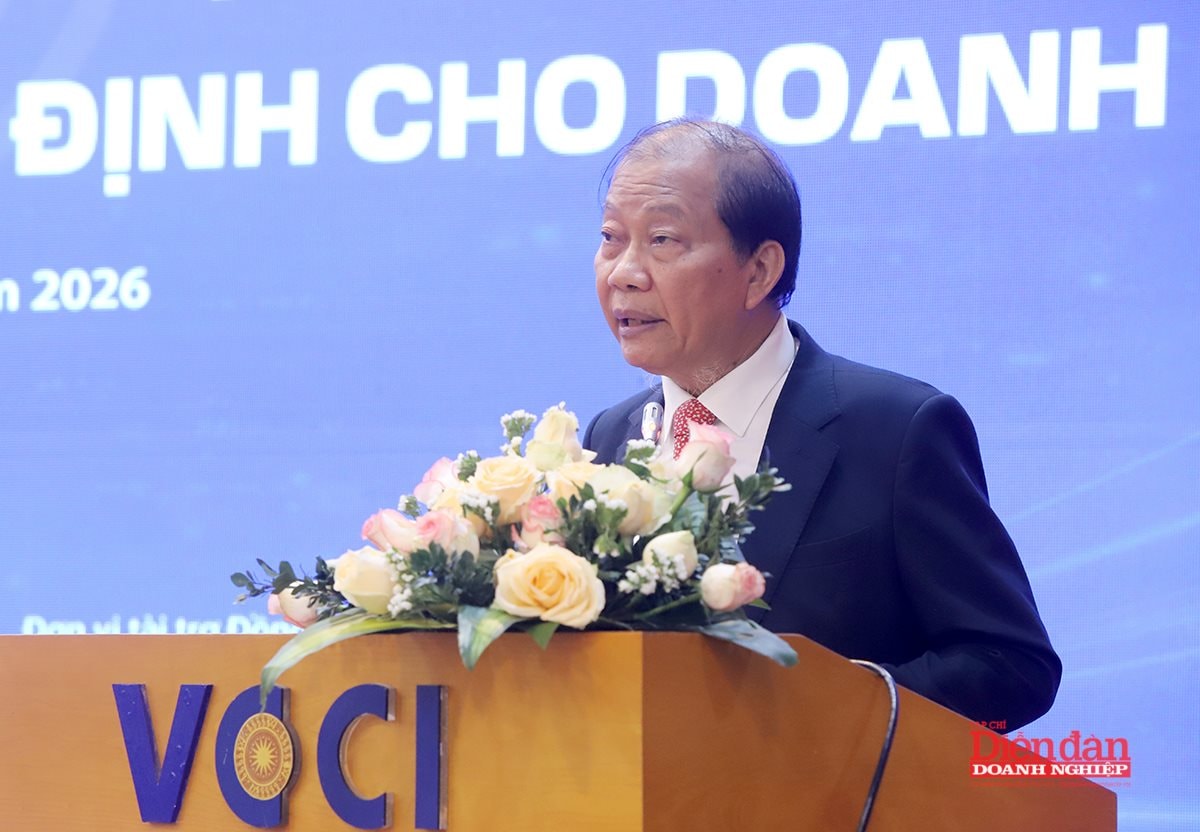
Mr. Hoang Quang Phong – Vice President of the Vietnam Chamber of Commerce and Industry (VCCI) delivers the opening remarks at the Forum
On December 11, 2025, the National Assembly issued Resolution No. 253/2025/QH15 on mechanisms and policies for national energy development in the 2026–2030 period. The Resolution emphasizes the expansion of the direct power purchase agreement (DPPA) mechanism, creating conditions for enterprises to access green electricity sources in a proactive, transparent manner in line with international practices. At the same time, it sets requirements for the development of energy storage infrastructure (BESS) to enhance the absorption of renewable energy, contributing to the stable, safe, and efficient operation of the power system. This is a major policy with strategic significance and needs to be concretized through synchronized and feasible policies.
In 2026, Vietnam targets GDP growth of over 10%. With this target, electricity demand is expected to increase by about 1.2–1.5 times, equivalent to an annual growth rate of 12–15%, placing significant pressure on the national power system.
In this context, on March 30, 2026, the Prime Minister issued Directive No. 10/CT-TTg, demonstrating a clear direction to strengthen electricity saving and develop rooftop solar power, aiming to ease supply-demand pressure and ensure energy security amid rapidly increasing consumption demand and ongoing volatility in the global energy market.
These orientations affirm that green energy is not only a future strategy but an imperative task, as practical challenges have already emerged and are becoming increasingly severe.
.jpg)
Delegates visit exhibition booths at the Forum “Improving policies on renewable energy and storage – a stable green energy foundation for enterprises”
Mr. Phong also pointed out three major challenges. First, the world is experiencing geopolitical fluctuations that strongly affect the global energy supply chain. Prices of coal, liquefied natural gas (LNG), oil, and others are highly unpredictable, influenced by conflicts, supply competition, and trade policies.
Meanwhile, Vietnam’s economy still relies significantly on imported fuels for electricity generation. This creates major risks for energy security, production cost stability, and business competitiveness.
Second, in the domestic market, electricity demand continues to rise rapidly. Industrialization, logistics development, digital transformation, the establishment of data centers, new industrial zones, and smart cities are increasing not only the quantity of electricity demand but also the requirement for greener energy.
Third, international requirements for sustainable development are becoming mandatory standards. As Vietnam deeply participates in new-generation free trade agreements, enterprises have more opportunities to access large markets, but these opportunities come with challenges.
Mechanisms such as the European Union’s CBAM, along with ESG standards, carbon standards, and green supply chain standards, are gradually becoming compulsory trade conditions. It can be said that these are the “passports” for enterprises to maintain orders, retain market share, and secure their positions in the global supply chain.
Removing bottlenecks from the policy framework
The VCCI Vice President noted that although Vietnam has great potential for renewable energy and energy storage development, the implementation process still faces many obstacles.
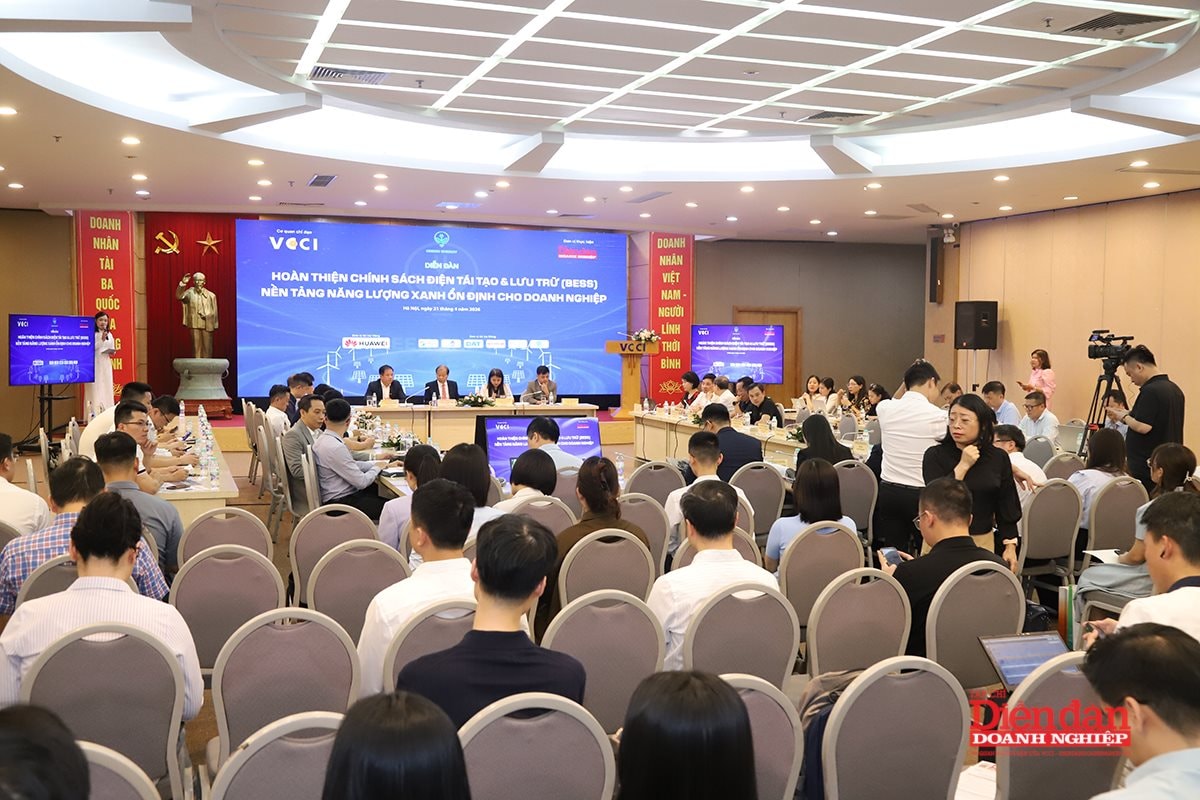
Overview of the Forum “Improving policies on renewable energy and storage – a stable green energy foundation for enterprises”
Under the direct power purchase agreement (DPPA) mechanism, many enterprises still face difficulties due to an inconsistent policy framework and a lack of detailed guidance. Businesses remain uncertain in selecting appropriate contract models and unclear about mechanisms for determining transmission and distribution costs, payment processes, and the responsibilities and benefits among stakeholders. This is an urgent issue that needs to be addressed so that DPPA can truly become a driving force for the meaningful development of the green electricity market.
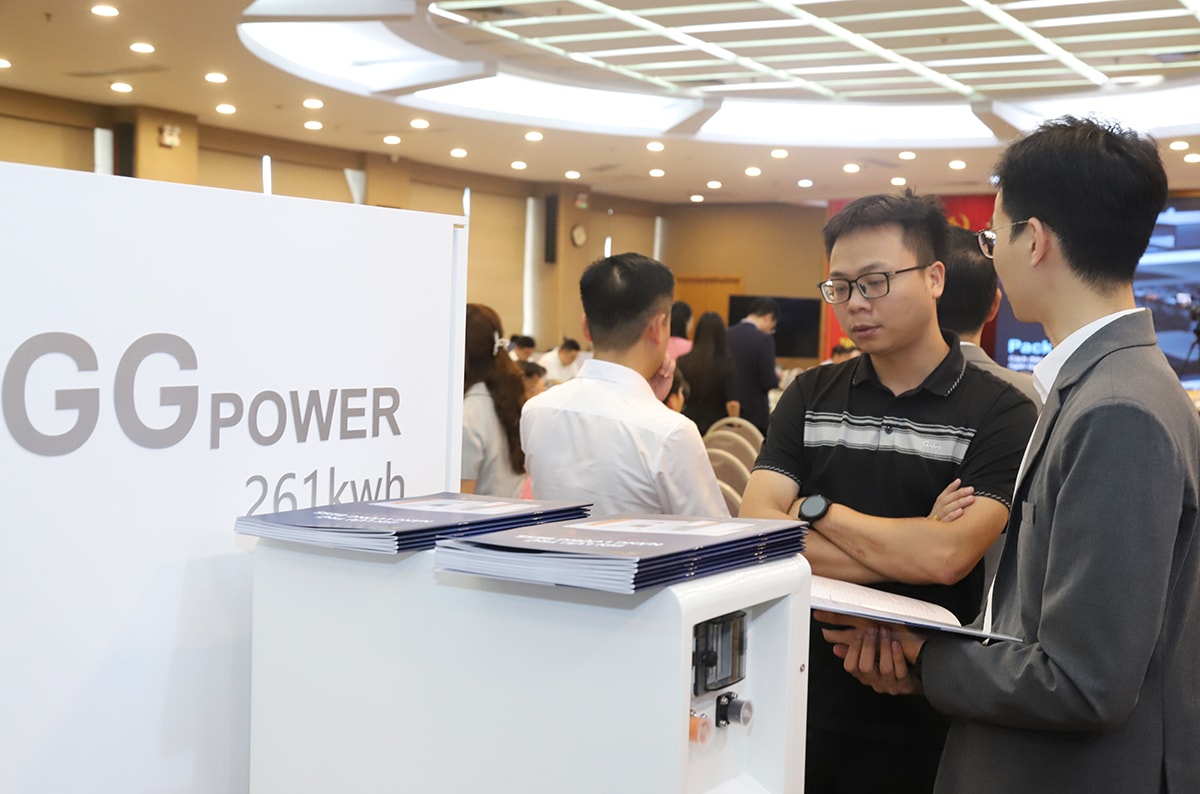
Delegates visit exhibition booths at the Forum “Improving policies on renewable energy and storage – a stable green energy foundation for enterprises”
Regarding energy storage development mechanisms, regulations related to investment, grid connection, pricing mechanisms, business models, technical standards, ancillary service markets, as well as capital mobilization and green credit mechanisms, have not kept pace with development speed and practical demand.
The Party and Government’s orientations are already very clear. However, to move from policy direction to reality, a more specific, synchronized, and feasible policy system is required.
“Based on these requirements, VCCI aims to comprehensively compile recommendations from the business community and experts, while proposing practical solutions to promote the effective implementation of the DPPA mechanism and the application of energy storage technologies in a safe and efficient manner. This will contribute to improving operational efficiency, stabilizing the power system, and better serving production and business activities.
On that basis, we will report and make recommendations to the Government, the Ministry of Industry and Trade, and relevant agencies to support the process of policy improvement and promote the effective implementation of rooftop solar power, DPPA, and energy storage, thereby enabling enterprises to proactively access green electricity sources, reduce costs, and enhance competitiveness,” emphasized Mr. Hoang Quang Phong.