VIETNAM CHAMBER OF COMMERCE AND INDUSTRY
Liên Đoàn Thương Mại Và Công Nghiệp Việt Nam
Thu, Apr 23, 2026, 15:57:00
Continuing the agenda of the First Session of the 16th National Assembly, on the afternoon of April 21, delegates in Group 1 discussed and provided comments on the Draft Law amending and supplementing a number of articles of the Law on Personal Income Tax, the Law on Value Added Tax, the Law on Corporate Income Tax, and the Law on Special Consumption Tax.
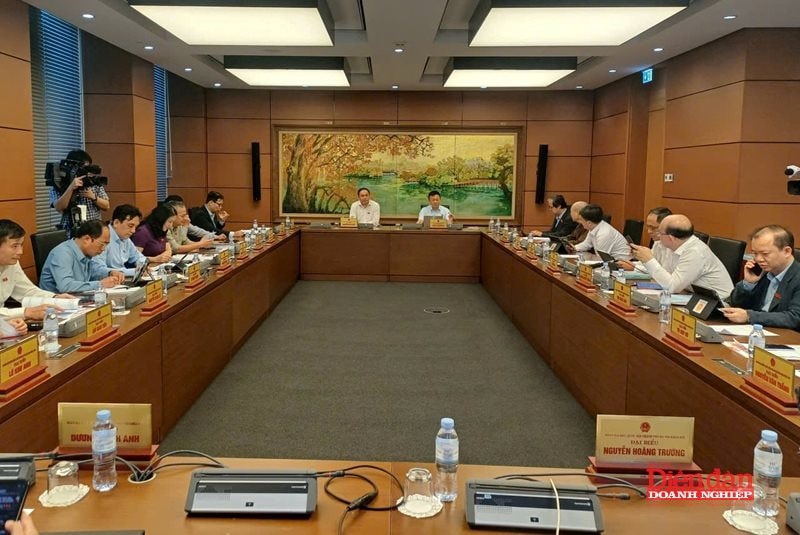
Delegates in Group 1 discuss and give opinions on the Draft Law amending and supplementing four tax laws at the afternoon session on April 21
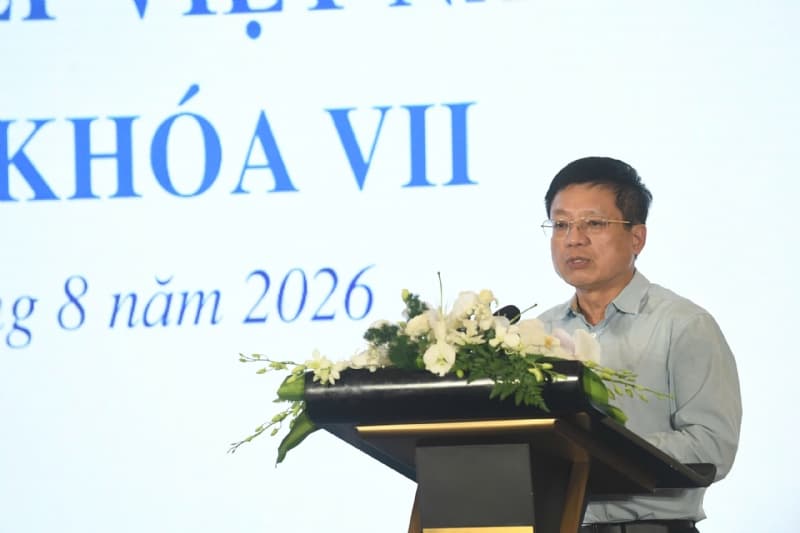
Participating in the discussion, Mr. Ho Sy Hung, President of the Vietnam Chamber of Commerce and Industry (VCCI), member of the National Assembly delegation of Hanoi, stated that, in principle, the proposed amendments are necessary.
“The amendments to value added tax for household businesses, corporate income tax for enterprises, and special consumption tax for battery-powered electric vehicles are all necessary to align with the current situation. However, the Draft still contains points that are not yet consistent,” President Ho Sy Hung shared.
According to VCCI President Ho Sy Hung, the amendment to value added tax for household businesses essentially transfers the authority to determine the threshold to the Government. Accordingly, if the National Assembly assigns this threshold to the Government, then the Government should further clarify what the threshold would be and the basis for adjusting it under different circumstances, ensuring a logical approach to such adjustments. As currently proposed, the regulation remains unclear.
Second, it is not yet clear whether the objective of the amendment is to support the development of household businesses or to address procedural issues and implementation shortcomings. Therefore, it is necessary to define the objective of the amendment. If the goal is to provide support, a different approach is required; if the goal is to resolve procedural issues, then a different approach is also needed.
“The proposed policy has not yet specified a concrete threshold nor a clear objective. Therefore, while the viewpoint is to make things more convenient and simpler for household businesses, the lack of specificity regarding thresholds and objectives needs further clarification,” President Ho Sy Hung expressed.
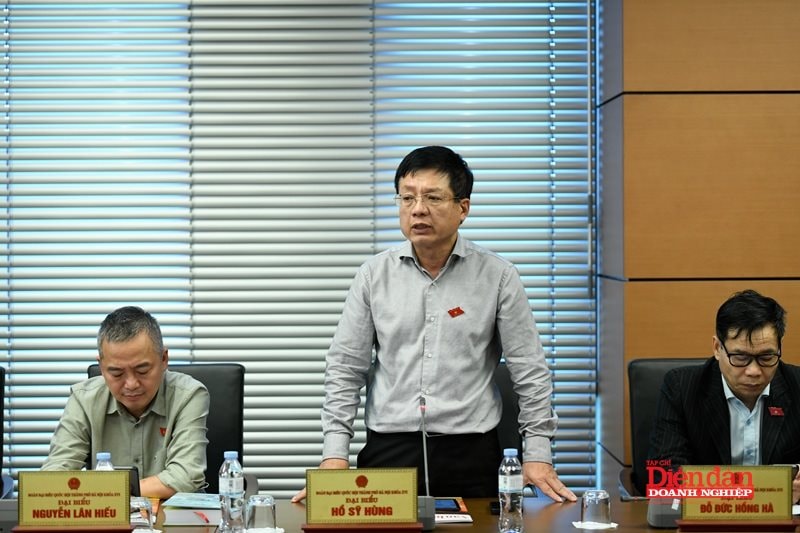
VCCI President Ho Sy Hung gives comments on the Draft Law in Group 1 – National Assembly delegation of Hanoi
According to VCCI President Ho Sy Hung, the second issue regarding corporate income tax is similar. The objective is to support Vietnamese enterprises in development, but the thresholds that qualify for such support remain unclear.
“Regarding fairness, if a business makes a profit, it must pay taxes. This is a principle, and all profit-generating business activities must pay taxes, not only enterprises. However, in this case, enterprises with profits up to a certain level are exempt from tax — this is a very strong support measure, but it is also necessary to clarify the objective, and based on that objective, determine the appropriate threshold for taxation…,” the VCCI President commented.
At the same time, Mr. Hung noted that regarding the special consumption tax for battery-powered electric vehicles, the essence is to extend the current tax schedule until 2026, after which it will increase in the following period. From the perspective of promoting electricity and energy savings as well as environmental protection, this is a very good policy.
However, when setting a timeline until 2027 for higher tax rates, it is necessary to reconsider what the policy objective is, and whether extending it until 2030 would achieve the intended goals. Therefore, additional policy instruments are needed to ensure consistency.
In addition, while providing preferential incentives for electric vehicles entering the market, attention should also be paid to ensuring convenience for consumers in using products from different manufacturers, with different standards, in a connected and synchronized manner.
Sharing the same view, delegate To Huy Vu, member of the National Assembly delegation of Hanoi, also appreciated the progressive aspects of the Draft, particularly the timely institutionalization of Resolution No. 68-NQ/TW on private sector development, especially the goal of supporting small and micro enterprises. In addition, extending special consumption tax incentives for battery-powered electric vehicles demonstrates the State’s consistent commitment to green transition goals with a vision toward 2050. Finally, integrating two contents into a single Draft Law helps simplify the legal document system.
However, alongside these positive aspects, the delegate also called for further clarification of several contents in Article 3 of the Draft, which supplements Clause 14a to Article 4 of the Law on Corporate Income Tax, stipulating: “Income of enterprises and organizations established under Vietnamese law with total annual revenue at a level prescribed by the Government shall be exempt from corporate income tax.”
According to the delegate, this provision assigns full authority to the Government without setting a floor, a ceiling, guiding principles, eligibility conditions, or an automatic sunset clause. Therefore, the Government, as well as the Economic and Financial Committee, should further clarify the policy direction.
In addition, regarding the exemption of special consumption tax for battery electric vehicles and other incentive packages, while the package for electric batteries clearly specifies the level of tax reduction, other packages have not yet been assessed in terms of their impact on state budget revenue reduction.
Therefore, the delegate expressed the expectation that the Government could provide directional options so that the National Assembly can understand the extent of budget revenue reduction and its impact through specific figures.
According to the delegate, when explaining policies, international experiences are often cited; however, such experiences usually have two sides.
“For example, regarding the experience of Germany or China, in Germany, tax support has recently been cut. Therefore, if citing examples, both sides should be presented to provide a comprehensive view. For instance, the submission states that Germany applies subsidies from 3,000 to 5,000 Euros for battery electric vehicles, but in reality, Germany terminated EV subsidies on December 17, 2023 due to budget pressure and a ruling by the Federal Constitutional Court on the budget.
Therefore, regarding EV subsidies, in the context where we import the majority (according to the submission, 80% is imported), such subsidies must be linked to localization requirements, and the level and duration of support should be tied to localization rates to enhance domestic production capacity,” the delegate commented.