VIETNAM CHAMBER OF COMMERCE AND INDUSTRY
Liên Đoàn Thương Mại Và Công Nghiệp Việt Nam
Mon, Mar 09, 2026, 15:00:00
This was one of the recommendations made by experts at the international workshop titled “Integrated and Sustainable Waste Management,” organized on the morning of March 6 by the Da Nang Union of Friendship Organizations in coordination with the Vietnam Chamber of Commerce and Industry – Central and Central Highlands Branch, and the Center for Education and Development under the Vietnam Association for the Development of Human Resources and Talent (CED).
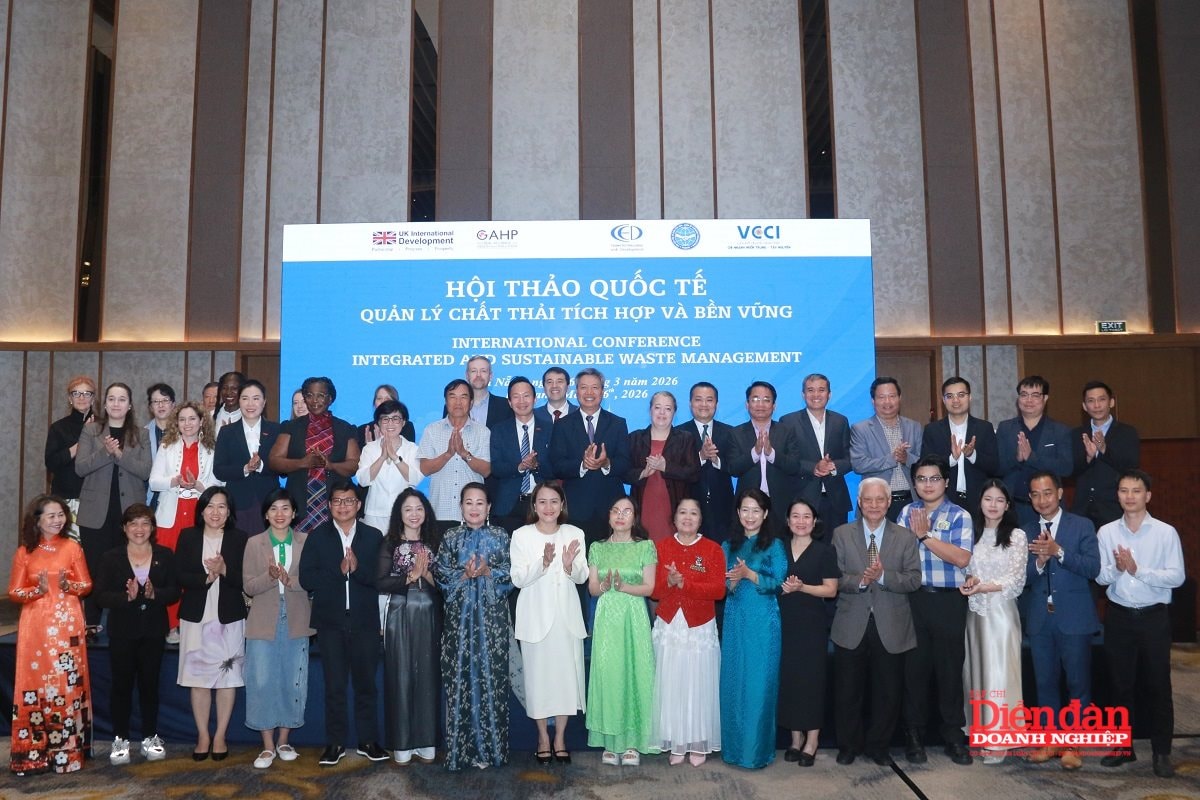 The international workshop “Integrated and Sustainable Waste Management” held in Da Nang on the morning of March 6.
Pressure on a central urban area
Opening the workshop, Nguyen Ngoc Binh, President of the Da Nang Union of Friendship Organizations, shared that after nearly 18 years of implementing the project “Building Da Nang – an Environmental City,” the model of sustainable urban development has become a widespread movement within the community. According to Binh, Da Nang has consistently affirmed its position as a green and sustainable city over the years, receiving numerous prestigious domestic and international awards.
“Combining economic development with environmental protection, and moving toward a green and clean city, is both a strategic direction and a meaningful choice to build Da Nang into a modern, sustainable, livable ecological city,” Binh said.
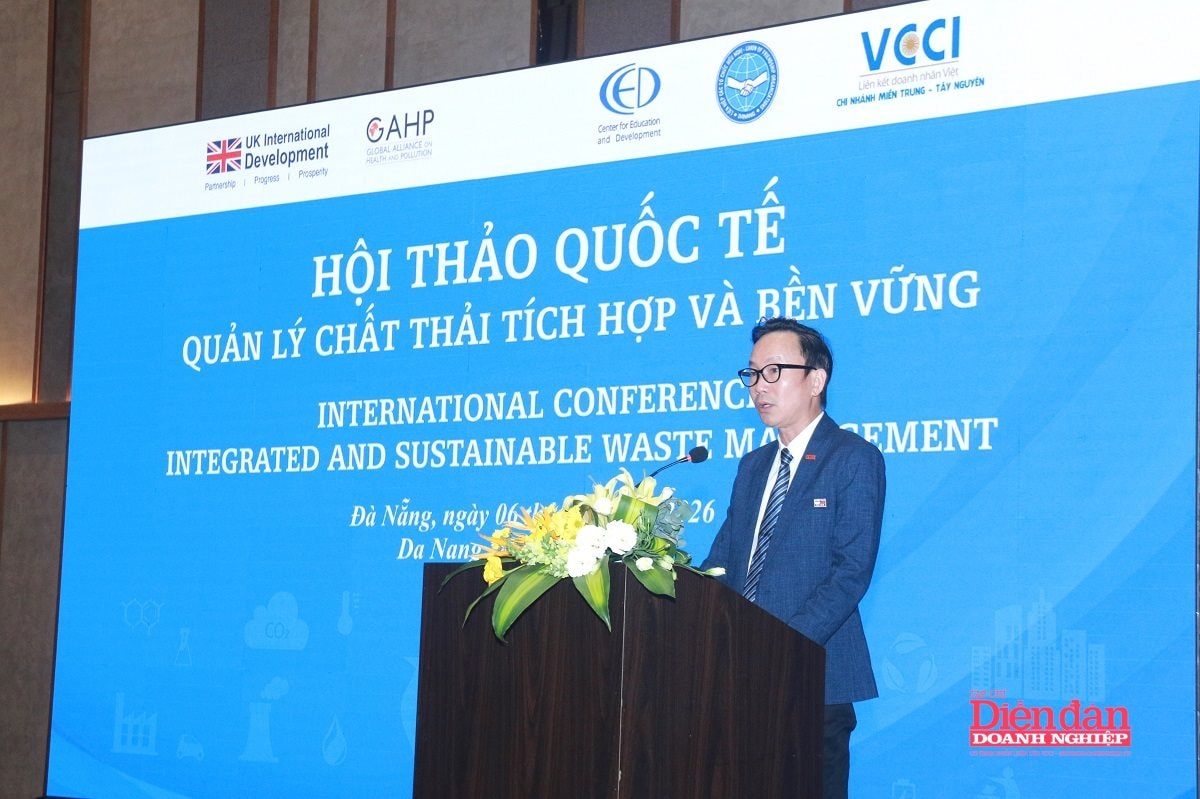 Nguyen Tien Quang, Director of VCCI Central and Central Highlands, noted that requirements for greenhouse gas emission reduction and climate change adaptation have created new challenges and standards.
Sharing the same view, Nguyen Tien Quang, Director of the Vietnam Chamber of Commerce and Industry – Central and Central Highlands Branch (VCCI Central and Central Highlands), affirmed that Da Nang is the central urban hub of the Central and Central Highlands region, a city of tourism, services, and high technology that is striving to become an “environmental city” and an ecological urban center.
However, alongside rapid socio-economic development, Quang noted that the volume of municipal solid waste, industrial waste, construction waste, and plastic waste has been increasing both in quantity and complexity.
“The pressure on waste collection, transportation, and treatment systems is growing; budget expenditures for environmental management are rising; while requirements for greenhouse gas emission reductions and climate change adaptation are introducing new challenges and standards,” Nguyen Tien Quang said.
A new perspective on waste
According to forecasts, the volume of household waste generated in the city will continue to rise rapidly, reaching an estimated 3,900 tons per day by 2030. In this context, traditional linear waste management approaches—collecting and landfilling—are no longer suitable.
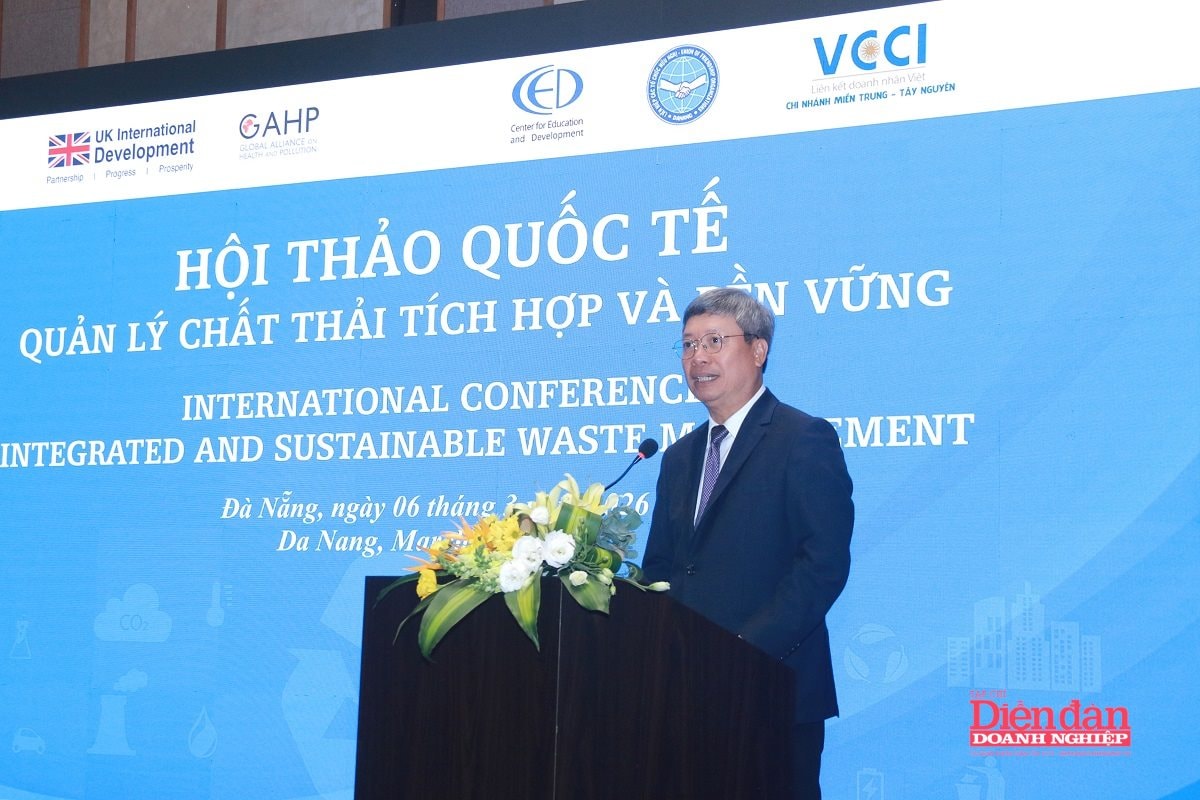 Ho Quang Buu, Vice Chairman of the Da Nang People’s Committee, noted that requirements for green technical infrastructure, modern environmental governance, and sustainable development standards in Da Nang are becoming increasingly demanding.
Nguyen Tien Quang, Director of VCCI Central and Central Highlands, stated that current development trends are moving toward a green economy and circular economy, in which waste should be regarded as a resource. Recognizing and managing waste as a type of resource would create the foundation for reuse, recycling, and value recovery from waste, contributing to environmental pollution reduction and more efficient use of resources.
“Therefore, the city needs to shift strongly toward an integrated waste management model based on circular economy principles: reduction – reuse – recycling – energy recovery – final treatment, with the participation of authorities, businesses, and the community. More broadly, there should be mechanisms and policies to promote the transition from a linear economic model to a circular economy,” Quang recommended.
From the local government perspective, Ho Quang Buu, Vice Chairman of the Da Nang People’s Committee, noted that the goal of building an “Environmental City” has always been identified as a central and consistent task. According to Buu, the city has been implementing a range of coordinated solutions, including improving the efficiency of solid waste collection and treatment, promoting waste sorting at source, attracting investment in advanced treatment technologies, strengthening communication and public awareness, and gradually forming a circular economy model in waste management.
“In the coming period, as Da Nang implements new development orientations such as a Free Trade Zone, an International Financial Center, and a smart city, requirements for green technical infrastructure, modern environmental governance, and sustainable development standards will become even more demanding. Therefore, international cooperation, experience sharing, and technology transfer in waste management are particularly important for the city,” Buu said.
In the near future, Da Nang will accelerate investment and construction of municipal solid waste treatment projects across the city, particularly those using energy recovery technologies (projects with capacities of 650 tons/day, 1,000 tons/day, and 800 tons/day) as well as the southern landfill site, in order to ensure capacity alignment and secure waste treatment. At the same time, the city will strengthen the application of information technology in managing, monitoring, and coordinating waste collection, transfer, and treatment activities, as well as in the collection of service fees for waste collection, transportation, and treatment.