VIETNAM CHAMBER OF COMMERCE AND INDUSTRY
Liên Đoàn Thương Mại Và Công Nghiệp Việt Nam
Thu, Mar 26, 2026, 15:31:00
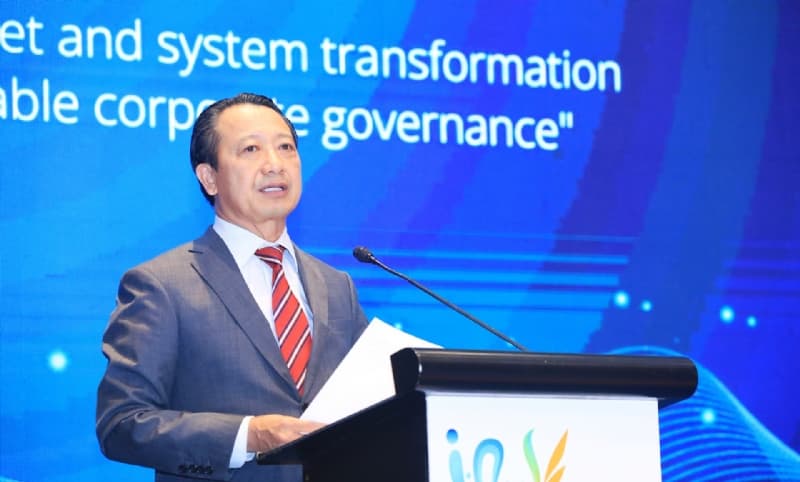
The above message was emphasized by Võ Tân Thành, Vice President of the Vietnam Chamber of Commerce and Industry, at the forum titled “Business Forum 2026: Vietnamese enterprises on the global economic map – Innovate to break through”, organized by Business Forum Magazine on the afternoon of March 24 in Ho Chi Minh City.
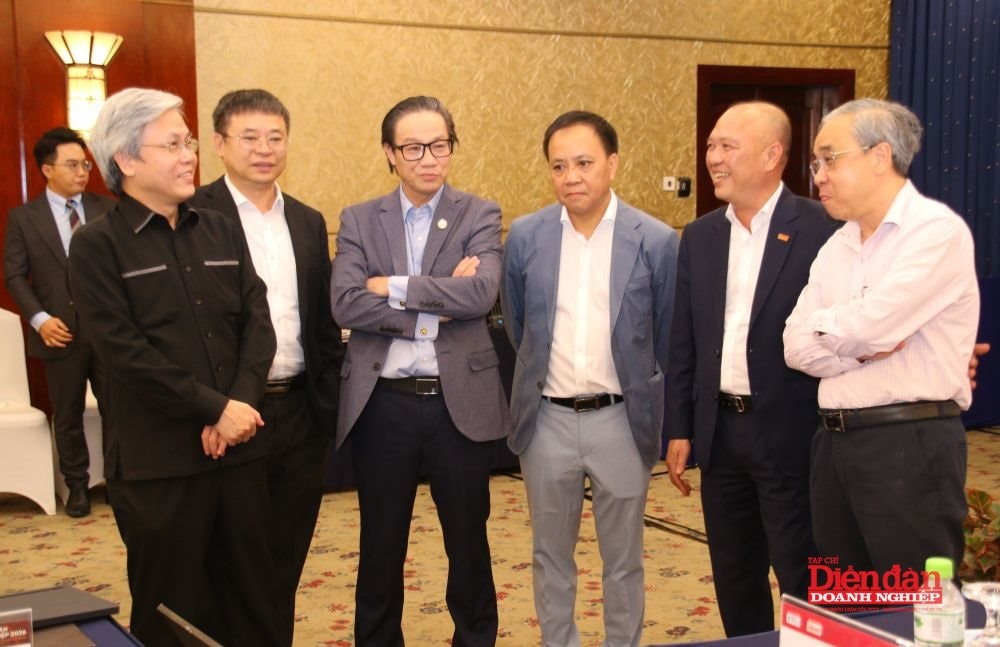 Delegates and enterprises exchange views ahead of the event.
In the context of a continuously restructuring global economy, intensifying strategic competition, and rapidly shifting supply chains, Vietnamese enterprises are facing an urgent need to innovate in order to adapt and achieve breakthroughs. The Vietnam Chamber of Commerce and Industry organized the forum to explore opportunities and share practical solutions from the business community.
The forum was attended by Võ Tân Thành; Nguyễn Đức Lệnh – Deputy Director of the State Bank of Vietnam, Region 2 Branch; Nguyễn Ngọc Hòa – Chairman of the Ho Chi Minh City Business Association; Đinh Hồng Kỳ – Chairman of the Ho Chi Minh City Green Business Association; Dr. Giản Tư Trung – Founding President of the PACE Institute of Management and Director of the IRED Institute of Education; Dr. Đinh Thế Hiển; Phan Minh Thông – Chairman of Phuc Sinh Group; along with representatives of ministries, agencies, investment and trade promotion centers, research institutes, business associations, and enterprises.
Representing the organizing body was journalist Phạm Hùng – Deputy Editor-in-Chief of Business Forum Magazine, together with a large number of delegates, experts, and business leaders.
In his opening remarks, Võ Tân Thành stated that 2026 is a particularly significant year – a pivotal year to accelerate the realization of Vietnam’s development aspirations in a new era of strong national advancement.
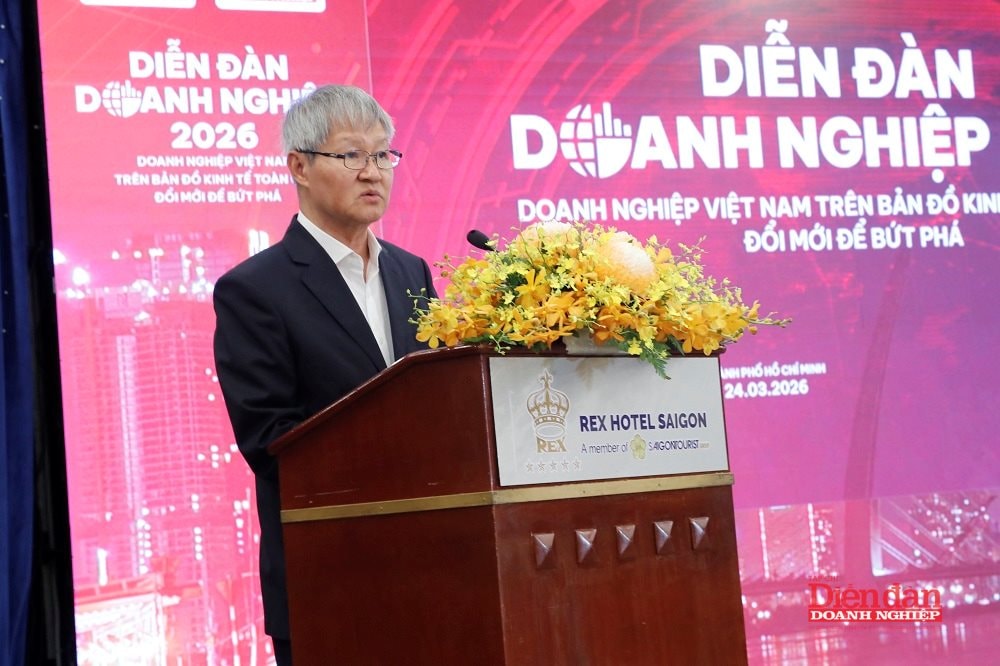 Võ Tân Thành, Vice President of the Vietnam Chamber of Commerce and Industry, delivers a speech at the forum.
According to him, looking back on nearly 40 years of Doi Moi (Renovation), Vietnam has achieved remarkable and transformative milestones. By 2025, GDP reached approximately USD 514 billion, making Vietnam the 32nd largest economy in the world. Total import-export turnover reached USD 930 billion, placing Vietnam among the top 20 trading economies globally. Vietnam is now one of the most open economies, deeply integrated into new-generation free trade agreements, and an attractive destination in global supply chains and international investment.
“From a latecomer economy, Vietnam has risen to become a deeply integrated economy, gradually affirming its role and position in the region and the world,” he noted.
He also pointed out that the world is entering a new phase marked by profound changes. Global supply chains are being strongly restructured, while the Fourth Industrial Revolution, particularly the rapid development of artificial intelligence and digital transformation, is fundamentally reshaping production and business models.
At the same time, green growth, sustainable development, and ESG standards are becoming mandatory requirements for enterprises participating in international markets. These are no longer trends but new rules of global competition.
In this context, low-cost labor is no longer a decisive advantage; innovation capacity, technology, and governance are now the key determinants of enterprise and national competitiveness.
Amid global uncertainties, the Vietnamese business community has demonstrated resilience, adaptability, and impressive dynamism. In 2025, nearly 300,000 enterprises were newly established or resumed operations, with total additional registered capital reaching nearly VND 6.4 quadrillion. In January 2026 alone, nearly 48,700 enterprises entered or re-entered the market – a record figure reflecting strong confidence in economic prospects.
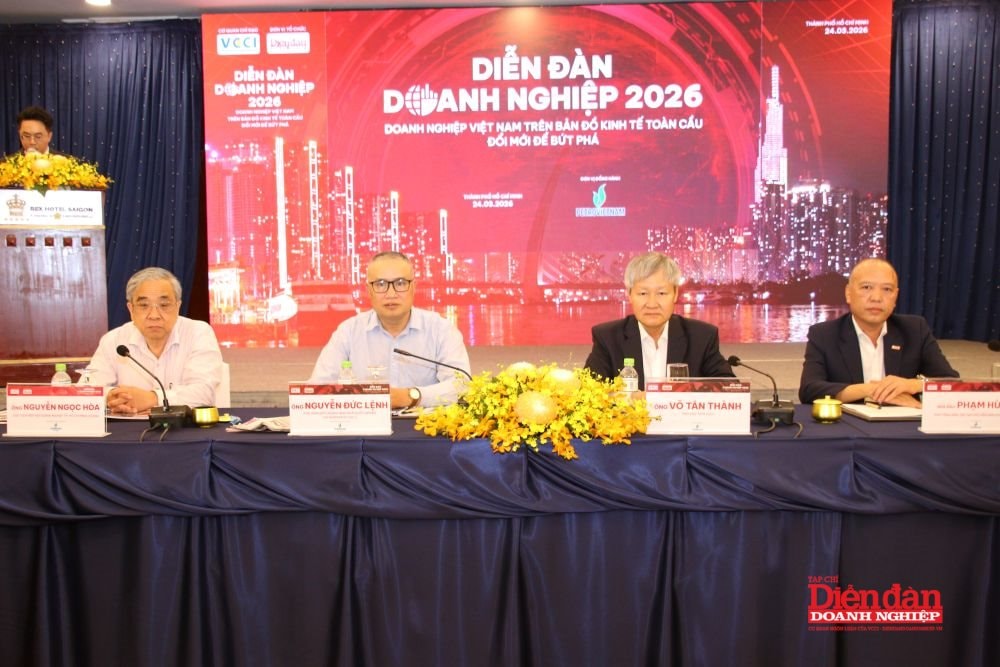 From left: Nguyễn Ngọc Hòa – Chairman of the Ho Chi Minh City Business Association; Nguyễn Đức Lệnh – Deputy Director of the State Bank of Vietnam, Region 2 Branch; Võ Tân Thành – Vice President of the Vietnam Chamber of Commerce and Industry; journalist Phạm Hùng – Deputy Editor-in-Chief of Business Forum Magazine, moderating the forum.
Outbound investment is also increasing rapidly, reaching approximately USD 1.36 billion in 2025. Many Vietnamese enterprises have gradually established their presence in international markets, such as FPT Corporation, Viettel, Vinamilk, VinFast, and TH True Milk, along with others in agriculture, manufacturing, textiles, and technology.
“It can be affirmed that Vietnamese enterprises have demonstrated adaptability in difficult contexts and are gradually shifting from ‘participation’ to ‘value creation’ in global value chains,” he said.
However, he also noted that current achievements are mainly concentrated among large enterprises, while most businesses still face significant challenges.
Most Vietnamese enterprises are small and medium-sized, with limited financial capacity, low technological capability, and productivity gaps compared to regional and global peers. There is also a shortage of high-quality human resources, particularly in technology and modern management. Linkages among domestic enterprises remain weak, and strong industrial ecosystems capable of deep integration into global value chains have yet to fully form.
“These bottlenecks not only slow down growth but, if not addressed promptly, will erode the long-term competitiveness of Vietnamese enterprises,” he warned.
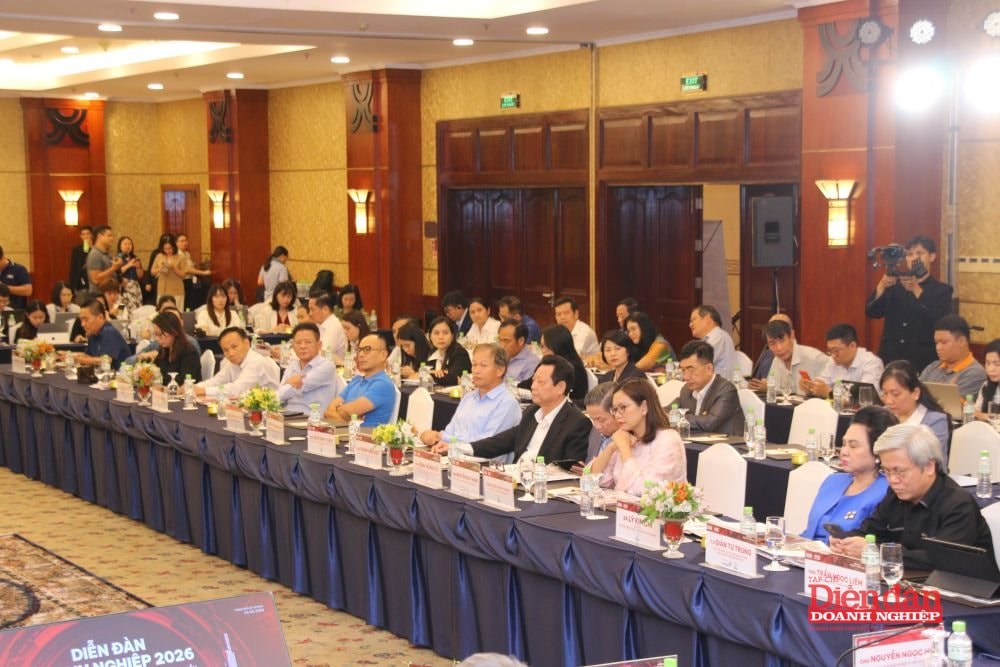 Delegates and enterprises attend the Business Forum 2026.
In this context, innovation is no longer a strategic option but a prerequisite for survival and growth in global competition.
Vietnamese enterprises need to undergo fundamental transformations: from outsourcing to innovation and value ownership; from domestic market focus to a global mindset; and from rapid growth to sustainable growth.
At the same time, they must effectively leverage opportunities from digital transformation, artificial intelligence, green finance, and new-generation free trade agreements to enhance competitiveness. The competitiveness of enterprises is the competitiveness of the economy; strong enterprises make a strong nation.
He also emphasized that institutional quality and the business environment play a crucial role. It is necessary to continue improving a modern, integrated market economy framework; remove bottlenecks and barriers; facilitate enterprise access to resources, especially capital, technology, and markets; and strongly develop innovation ecosystems. Institutions must truly become a driving force for development rather than a barrier.
“With its role as a national organization representing the business community, Vietnam Chamber of Commerce and Industry is committed to accompanying enterprises, listening to and promptly conveying their recommendations to competent authorities, while promoting improvements in the investment and business environment,” he affirmed.
He added that the forum aims to create a substantive dialogue platform among regulators, experts, and the business community; to better identify challenges and barriers; and to propose feasible solutions to enhance the competitiveness of Vietnamese enterprises. All recommendations from the forum will be compiled and reported to the Government and relevant ministries and agencies to contribute to policy and institutional improvements.
He concluded by reiterating that if the question in the past was whether Vietnam could join the global economy, today the key question is where Vietnamese enterprises will stand on the global economic map.
“The answer depends on the innovation capacity of enterprises, the quality of institutions, and the coordination of the entire development ecosystem. I believe that if Vietnamese enterprises achieve breakthroughs in innovation and institutions truly foster development, Vietnam can elevate its position on the global economic map in the coming decade,” he emphasized.