VIETNAM CHAMBER OF COMMERCE AND INDUSTRY
Liên Đoàn Thương Mại Và Công Nghiệp Việt Nam
Mon, Feb 02, 2026, 16:08:00
Speaking at the opening of the forum “Vietnamese Suppliers – the journey toward excellence,” VCCI Vice President Bui Trung Nghia emphasized that the world is undergoing profound changes in the way production and trade are organized. Today’s global supply chains are no longer simple buyer-seller relationships but are increasingly evolving into complex ecosystems where technology, quality standards, social responsibility, sustainable development, and adaptability to volatility converge.
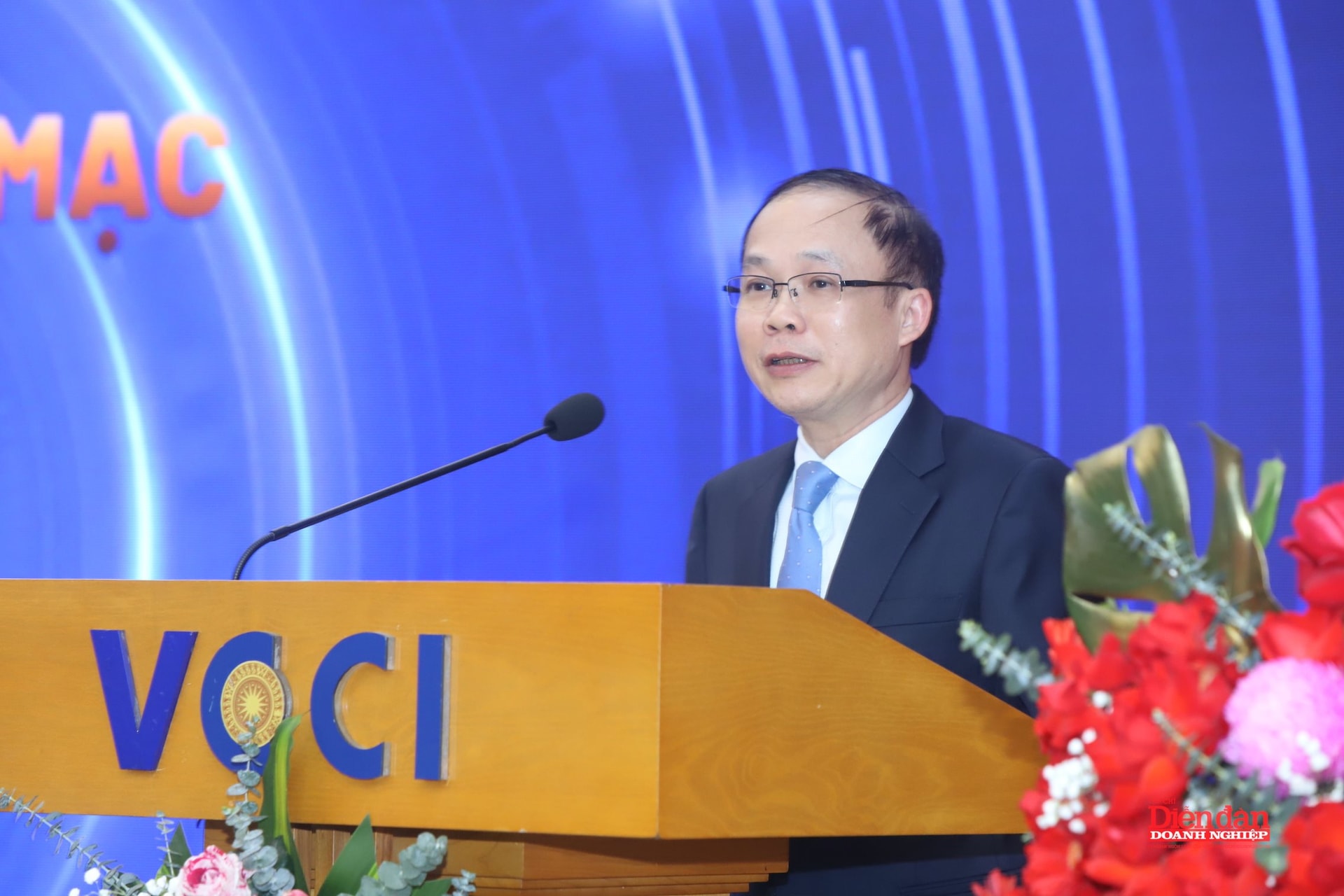
VCCI Vice President Bui Trung Nghia delivers the opening remarks at the forum.
Deep integration together with the wave of supply chain restructuring is opening up very significant opportunities for Viet Nam’s economy. However, these opportunities can only be realized when domestic suppliers are sufficiently capable of participating deeply, participating sustainably, and gradually taking on roles with higher added value.
According to data from the General Statistics Office (Ministry of Finance), Viet Nam currently has around 5,000 enterprises that genuinely participate in global supply chains. Out of a total of approximately one million operating enterprises, the proportion of domestic firms involved in supply chains accounts for only 0.5 percent - a very small figure. This is both a challenge and an indication of the substantial room for Vietnamese suppliers to grow in the coming period.
Clearly identifying the pivotal role of the supplier enterprise community, Mr. Bui Trung Nghia, Vice President of VCCI, noted that the Party and the State have issued many important guidelines and policies aimed at developing the private sector, promoting science and technology and innovation, developing supporting industries, accelerating digital and green transformation, and enhancing the competitiveness of domestic enterprises. These policies are gradually laying the groundwork for Vietnamese enterprises to rise and affirm their position in regional and global supply chains.
However, practice also shows that policies only truly take effect when they are translated into concrete actions by enterprises into operational capacity, technological capability, management capability, and the ability to meet the increasingly stringent standards of the market.
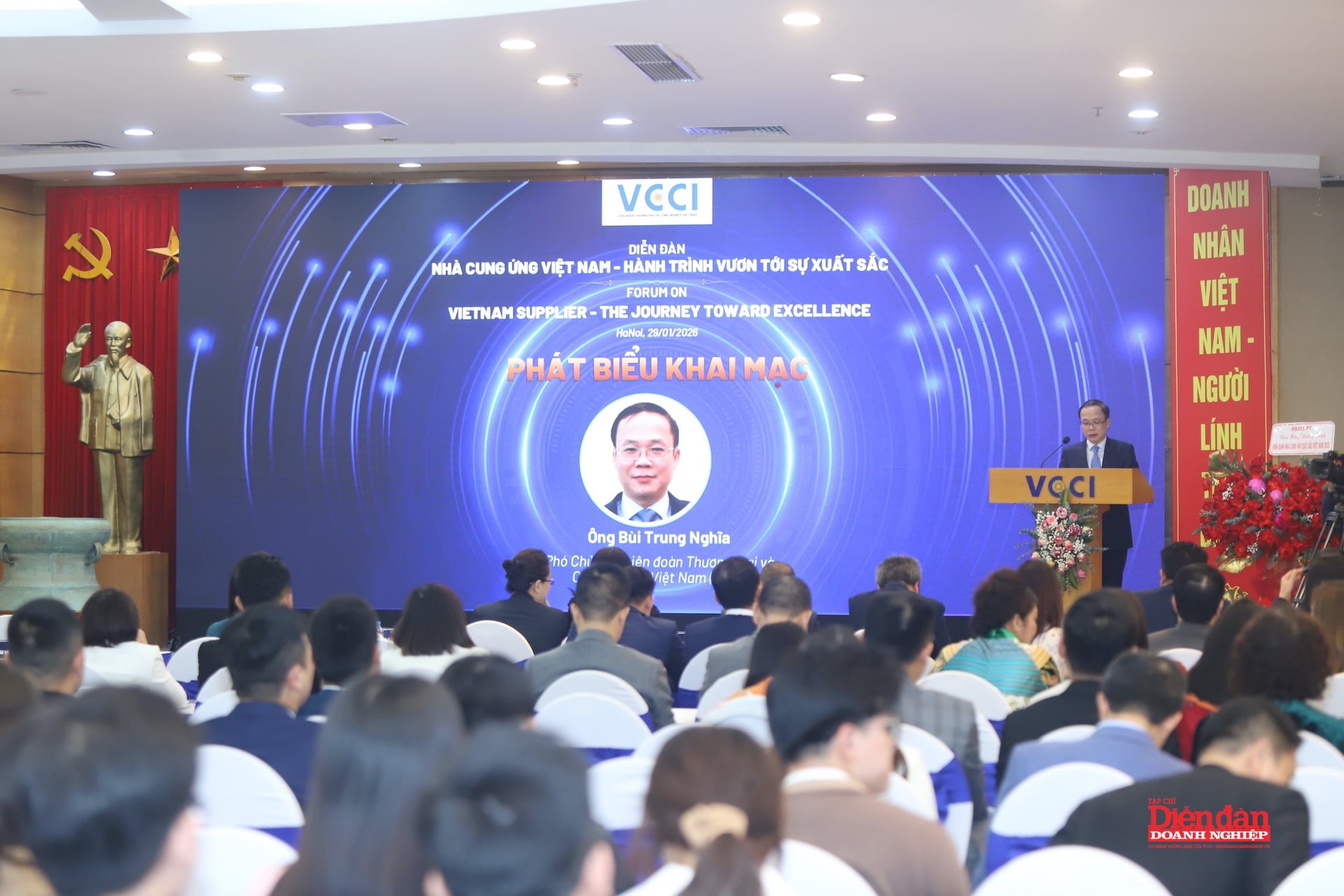
The forum “Vietnamese Suppliers – the journey toward excellence” serves as a space for dialogue, connection, and sharing among stakeholders in the supply ecosystem.
As the national organization representing the business community, Mr. Bui Trung Nghia affirmed: “VCCI always regards the building and development of a Vietnamese supplier force as a key task. We will continue to accompany enterprises in reflecting and recommending policies; promoting market and supply chain connectivity; and strengthening linkages between large enterprises and small and medium-sized enterprises, between FDI enterprises and domestic enterprises, and between buyers and suppliers.”
Representing the State management authority, speaking at the forum, Mr. Pham Van Quan, Deputy Director General of the Department of Industry (Ministry of Industry and Trade), stated that in 2025, amid significant global economic fluctuations, Viet Nam’s PMI still reached a high level of over 9 percent, demonstrating that policies to stabilize production, expand markets, and transform the growth model have been effective. In particular, key industrial sectors recorded double-digit growth, domestic enterprises developed well, and several lead firms at the top of the value chain demonstrated their guiding role.
Alongside these positive results, the leadership of the Department of Industry also pointed out a number of difficulties and challenges, such as unstable industrial growth; capital investment constraints in manufacturing and processing; heavy reliance of exports on FDI enterprises; and the fact that 94 percent of imports are for input materials and equipment.
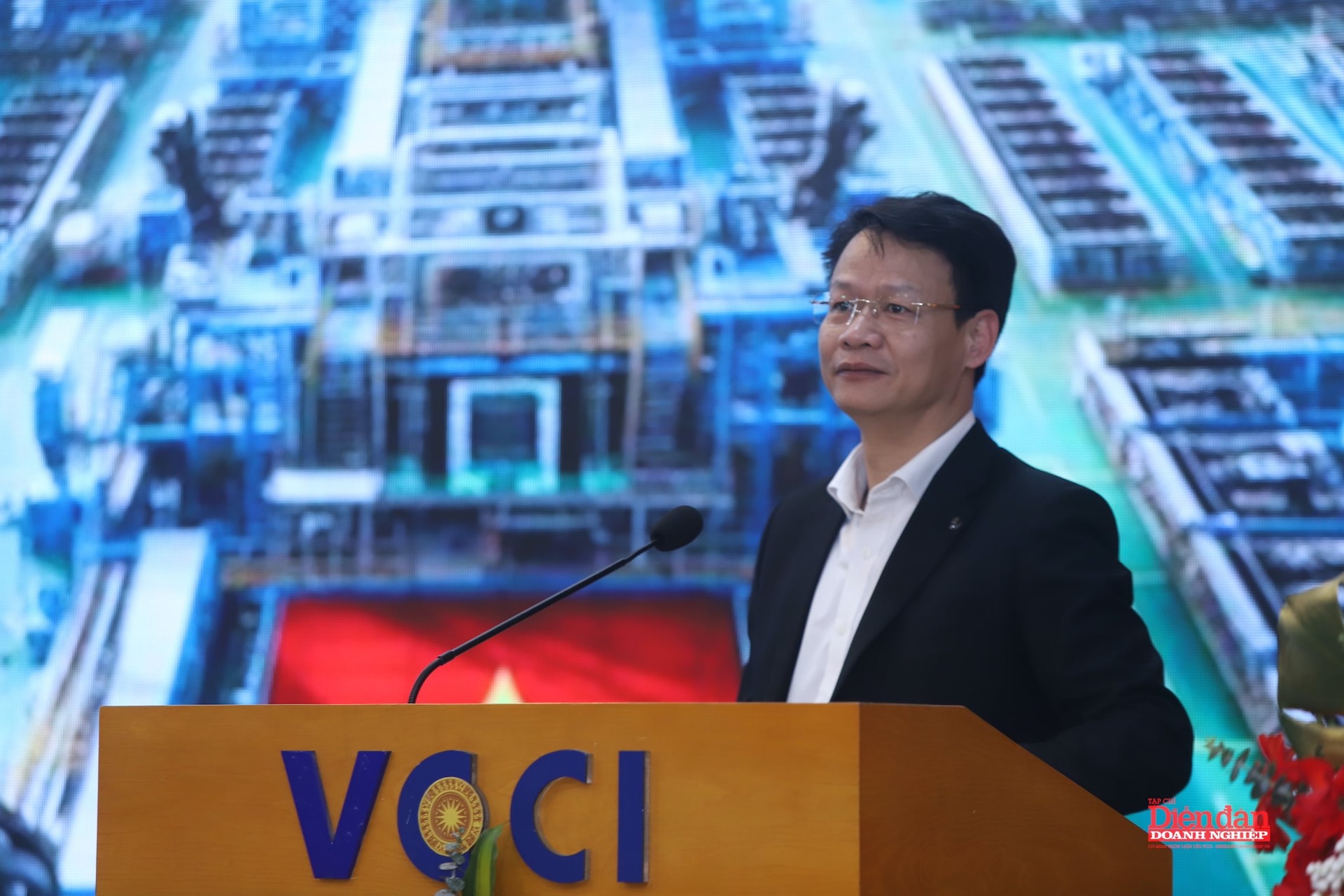 Mr. Pham Van Quan, Deputy Director General of the Department of Industry (Ministry of Industry and Trade), shares new policy orientations for the development of supporting industries.
From these challenges, Mr. Pham Van Quan identified major opportunities to develop supporting industries and increase localization rates. On that basis, the leadership of the Department of Industry outlined future development orientations built on three pillars.
These include institutional reform with the decentralization of 81 percent of procedures to local authorities; the development of policies to enhance domestic production in order to raise localization rates in certain sectors to 40 percent and promote linkages between FDI enterprises and domestic enterprises; and finally, a dual transformation focusing on building industrial databases and digital platforms.
With the support of management agencies, international organizations, experts, and the business community, VCCI Vice President Bui Trung Nghia expressed his hope that a new generation of Vietnamese suppliers, with broader scope, greater professionalism, and deeper integration,will gradually be formed, making a practical contribution to the country’s goal of rapid and sustainable economic development.