Multiple bottlenecks
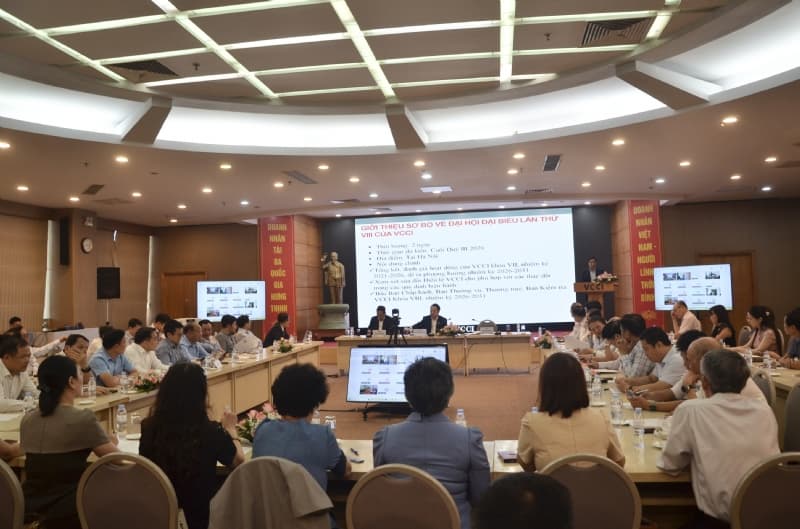
The Vietnam Chamber of Commerce and Industry (VCCI) recently submitted a report to Prime Minister Pham Minh Chinh and relevant ministries and agencies outlining difficulties and obstacles arising during the implementation of Decree No. 46/2026/ND-CP dated January 26, 2026 of the Government, which details several provisions and measures for implementing the Law on Food Safety (Decree 46), and Resolution No. 66.13/2026/NQ-CP dated January 27, 2026 on the announcement and registration of food products (Resolution 66).
The business community appreciated the Government’s timely decision to issue Resolution No. 09/2026/NQ-CP to temporarily suspend the implementation of certain provisions of Decree 46 and Resolution 66 until April 15, 2026. However, with the suspension period nearing its end, businesses are concerned that if core issues are not resolved before that date, serious consequences for production and business operations may reoccur.
Based on feedback from more than 1,000 enterprises and numerous major industry associations, the report shows that Decree 46 and Resolution 66 on food safety management have created significant administrative barriers, increasing costs and causing severe congestion of goods at border checkpoints.
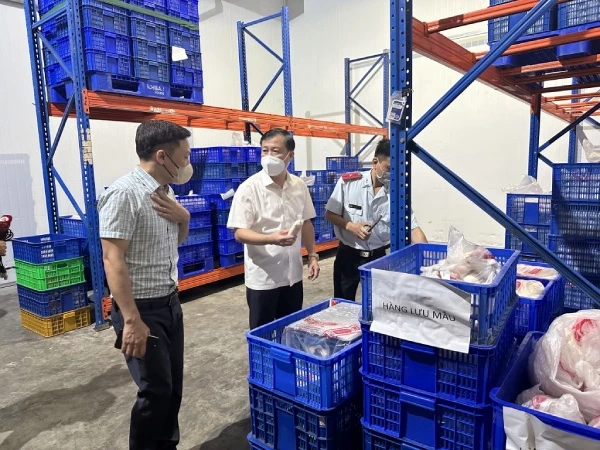 The business community is concerned that key issues may remain unresolved before April 15, 2026 – the deadline for the suspension of Decree 46.
According to the business community, Decree 46 and Resolution 66 were issued and took effect while the Law on Food Safety is currently undergoing revision. Applying these regulations in the short term and then replacing them with new documents guiding the implementation of the revised law could create legal instability, increase compliance costs, and disrupt the business environment.
Therefore, most opinions recommend extending the suspension of Decree 46 and Resolution 66 until the revised Law on Food Safety is approved and takes effect, while continuing to apply Decree No. 15/2018/ND-CP during the transitional period.
VCCI also identified a range of difficulties related to procedures for product announcement and registration, state inspection of imported food products, transitional regulations and product labeling, management of food supplements and technical definitions, as well as registration of advertising content for food supplements.
The report also highlighted barriers related to food traceability requirements, the capacity of the testing system, and issues concerning legal stability and the policy development process.
“The three-step inspection process, which lasts 10–12 working days (excluding testing time), causes significant losses for businesses due to storage costs and the risk of spoilage of perishable goods,” the report noted.
Proposals for long-term solutions
In response to the situation, VCCI proposed a comprehensive set of solutions to the Government and relevant ministries and agencies. In terms of long-term policy orientation, VCCI recommended that the Government consider extending the suspension of Decree 46 and Resolution 66 until the revised Law on Food Safety is officially approved and comes into effect.
This solution aims to ensure consistency and coherence in the legal framework and to avoid frequent regulatory changes within a short period that could destabilize the business environment. During the transitional period, Decree No. 15/2018/ND-CP should continue to be applied as the legal basis to maintain stable supply chain operations.
Regarding specific technical issues, VCCI proposed restoring the exemption mechanism for product announcement procedures and state inspection for raw materials, additives, and packaging used solely for internal production. This would help reduce administrative burdens while better aligning with business practices.
In addition, transitional provisions should be expanded, and internationally recognized certifications such as HACCP, ISO 22000, and FSSC 22000 should be accepted as equivalent to the Certificate of Food Safety Eligibility. To accelerate customs clearance, a “clearance first – inspection later” mechanism should be applied to enterprises with strong compliance records. At the same time, the total inspection timeline, including testing, should be clearly regulated to improve predictability for business operations.
From a sectoral management perspective, the report recommended that relevant authorities promptly issue clear legal definitions for technical concepts and provide consistent guidance on inspection authority across different administrative levels. In particular, the Government should review and eliminate impractical documentation requirements, such as direct authorization letters for goods imported through global distribution systems.
Allowing enterprises to continue using existing packaging and labeling, and providing flexible procedures for amending self-declared product information, would help avoid substantial social costs. In addition, traceability requirements should be implemented according to a roadmap consistent with the current technological capacity of both the government and businesses.
Regarding the capacity of the enforcement system, VCCI emphasized the importance of conducting a comprehensive assessment of the national testing system before implementing new regulations. To address capacity constraints, the Government should consider recognizing test results from qualified in-house laboratories or reputable international organizations.
In the policy development process going forward, VCCI also recommended meaningful consultation with the business community from the drafting stage, ensuring that each regulation is subject to a full impact assessment and accompanied by a reasonable transition period so that enterprises can adapt in a timely manner. This approach would both protect consumer health and support sustainable economic development.