VIETNAM CHAMBER OF COMMERCE AND INDUSTRY
Liên Đoàn Thương Mại Và Công Nghiệp Việt Nam
Wed, May 27, 2026, 16:28:00
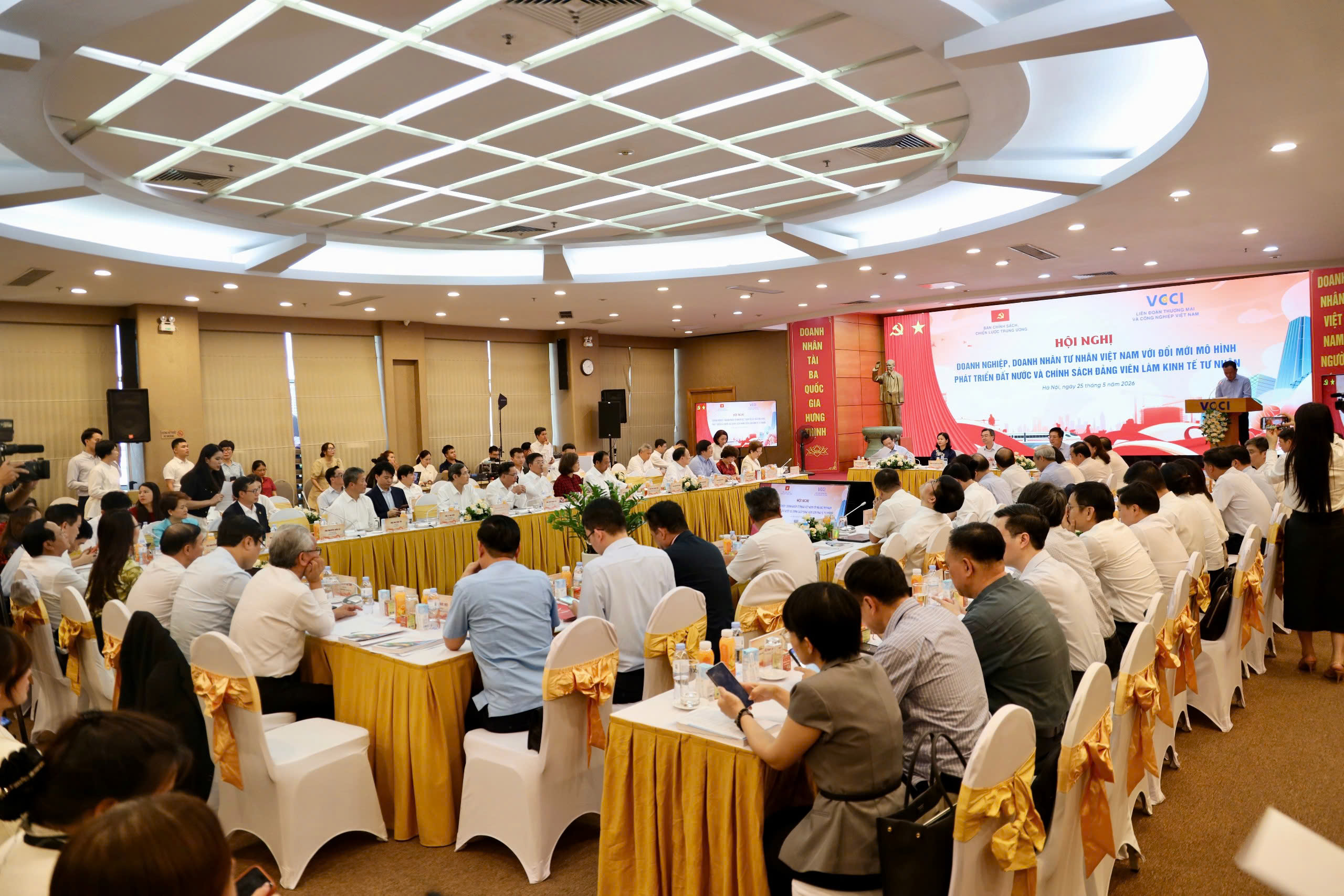
As part of implementing the Action Program of the Party Central Committee to carry out the Resolution of the 14th National Party Congress and tasks assigned by the Politburo, the Central Policy and Strategy Commission has been tasked with leading and coordinating with relevant agencies in developing the Project on “Renewing the National Development Model Based on Science, Technology, Innovation and Digital Transformation,” to be submitted to the 14th Party Central Committee at its Third Plenary Session. In addition, the Commission is also developing the Project on “Reviewing 20 Years of Implementing Regulation No. 15-QĐ/TW dated August 28, 2006, of the 10th Party Central Committee on Party Members Engaging in Private Economic Activities, and Eight Years of Implementing Conclusion No. 29-KL/TW dated January 31, 2018, of the Politburo,” which will serve as the basis for issuing a new regulation on Party members engaging in private economic activities. The conference was organized to support the development of these projects.
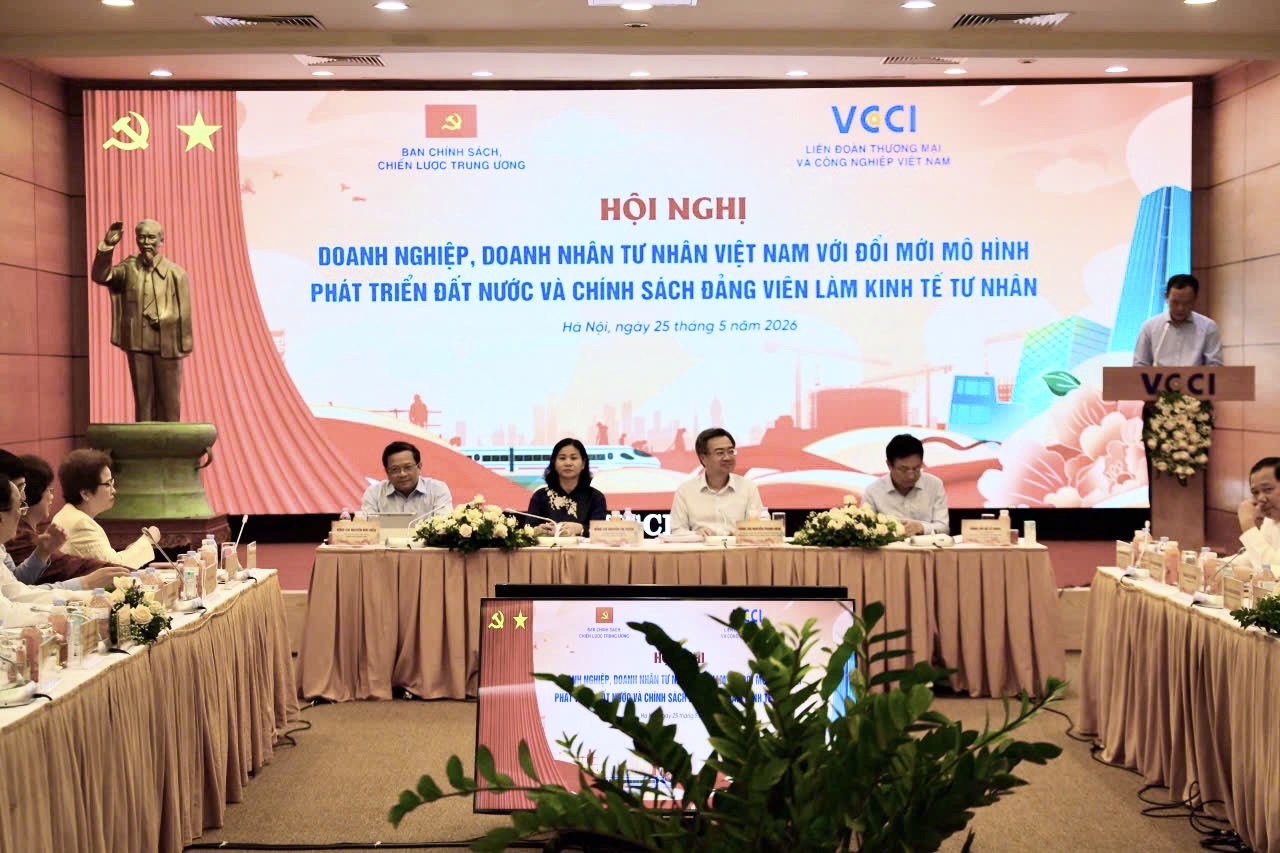
The conference was chaired by Mr. Nguyen Thanh Nghi, Politburo Member, Secretary of the Party Central Committee and Head of the Central Policy and Strategy Commission; Ms. Nguyen Thi Tuyen, Member of the Party Central Committee and Deputy Secretary of the Government Party Committee; Mr. Ho Sy Hung, Secretary of the VCCI Party Committee and President of VCCI; and Mr. Nguyen Duc Hien, Deputy Head of the Central Policy and Strategy Commission.
Participants included representatives from the Party Committee of the Government Office, several National Assembly committees, the Vietnam Fatherland Front, leaders of central ministries and agencies, as well as more than 100 delegates representing major private economic groups, leading enterprises, industry associations and local business associations from across the country.
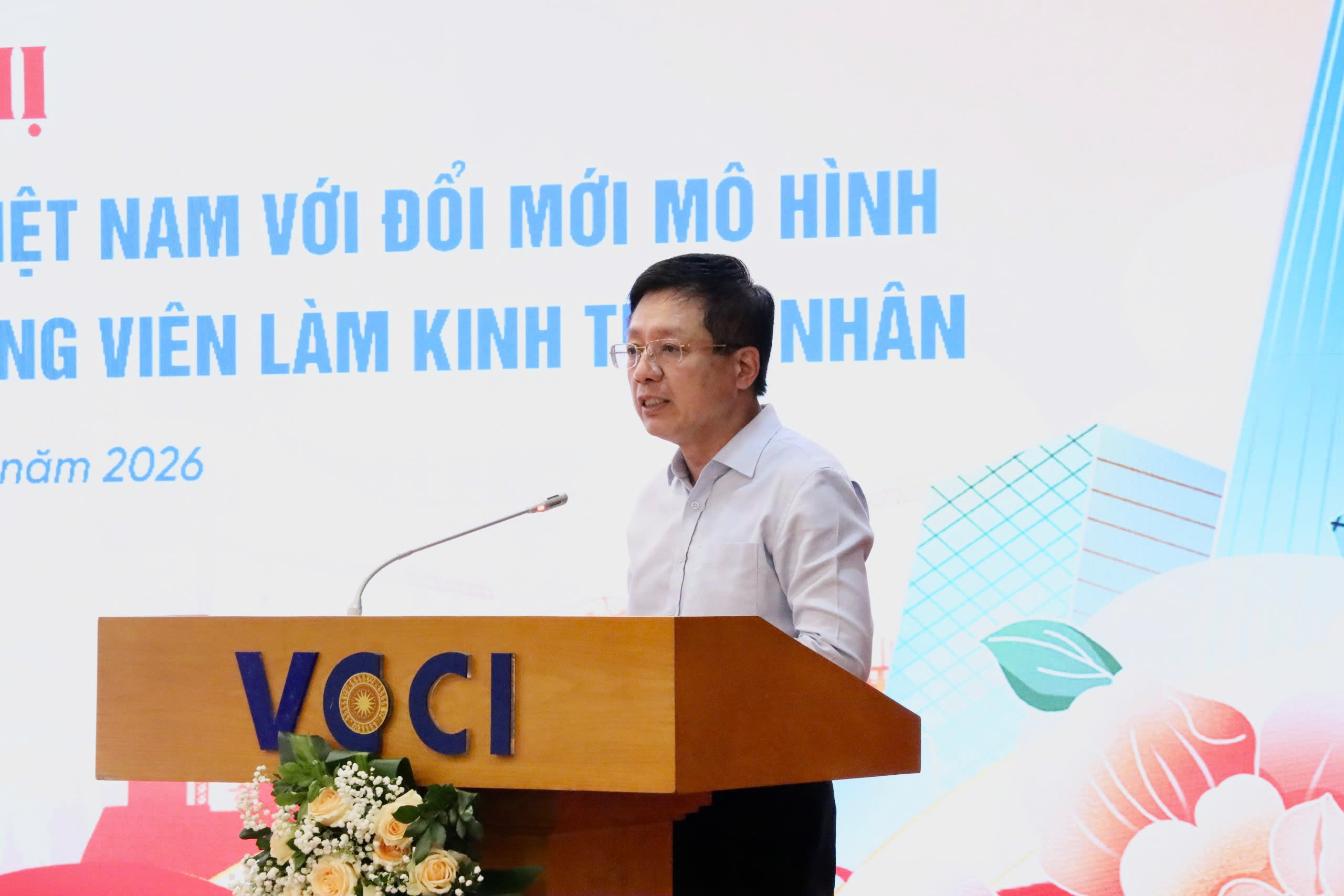
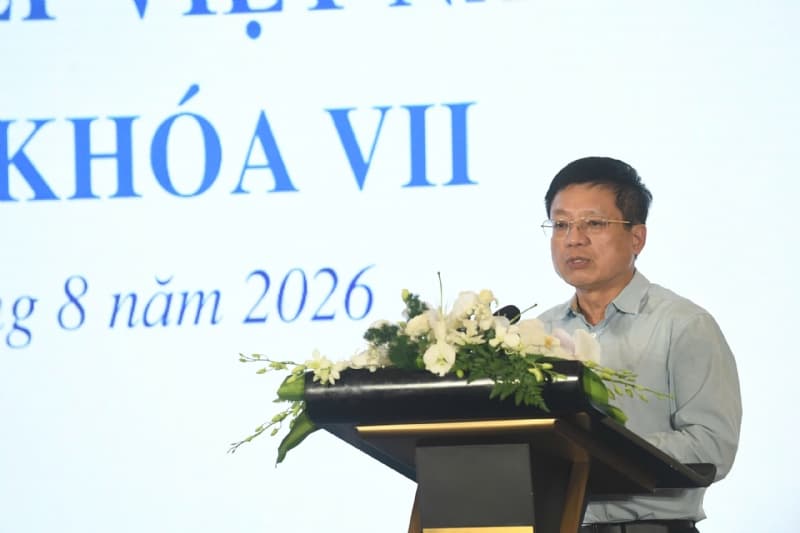
Delivering welcoming remarks, VCCI President Ho Sy Hung emphasized the importance of the private economic sector. Currently, the private sector comprises around one million enterprises, accounting for approximately 97% of all enterprises nationwide, contributing more than 50% of GDP, over 30% of total state budget revenues and generating employment for more than 80% of the workforce.
The private business sector is increasingly demonstrating its pioneering role in innovation, digital transformation, investment in new technologies, green economic development, market expansion and deeper integration into global value chains.
According to Mr. Hung, for the private sector to truly become the most important driving force of the economy, Vietnam must establish an institutional environment that is sufficiently open, transparent, stable and secure, enabling private enterprises to invest with confidence over the long term, innovate boldly, grow confidently and participate in strategic sectors of national importance.
He also stressed the need to continue improving the socialist-oriented market economy framework, reducing compliance costs and addressing bottlenecks related to land, capital, technology and human resources. To enable private enterprises to become a core force in renewing the development model, opportunities should be provided for them to participate in large-scale national investment projects, especially those involving strategic infrastructure, technologies and products.
At the same time, it is essential to further promote entrepreneurship, the aspiration for legitimate prosperity, a spirit of dedication and innovation, and a commitment to national contribution among Vietnamese entrepreneurs, particularly through policies encouraging Party members to engage in private economic activities in the new era.
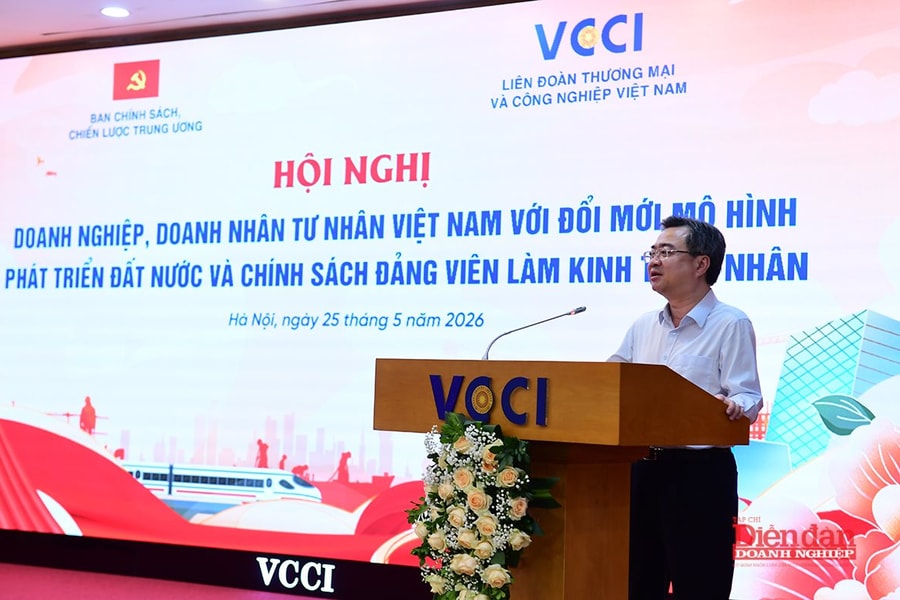
Speaking at the conference, Mr. Nguyen Thanh Nghi, Politburo Member, Secretary of the Party Central Committee and Head of the Central Policy and Strategy Commission, emphasized that after nearly 40 years of reform, the Party’s policy orientation toward the private economy has become increasingly comprehensive, profound and groundbreaking.
He noted that Resolution No. 10-NQ/TW of the Fifth Plenum of the 12th Party Central Committee in 2017 identified the private economy as “an important driving force” of the economy. More recently, Resolution No. 68-NQ/TW issued by the Politburo on May 4, 2025, elevated the private sector to “one of the most important driving forces” of the national economy.
According to him, this reflects not only progress in theoretical and policy thinking but also a strong political commitment to unlocking all available resources, stimulating innovation, encouraging legitimate wealth creation and promoting the contributions of Vietnamese enterprises and entrepreneurs.
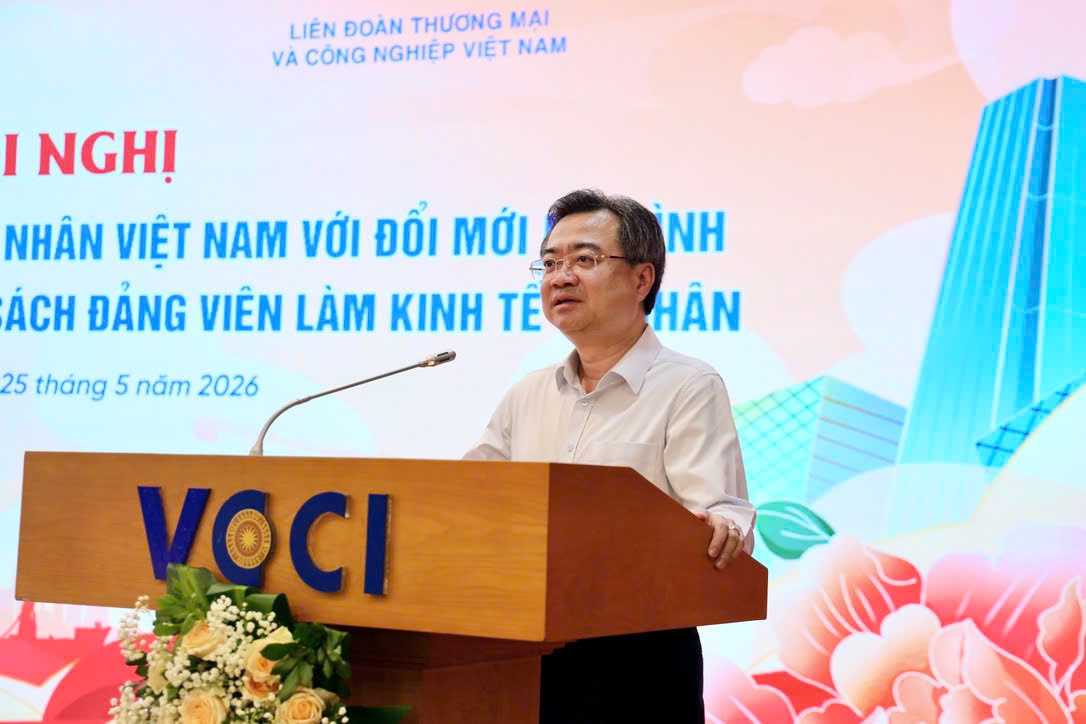
Mr. Nghi also noted that the Central Policy and Strategy Commission had been assigned to develop the project on renewing Vietnam’s development model based on science, technology, innovation and digital transformation for submission to the 14th Party Central Committee.
He stated that the conference provided an opportunity for the Commission to listen to the views and recommendations of private enterprises and entrepreneurs, who are the direct creators of material wealth, employment and technological applications, and are considered one of the most important growth drivers of the economy.
He called on businesses and entrepreneurs to focus discussions on several key issues: how to further improve institutions and the business environment to maximize the role of the private sector; how private enterprises can fulfill their mission in the process of renewing the national development model based on science, technology, innovation and digital transformation; and how major Party policies such as Resolutions 68, 57 and 41 can be effectively implemented and translated into practical results.
At the conference, private entrepreneurs and business leaders directly involved in production and business activities shared practical experiences, highlighted challenges encountered in economic activities and proposed recommendations under two themes: private enterprises contributing to a national development model based on science, technology and digital transformation; and policies regarding Party members engaging in private economic activities.
The presentations focused on major issues including affirming the role, mission and development aspirations of the private sector in the new era; improving institutions and the business environment while removing business obstacles; promoting science and technology, innovation, digital transformation and startup ecosystems; advancing green and sustainable development and enhancing corporate social responsibility; modernizing industrial and logistics infrastructure and improving participation in global value chains; developing key sectors such as tourism, high-tech agriculture, processing industries, construction and services; building a Vietnamese entrepreneurial culture based on integrity, responsibility and national identity; and addressing policy bottlenecks related to Party members engaging in private economic activities.
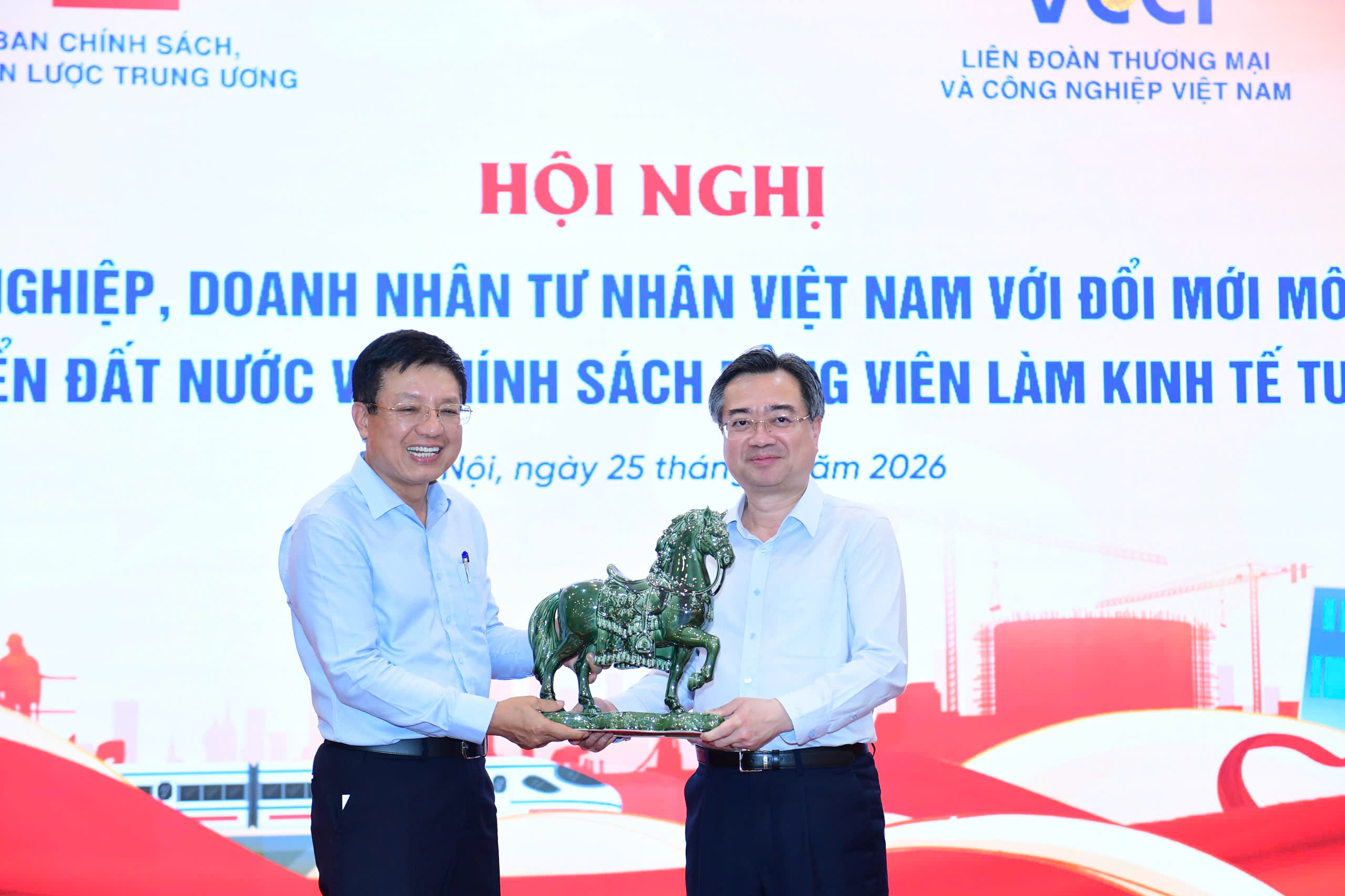
Concluding the conference, Mr. Nguyen Duc Hien, Deputy Head of the Central Policy and Strategy Commission, expressed appreciation for the responsible and constructive contributions from the private business community regarding the national development model and policies for Party members engaging in private economic activities.
He summarized key themes raised during discussions, including the need to reaffirm the role of the private sector as a primary driver within the new development model; foster leading enterprises; adjust approaches to supporting small and medium-sized enterprises; continue building a facilitating state with transparent, modern and internationally integrated institutions; adopt breakthrough institutional thinking; develop new perspectives on international integration and national intellectual capacity; address business challenges and experiences; and further discuss issues related to Party members participating in private economic activities.
He stated that following the conference, the organizing committee would review and incorporate appropriate recommendations into the development and completion of policy proposals and reports for submission to the Party Central Committee, contributing to the formulation of sound policies aligned with public interests and national goals of prosperity, strength, democracy, fairness and civilization.