VIETNAM CHAMBER OF COMMERCE AND INDUSTRY
Liên Đoàn Thương Mại Và Công Nghiệp Việt Nam
Tue, Jul 28, 2026, 16:17:00
Speaking at the Government Standing Committee’s Conference with the business community themed “Removing Bottlenecks – Unlocking Resources – Promoting Growth,” Assoc. Prof. Dr. Ho Sy Hung, Chairman of the Vietnam Chamber of Commerce and Industry (VCCI), emphasized that the Prime Minister, Deputy Prime Ministers, and members of the Government Standing Committee directly listening to the voices of all three business sectors — private, state-owned, and foreign-invested enterprises — at the same time sends a strong message: businesses are the central force driving growth, and the Government is committed to working alongside them to resolve challenges thoroughly.
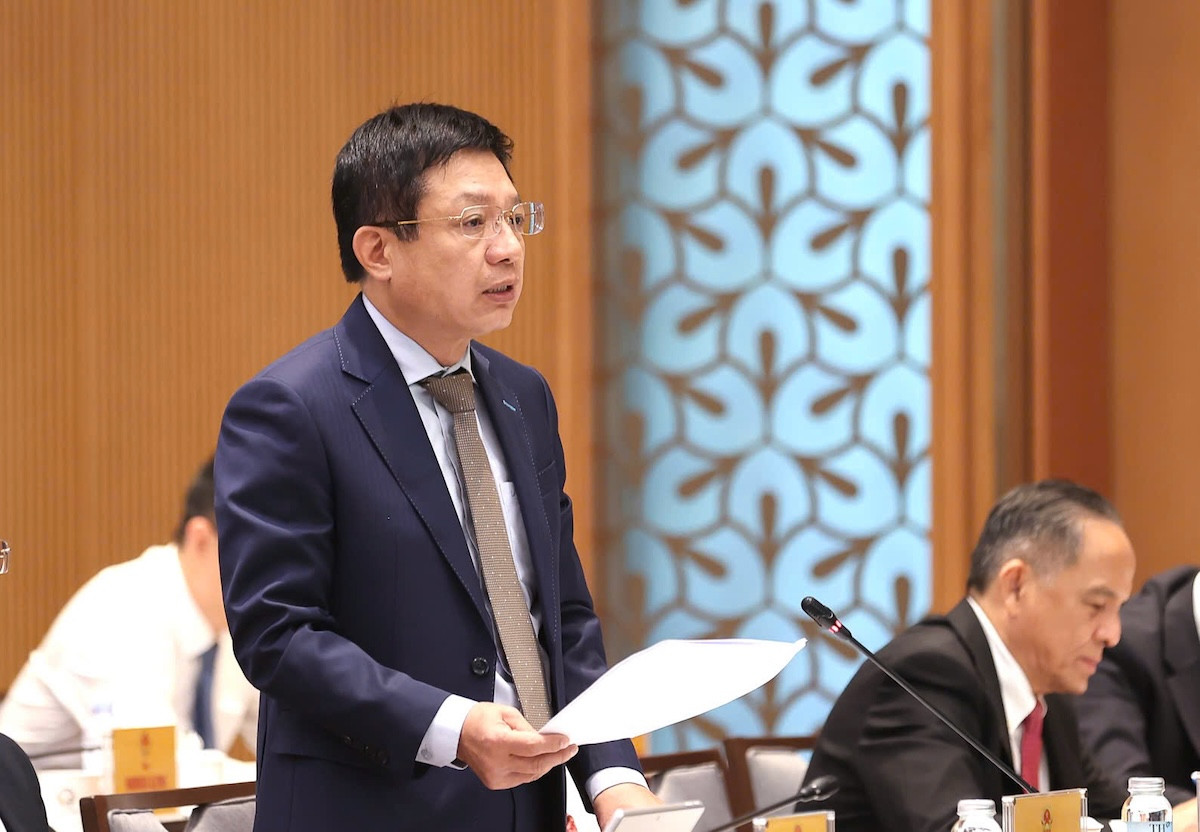
VCCI Chairman Assoc. Prof. Dr. Ho Sy Hung said that VCCI has consolidated nearly 900 opinions and recommendations from domestic and international businesses into 53 groups of obstacles across 10 areas. Photo: Nhat Bac
Five Key Issues of Concern for Businesses
Drawing on nearly 900 comments and recommendations from domestic and international corporations, enterprises, and business associations, VCCI has consolidated 53 groups of challenges across 10 areas, which have been compiled by the Ministry of Finance. At the Conference, VCCI Chairman Ho Sy Hung highlighted five major issues that remain key concerns for the business community.
First, institutional uncertainty has become a significant hidden cost for businesses. The most frequently reported bottleneck is the legal gap that occurs when old regulations are abolished before replacement regulations are issued, combined with frequent legal changes without clear transition roadmaps. Businesses face a difficult situation: if they comply, they may lack a clear legal basis; if they fail to comply, they risk being considered in violation.
Second, cash flows are being constrained at multiple stages, particularly in relation to value-added tax (VAT) refunds. Some enterprises have had more than VND 72 billion in input VAT refunds outstanding. Many businesses have become victims of partners who absconded but still had their VAT refund rights revoked despite legitimate transactions. The additional annual charge of 3.6% during periods when the State delays determining land prices is shifting administrative risks onto investors who are not at fault.
Third, the pre-inspection mindset continues to impose heavy compliance costs. Food products that already meet international standards are still being managed as high-risk categories. Imported chemicals are held up at ports because licensing timelines cannot keep pace with vessel arrival schedules, resulting in additional costs of up to USD 18,000 per day.
Fourth, the lack of legal coordination and overlapping regulations are creating repetitive administrative procedures. A single project may have to undergo investment, planning, land, construction, and environmental procedures simultaneously without a designated coordinating authority. Digital transformation in many areas remains insufficient in practice.
Fifth, resources for innovation have yet to be fully unlocked. There is still a lack of effective risk-taking mechanisms, while credit access remains heavily dependent on real estate collateral. In addition, issues related to value creation and branding are also among the concerns raised by the business community.
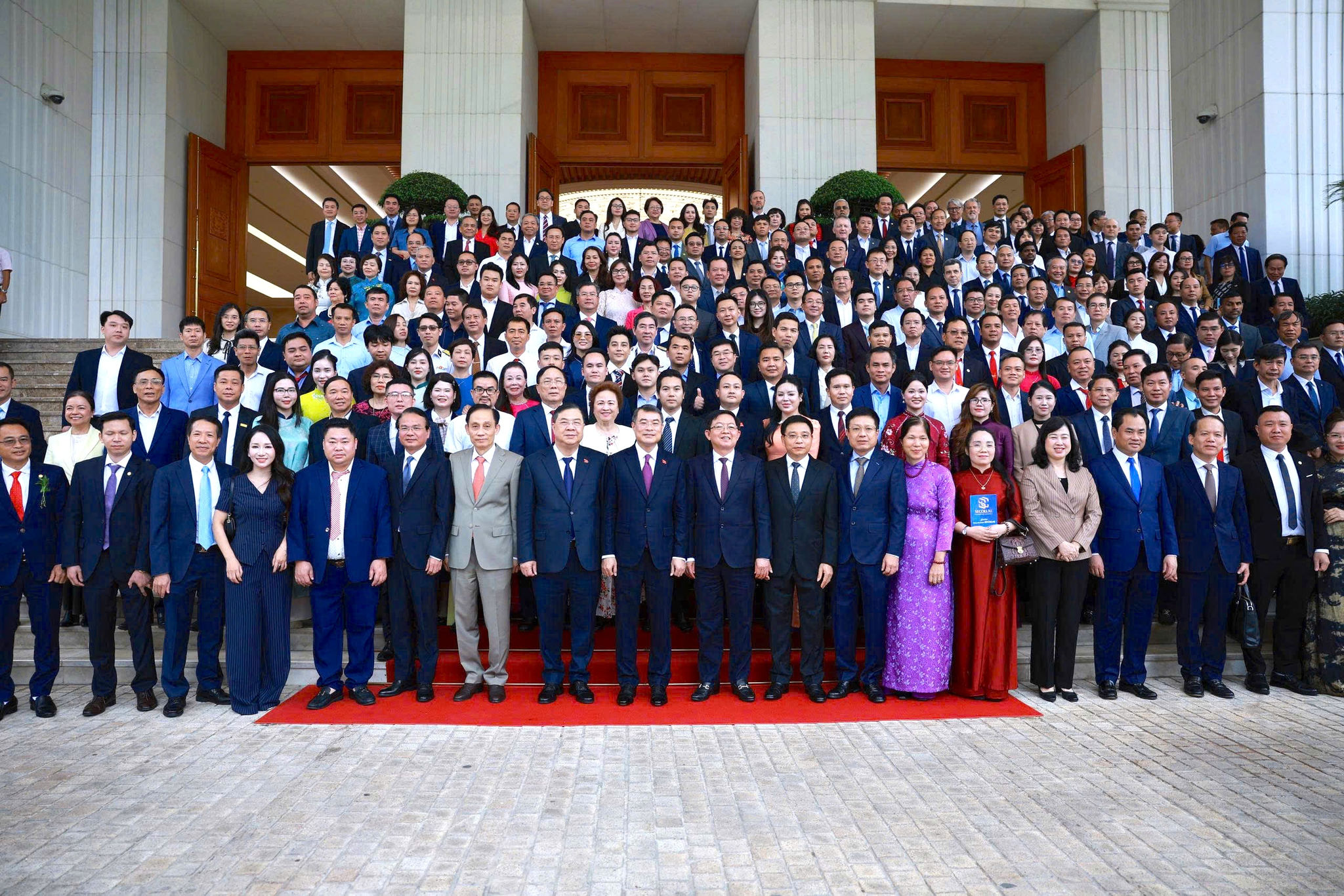
The Prime Minister and delegates attend the Government Standing Committee’s Conference with the business community themed “Removing Bottlenecks – Unlocking Resources – Promoting Growth.” Photo: Nhat Bac
In particular, Assoc. Prof. Dr. Ho Sy Hung emphasized that the 53 bottlenecks identified in VCCI’s report can be summarized into one key point: although resources can still be mobilized and put into circulation, overall output efficiency remains limited and continues to be eroded by the costs arising from uncertainty.
Notably, VCCI Chairman Ho Sy Hung said that the business community highly appreciates the constructive approach and prompt responses from ministries and sectors. To date, 51 out of 53 recommendations compiled by VCCI have received official feedback. The “20-day-and-night campaign” to finalize guiding documents, Resolution No. 10/2026 allowing existing regulations to remain effective to avoid legal gaps, along with various proposals promptly incorporated into new legislation — such as risk acceptance mechanisms and regulatory sandboxes under the Law on Science, Technology and Innovation — are highly commendable developments.
However, after carefully reviewing the responses, VCCI identified three major issues. First, a significant proportion of the feedback indicates that the obstacles do not lie in policy itself, but rather in the implementation process. A typical example is the requirement for businesses to submit paper documents in parallel. The Ministry of Finance frankly confirmed that such a requirement is not stipulated by law, and that the issue stems from the implementation practices of certain receiving agencies.
“This is a valuable and candid acknowledgment, but it also raises a major question: if the policy is already sound but businesses continue to face difficulties, then the solution lies in implementation rather than in issuing additional regulations,” Assoc. Prof. Dr. Ho Sy Hung noted.
Second, 17 recommendations remain at the stage of being “acknowledged and considered for further adoption.” For businesses, acknowledgment is necessary but not sufficient; what they expect is a commitment with clear accountability and a specific timeline.
Third, for cross-sectoral issues, each ministry provides responses only within its respective authority, while businesses still have to piece together separate solutions themselves and remain stuck at the points of coordination between ministries.

Prime Minister Le Minh Hung attends the Government Standing Committee’s Conference with the business community. Photo: VGP/Nhat Bac
Synchronizing Three Groups of Solutions
Based on this assessment, VCCI proposed focusing on three groups of solutions. The first group is not merely about revising policies, but ensuring effective implementation at the grassroots level, with clear roadmaps and specific outcomes.
The VCCI Chairman emphasized that sound policies only deliver value when they reach businesses through every official responsible for receiving and processing administrative procedures. Returning to the example of parallel paper submissions, this issue does not require amendments to any legal provisions, but rather an implementation monitoring mechanism at the receiving-agency level, including business satisfaction indicators, direct feedback channels, and sanctions for officials who improperly enforce regulations. Similarly, regarding tax refunds, while regulations already stipulate deadlines, it is necessary to publicly disclose the rate of on-time resolution by each agency and establish a “green channel” for enterprises with good compliance records.
Therefore, VCCI proposed concrete actions whereby each recommendation among the 53 groups of issues should be assigned to a lead agency, a responsible individual, a specific deadline, and measurable results, with progress publicly disclosed on a quarterly basis. VCCI is ready to coordinate with the business community to independently assess implementation progress.
The second group involves conducting dialogues with businesses based on common groups of issues, rather than addressing each recommendation separately.
The VCCI Chairman noted that many challenges are recurring across multiple industries and have been raised by various business associations. For example, issues related to the pre-inspection approach and risk classification in food safety management were raised by VBF, BritCham, AusCham, and AmCham; while legal gaps have been identified as the most frequently mentioned bottleneck across all recommendations. For such systemic issues, handling individual documents one by one would be both slow and inconsistent.
Accordingly, VCCI proposed organizing regular thematic dialogues on common issues, such as “Transitioning from Pre-inspection to Post-inspection and Risk-based Management” and “Unlocking Cash Flows for Businesses.” Each dialogue should be accompanied by a post-dialogue monitoring mechanism, enabling solutions for groups of businesses rather than individual enterprises. VCCI and the business community also proposed that ministries, sectors, and local authorities strengthen dialogue and engagement activities with businesses during the final six months of the year to listen to and promptly address difficulties and obstacles faced by the business community.
The third group focuses on comprehensively addressing challenges involving multiple ministries, sectors, and fields. This is considered the most difficult group and the area where businesses have faced prolonged difficulties, as no single ministry can resolve these issues independently. They involve various areas, including investment, land, planning, construction, and environmental regulations, as well as overlaps among different ministries.
VCCI hopes that each issue will have a single lead agency responsible throughout the entire process until the final outcome is achieved, following the principle of: one focal point, one procedure, and one result for businesses.
Alongside the three groups of solutions, VCCI proposed an approach to accelerate progress immediately by dividing the 53 recommendations into three processing tracks with different timelines. The first track covers issues where regulations are already sufficient and only implementation adjustments are required, which should be fully resolved within the quarter. The second track includes issues requiring amendments to legal documents, with a clear roadmap for completion within the year. The third track consists of complex cross-sectoral issues, which should be assigned to specialized task forces. This approach will allow businesses to see actual progress instead of waiting without knowing when solutions will be delivered.
In addition, VCCI proposed two groups of measures related to growth. First, it is necessary to create market opportunities for businesses, especially in the current context, by removing export-related procedures and expanding markets through free trade agreements to support exports.
Second, there should be mechanisms to establish genuine linkages. Currently, mechanisms for connectivity exist, and existing policies are not necessarily inappropriate, but they have not yet effectively supported such linkages.
Regarding Decree No. 132 on corporate income tax administration for related-party transactions, if tax management remains as stringent as it is today without stronger connections among enterprises, it will be difficult to achieve effective implementation or provide support for businesses operating in disadvantaged areas.
The VCCI Chairman affirmed that removing bottlenecks is a shared responsibility, and businesses cannot simply remain in the position of making requests. Therefore, state-owned enterprises, especially large corporations, should promote their role as “major buyers” and “large-scale procurers,” publicly disclose procurement needs, and create opportunities for private enterprises to participate in the value chains they lead.
Meanwhile, FDI enterprises should fully implement commitments on localization, technology transfer, and the development of Vietnamese suppliers, while expanding research and development (R&D) and innovation centers in Vietnam.
In particular, private enterprises need to proactively innovate technologies, standardize governance, enhance transparency and integrity, while large enterprises should lead and support small and medium-sized enterprises through supply chain linkages. The pangasius industry demonstrates that the key challenge is not production volume, but rather restructuring production organization and building a shared brand.
VCCI commits to further strengthening its role as a bridge for evidence-based policy advocacy, accompanying and supporting businesses in digital transformation, green transformation, and improving their capacity to meet international standards, while closely monitoring the progress and final outcomes of the recommendations raised at the conference.