VIETNAM CHAMBER OF COMMERCE AND INDUSTRY
Liên Đoàn Thương Mại Và Công Nghiệp Việt Nam
Mon, Sep 07, 2026, 16:40:00
 |
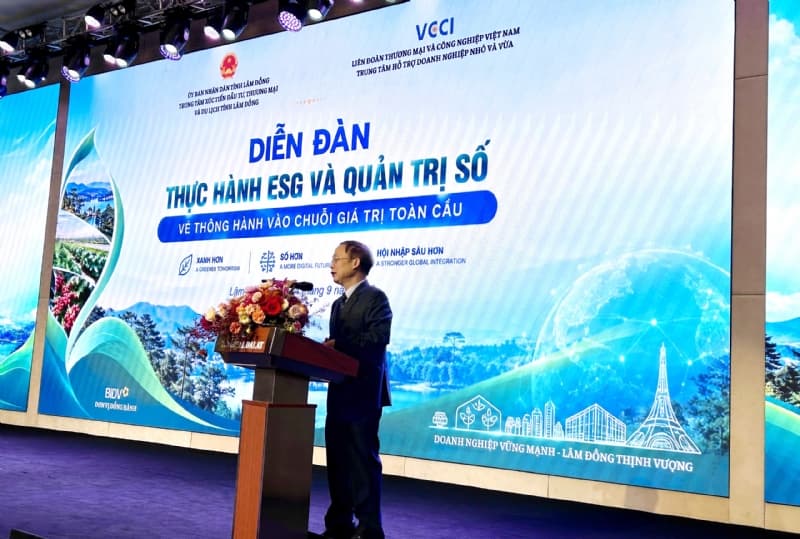
| VCCI President Ho Sy Hung delivers remarks at the 13th VCCI Executive Committee Conference |
Turning policy into practice
The report showed that, since the 12th Executive Committee Conference on April 2, 2026, the VCCI Standing Committee has focused on implementing its 2026 work program and putting central resolutions into practice, including Resolutions 57-NQ/TW, 59-NQ/TW, 66-NQ/TW, 68-NQ/TW and 41-NQ/TW.
In particular, VCCI has identified Resolution 68-NQ/TW on private sector development as a key focus for 2026. With the VCCI President participating in the National Steering Committee for Implementing Resolution 68, VCCI has launched action programs, policy dialogues and communications initiatives. The “Forum on Resolution 68,” organized in cooperation with VTV1, is one such initiative, aimed at strengthening policy dialogue and communications and creating further momentum for the business community.
In the first eight months of 2026, VCCI provided input on nearly 340 draft legal documents, mechanisms and policies related to business activities. It also compiled more than 1,000 recommendations and reports on business difficulties through its network of branches, associations and members nationwide.
VCCI also released the 2025 Vietnam Private Economy Report and the 2025 Provincial Competitiveness Index (PCI), continuing to provide a basis for identifying issues related to the business environment, local economic governance and private sector development.
Strengthening business support and connections
VCCI has continued to provide in-depth business support, focusing on digital transformation, green transformation, innovation and the application of artificial intelligence (AI). Since the beginning of the year, VCCI has organized about 580 training courses and programs for more than 39,000 businesses, reaching 97% of the annual target for the number of courses and 122% for the number of participants. Training covered corporate governance, finance, risk management, human resources, AI, e-commerce, ESG and new requirements arising from international integration. VCCI is also promoting the establishment of the VCCI National Council of Entrepreneurs and Startups, while continuing sustainable development programs through the Vietnam Business Council for Sustainable Development (VBCSD).

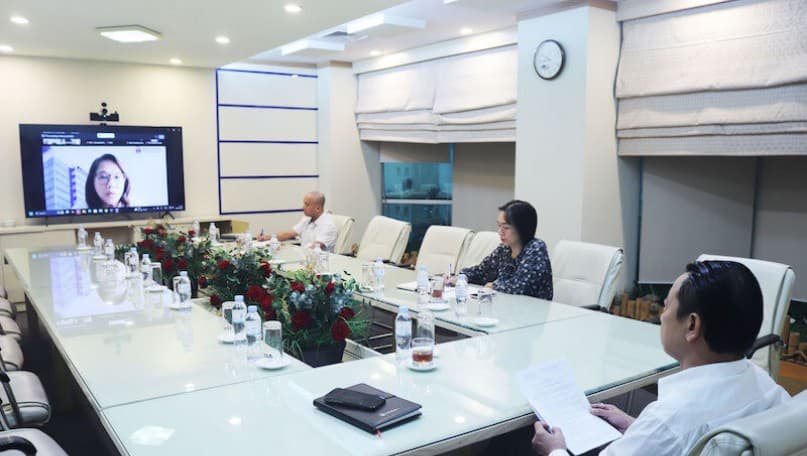
Delegates discuss institutional reforms and stronger business support at the event
VCCI’s membership development has been renewed to improve service quality and strengthen connections with the business community, with 450 new members added in the first eight months. VCCI has also continued its role as an employer representative, contributing to policies on labor, wages, social insurance and human resource development.
In trade and investment promotion and international integration, VCCI led and coordinated 170 conferences, forums and thematic discussions, as well as 270 trade and investment promotion programs in the first eight months of the year, focusing on connecting businesses, expanding markets and promoting international cooperation.
Notably, VCCI is actively preparing for Vietnam’s APEC Year 2027. As Co-Chair of the APEC Business Advisory Council (ABAC), VCCI is involved in developing initiatives to facilitate trade and investment and strengthen business connectivity across the region. According to the report, in 2027, VCCI will organize the 4th ABAC Meeting from November 5 to 7, 2027; ABAC Dialogue with APEC Economic Leaders; and the APEC CEO Summit.
Emphasizing the importance of external relations activities during Vietnam’s APEC Year 2027, VCCI Vice President Nguyen Quang Vinh said this is a key work program requiring thorough preparation and a strong sense of responsibility from the Executive Committee. “VCCI needs the active participation and support of Executive Committee members to successfully organize the 4th APEC Business Advisory Council Meeting from November 5 to 7, 2027,” he said.
Renewing governance and preparing for the eighth term
The conference also called for continued innovation in VCCI’s organizational structure, operating methods and internal governance. In recent years, VCCI has reviewed and reorganized its structure, completed its job-position scheme, revised internal regulations, and deployed an electronic document and management system connected to the national document interconnection platform.
VCCI President Ho Sy Hung stressed the need to update internal operating mechanisms, including using the e-office system to monitor activities and improve transparency across VCCI’s leadership bodies.
Besides technology adoption, the relationship and working methods between the Executive Committee and Standing Committee need to evolve to strengthen cohesion and promote each member’s responsibility. Favorable conditions should be created so that every Executive Committee member can contribute and participate effectively in activities serving the common interests of the business community.
In addition, the structure and criteria for Executive Committee membership, along with members’ rights and responsibilities, need to be carefully studied and discussed, as these areas could lead to changes in VCCI’s operating methods. Regarding preparations for the new term, VCCI President Ho Sy Hung said: “Adjusting the organizational structure and clearly defining the criteria and responsibilities of each Executive Committee member for the next term will be a turning point in VCCI’s transformation and the effectiveness of its engagement with economic sectors.”
According to Pham Dinh Doan, Chairman of Phu Thai Holdings Group, VCCI should strengthen coordination with the Government to produce substantive quarterly policy reports and organize thematic conferences on trade, tourism, services and supporting industries. On VCCI’s role, he said: “VCCI cannot do everything, but it plays an important role in advising the Party and Government on macroeconomic issues and putting forward key recommendations and proposals on behalf of the business community.”
Calling for institution-building to remain closely aligned with business realities, Nguyen Thi Nga, Chairwoman of the Board of Directors of BRG Group, Acting Chairwoman of the Vietnam Private Business Association (VPBA), called on VCCI to ensure that business voices are reflected in laws and policies in practical ways. She proposed that, in the next term, VCCI more effectively represent the interests of the business community and serve as a bridge between businesses and Party and government agencies through practical solutions.
Alongside the results achieved, the Standing Committee also acknowledged that some tasks and projects remain behind schedule, while coordination and follow-up in some areas have not been consistent. In the final four months of the year, VCCI aims to maximize completion of the targets in its 2026 work program and the remaining goals of the seventh term, while reviewing the 2021-2026 term, preparing tasks for the start of the eighth term, and focusing on organizing the 8th VCCI National Congress for the 2026-2031 term.
According to the draft Resolution of the 8th National Congress, VCCI’s new term will seek to improve the effectiveness of representation, protect legitimate rights and interests, and contribute to policy review, while promoting innovation, digital transformation and international integration. Three strategic breakthroughs have been identified: improving the business environment and contributing more deeply to institutional development; building a business culture linked to digital transformation, green transformation and innovation; and renewing the organizational model and strengthening VCCI’s institutional capacity.