VIETNAM CHAMBER OF COMMERCE AND INDUSTRY
Liên Đoàn Thương Mại Và Công Nghiệp Việt Nam
Wed, Sep 16, 2026, 14:51:00

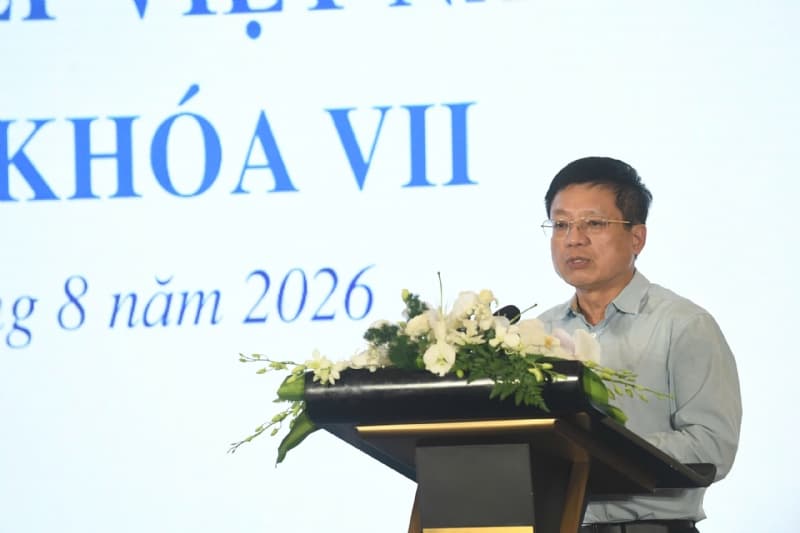
VCCI Vice President Nguyen Quang Vinh addresses the conference
At the VCCI Hanoi Regional Members Conference on September 8, members discussed the draft documents for the VCCI National Congress for the 202-2031 term and consulted on the selection of delegates to attend the congress.
Pham Ngoc Thach, Deputy Director of the VCCI Legal Department and a member of the Working Group of the Subcommittee on Documents for the eighth VCCI Congress, said the congress is not simply a routine transition between terms but a strategic transformation for VCCI. It aims to strengthen VCCI’s support for the Vietnamese business community in the nation’s new era of development. The new context places higher demands on economic institutions, the capacity of the business community, and VCCI’s role in representation and connectivity.
Key Improvements Needed
During the seventh term, VCCI commented on 2,250 draft legal documents, about 2.3 times the figure for the previous term, and compiled more than 5,700 business comments and recommendations for submission to competent agencies, an increase of 161%. VCCI also upgraded the Provincial Competitiveness Index (PCI) to version 2.0, released in May 2026, to measure governance quality under the new administrative structure, as the number of provinces and cities fell from 63 to 34. It also developed and published the Business Performance Index (BPI).
The draft documents also identify several areas requiring further improvement, including slower-than-expected growth in official membership and insufficiently distinct value for members. The target of establishing regional business councils in seven key economic regions has not been achieved. Business support activities have at times been fragmented, creating a need for more integrated and long-term models. Implementation of the two breakthroughs in digital transformation and business culture also needs to be translated into more regular and practical actions.

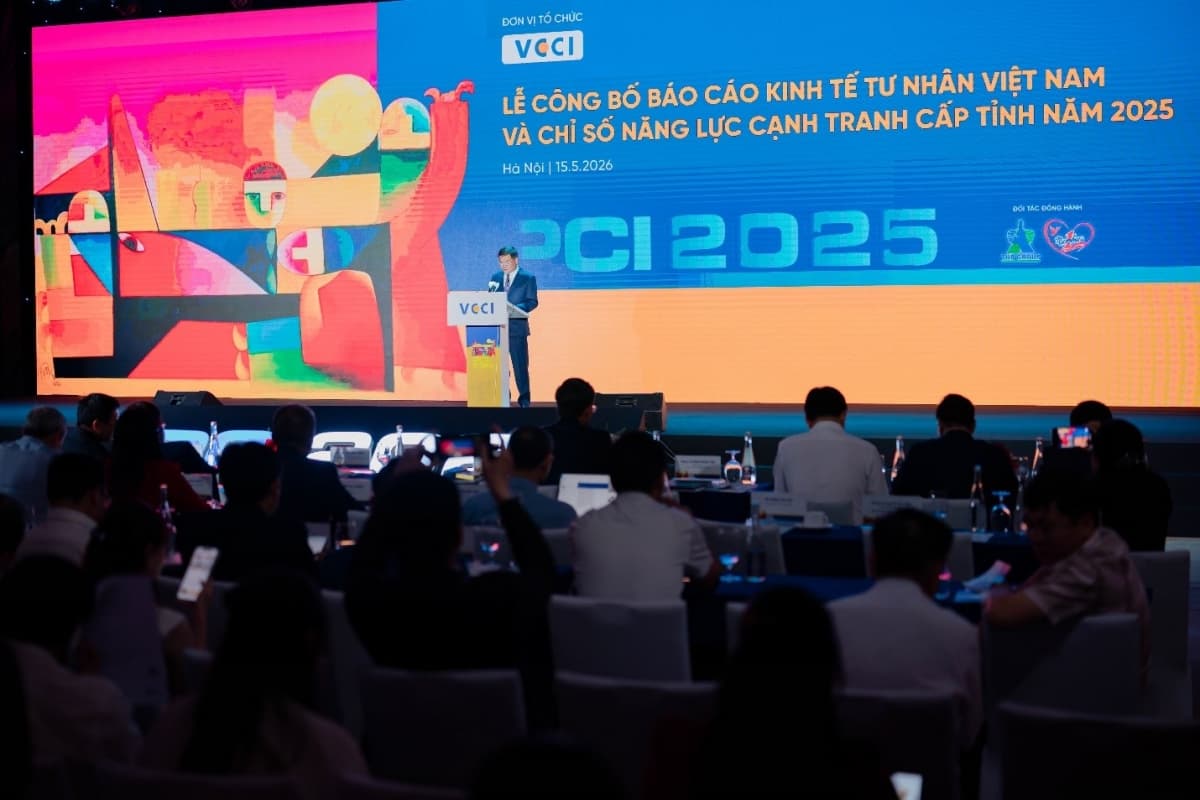
Overview of the VCCI Members Conference in Hanoi, September 8, 2026
The draft also identifies areas requiring improvement, including insufficiently focused forecasting and priority-setting; a lack of coordination among departments, units and branches; and uneven participation by some members of the Executive Committee.
Trinh Van Lau, Chairman of the Vietnam Pharmaceutical Companies Association (VNPCA), said VCCI’s science and technology activities remain limited, with no dedicated unit to support the business community in accessing funding and implementing science and technology tasks. He proposed that VCCI serve as a focal point for coordination with the Ministry of Science and Technology to promote the transfer of science and technology to businesses.
Le Thi Khanh Van, Vice Chairwoman of the Vietnam Association for Science and Technology Information, said science and technology have not been clearly reflected in VCCI’s review of its activities and future direction. She also proposed that VCCI pay greater attention to helping businesses access resources and develop science and technology.
VCCI Vice President Nguyen Quang Vinh said VCCI has coordinated with the Ministry of Science and Technology, its departments and various funds, but this coordination has not yet produced many visible, measurable results. He said science and technology are drivers of growth and that this area has been incorporated into the draft documents for the Eighth VCCI Congress, particularly through Resolution No. 57-NQ/TW.
Strategic Priorities for the New Term
The draft documents propose “Unity - Pioneering - Innovation - Development” as the action slogan for the eighth term, reaffirming VCCI’s role as the national organization representing the business community and its commitment to building a strong Vietnamese business community for a prosperous nation in the new era.
VCCI aims to support about 50,000 small and medium-sized enterprises in carrying out digital and green transformations; train about 6,000 chief executives through the “CEO Vietnam The New Era” program; support about 1,000 businesses in entering international markets; and organize at least 20 large-scale trade promotion programs and events each year. VCCI also aims to effectively implement five to 10 national-scale programs and projects; coordinate the training of high-tech human resources in semiconductors and artificial intelligence; and annually assess and publish the PCI and business environment indices, including the Business Performance Index (BPI) and Provincial Green Index (PGI). VCCI also plans to expand the application of the Corporate Sustainability Index (CSI) and build a unified member management system on a digital technology platform. In international integration, the Go Global Program is designed to support 1,000 businesses in entering international markets, while VCCI is expected to lead business activities during APEC Year 2027.

Delegates discuss and provide feedback on draft documents for the Eighth VCCI National Congress
Three strategic breakthroughs have been identified: promoting a favorable business environment and participating more deeply in improving the legal framework; strengthening business capabilities and business culture in connection with digital and green transformations; and renewing and upgrading VCCI’s organizational model, strengthening its institutional capacity, and shifting toward outcome-based management.
Nguyen Van, Vice Chairman of the Hanoi Supporting Industries Business Association (HANSIBA), said the documents should clearly identify bottlenecks in industrial production in general and supporting industries in particular; assess industrial development over the 40 years of Doi Moi (renovation); and set orientations for addressing difficulties and creating more opportunities for Vietnamese industrial businesses to expand production and operations. He proposed that the relevant content closely follow Resolution No. 68-NQ/TW, Resolution No. 57-NQ/TW and Resolution No. 10-NQ/TW.
Tran Manh Bao, Chairman of the Vietnam Seed Trade Association and Chairman of ThaiBinh Seed Group, said the VCCI Congress should not be limited to 450 official delegates and proposed broadening the composition of participants. He stressed the need for large enterprises to grow and create momentum for the economy.
Nguyen Thi Thu Thuy of Natuh Investment JSC proposed that VCCI should go beyond capacity building to create an environment where businesses can participate in green transformation and create value from Environmental, Social, and Governance (ESG) practices. She said ESG needs to move from indicators to practical implementation, while the member linkage model should focus on practical activities rather than simply establishing regional business councils.
According to Hoang Van Anh, Director of the VCCI Membership Department, the proposed plan includes 450 official delegates, including 95 delegates allocated automatically based on the organizational structure, 100 delegates selected through consultation with major business associations, and the remainder allocated to business representatives. The guidance documents set the delegate structure at about 50% representing business associations, 48% representing businesses, and 2% representing professional staff.
Alongside the draft documents, Pham Ngoc Thach presented the proposed amendments and supplements to the VCCI Charter. The amendments are required under Clause 3, Article 52 of Government Decree 126/2024 and also comply with Decision No. 118-QD/TW of the Party Central Committee Secretariat concerning associations assigned tasks by the Party and the State.
The amendments include adding the VCCI Standing Office, comprising the President and full-time Vice Presidents; regulating the number, standards, conditions, age limits and terms of office of key leaders in accordance with current Party and Government regulations and decisions by competent authorities; aligning the personnel process for key leadership positions; transferring the authority to elect the Inspection Committee, Head of the Inspection Committee and Deputy Head of the Inspection Committee from the National Congress of Delegates to the VCCI Executive Committee; and adding specific standards for Inspection Committee members to ensure professionalism, independence and objectivity.
Following the discussion, the VCCI Hanoi Regional Members Conference basically reached consensus on the draft documents for the congress and proposed that the Subcommittee on Documents incorporate members’ opinions on strengthening VCCI’s representative role and protecting the lawful and legitimate rights and interests of the business community; renewing membership affairs; improving the quality of participation in policy development and review; and supporting innovation, digital transformation, sustainable development and international integration.
The requirements raised by members show that the eighth term needs to continue improving VCCI’s representative role and turn its orientations on business support, participation in policy development and resource connectivity into more concrete and practical results.