VIETNAM CHAMBER OF COMMERCE AND INDUSTRY
Liên Đoàn Thương Mại Và Công Nghiệp Việt Nam
Thu, Oct 08, 2026, 16:01:00

Local residents and sanitation volunteers take part in a community cleanup campaign
Completing Infrastructure, Strengthening Environmental Practices
In 2026, Quang Minh continues to mobilize resources to renovate, expand and pave village roads and alleys. The commune aims to complete all planned routes in a coordinated manner by year-end. In particular, new-style rural development in the commune is shifting toward a more comprehensive approach. The goal is not only to improve village roads and alleys, but also to improve management quality, protect the environment, develop livelihoods and provide more convenient public services. At a 2026 meeting of the Quang Minh Commune People’s Council, the commune considered proposals on transport, drainage, wastewater treatment, ponds and lakes, parks, greenery, cultural spaces and digital transformation. Bringing these areas into the same development program reflects the need to create a coordinated living environment rather than investing in individual projects separately.
In addition, environmental protection is a prominent part of rural development in Quang Minh in 2026. The commune is implementing the “Green, Clean and Beautiful” urban living and “Green Weekend” campaigns, while organizing waste separation at source, inspecting waste collection and transportation, and addressing improperly located waste collection points. According to information released at a commune conference on September 18, 2026, six environmental sanitation campaigns attracted more than 5,130 participants. Models such as “Green House,” “Turning Waste into Money,” “Exchange Recyclables for Greenery” and “Youth Flag Roads - No-Waste Roads” are helping bring environmental protection activities to individual residential areas.
Quang Minh Party Committee Secretary Hoang Anh Tuan called for landscape preservation to become a regular task linked to building a civilized lifestyle, rather than being limited to campaign periods.
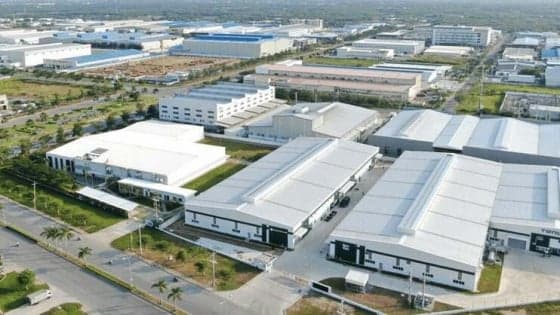
The commune also has industrial activities, so environmental conditions in residential areas must be considered in connection with production areas.

A view of a residential and urban development in Quang Minh Commune
Digital Transformation for Socioeconomic Growth
Digital transformation is part of new-style rural development in the new phase. In the first quarter of 2026, Quang Minh implemented tasks related to administrative reform, Project 06, the use of security surveillance cameras and improving management efficiency. The commune is also promoting the application of technology in production and business, e-commerce and cashless payments.
The value of digital transformation does not lie in the number of software applications or devices, but in the benefits they provide to residents. Procedures must become easier to complete, processing times must be shortened, planning information and project progress must be more accessible, and residents’ feedback must be forwarded to the appropriate agency and answered on time. These are practical criteria for assessing the quality of grassroots government.
For production households, cooperatives and business households, local authorities need to provide support in product promotion, electronic transactions, traceability and personal data protection. Support should address specific needs, include direct guidance and track results after training.
Quang Minh also has flower- and ornamental-plant growing areas and agricultural production models capable of generating high value. As agricultural land faces pressure from urbanization, an appropriate development direction is to increase value per unit of land, organize production according to planning and strengthen market linkages.
Hanoi’s direction for rural development, discussed in August 2026, emphasizes an ecological, circular and multi-value rural economy, with the application of science and technology, traceability and the development of value chains. For Quang Minh, this direction can be applied to flower and ornamental-plant products, safe agricultural products, experiential services and green spaces linked to village culture.
Clear Tasks, Measurable Results
The criteria for Hanoi’s new-style rural development communes for 2026-2030 took effect on September 7, 2026, covering planning, infrastructure, the rural economy, human resources, digital transformation, the environment, public administration and social welfare. The new framework requires local authorities to proactively review current conditions and develop appropriate plans and implementation roadmaps. Nguyen Dinh Hoa, Deputy Director of the Hanoi Department of Agriculture and Environment, requested that implementation plans focus on tasks that directly serve the program’s objectives and avoid spreading resources too thinly or creating overlaps.
For Quang Minh, the rural development plan needs to quantify results for each group of tasks. Infrastructure should be assessed based on connectivity and safety; environmental performance based on collection and treatment rates and the number of outstanding problem sites addressed; administrative reform based on processing times and satisfaction; and economic development based on job creation, increased product value and market expansion.
It is clear that new-style rural development in Quang Minh in 2026 has shifted more clearly toward improving governance and quality of life. When infrastructure, the environment, digital transformation and livelihoods are implemented under a unified plan, residents can see the results in their daily lives. This provides a foundation for the commune to develop in a green and sustainable manner.
|
This special section is presented in collaboration with the Hanoi Coordination Office for National Target Programs |