VIETNAM CHAMBER OF COMMERCE AND INDUSTRY
Liên Đoàn Thương Mại Và Công Nghiệp Việt Nam
Thu, Sep 03, 2026, 14:23:00
Continuing the agenda of the First Extraordinary Session of the 16th National Assembly, on the afternoon of August 21, National Assembly deputies held group discussions on the following: provisions on mechanisms and policies for projects involving the construction of sea-encroaching urban areas to be incorporated into the draft Law on Urban Development; the draft National Assembly Resolution on reductions in personal income tax and corporate income tax for individuals and enterprises; and the separation of the Ninh Thuan nuclear power project into independent projects.
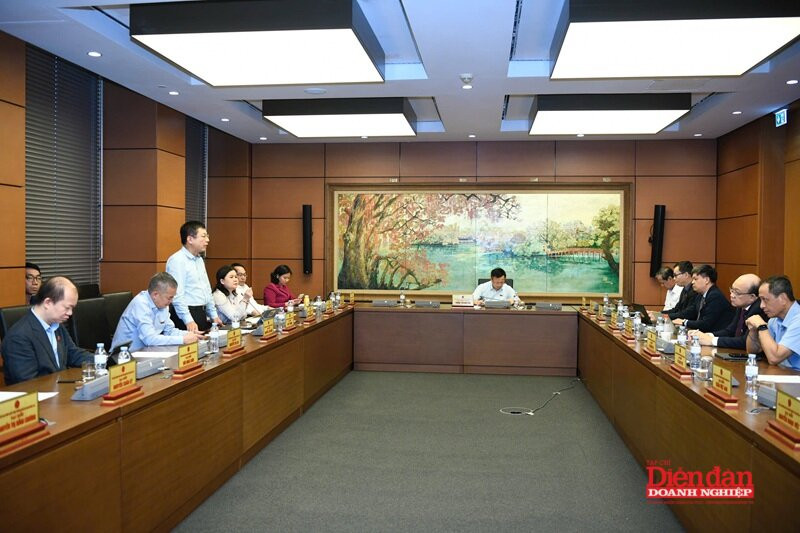
National Assembly deputies of the Hanoi National Assembly Delegation participate in the group discussion on the afternoon of August 21.
Commenting at Group 1 on the draft National Assembly Resolution on reductions in personal income tax and corporate income tax for individuals and enterprises, delegate Do Duc Hong Ha of the Hanoi National Assembly Delegation said he agreed with the Government’s submitted documents and the appraisal report of the reviewing agency, which he considered comprehensive and objective.
However, to further improve the Resolution, the delegate proposed, first, standardizing the terminology used to refer to taxpayers, ensuring consistency with the Law on Personal Income Tax and the Law on Corporate Income Tax, as well as compatibility with international commitments.
Specifically, regarding personal income tax, the delegate noted that Clause 1, Article 1 of the draft Resolution uses the term “income from business activities of resident individuals,” while the accompanying draft Decree defines the applicable entities as “business households and business individuals.” This creates inconsistency in legal terminology between the Resolution and its guiding Decree.
“Furthermore, under Clause 1, Article 2 of the current Law on Personal Income Tax, taxpayers are defined as resident individuals. The Law does not establish separate concepts of ‘resident business individuals’ or ‘resident business households.’ However, Clause 1, Article 3 provides that income from business activities is subject to tax, while Article 7 provides for personal income tax on income from business activities.”
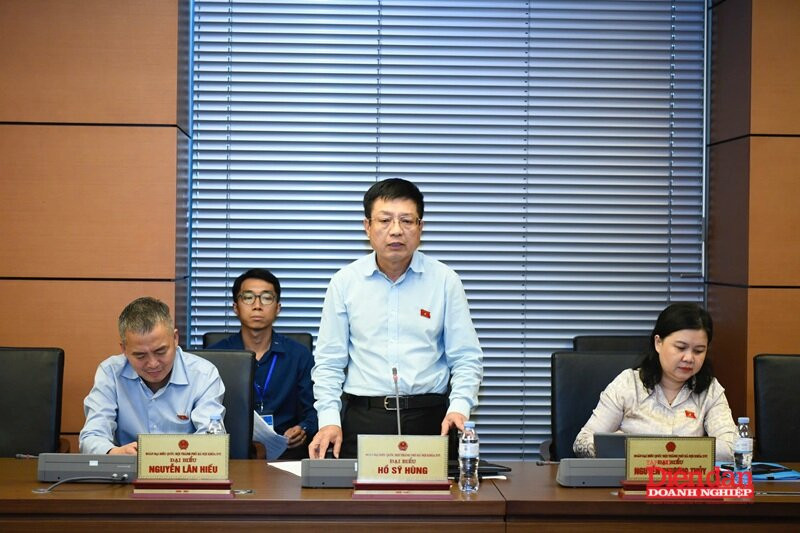
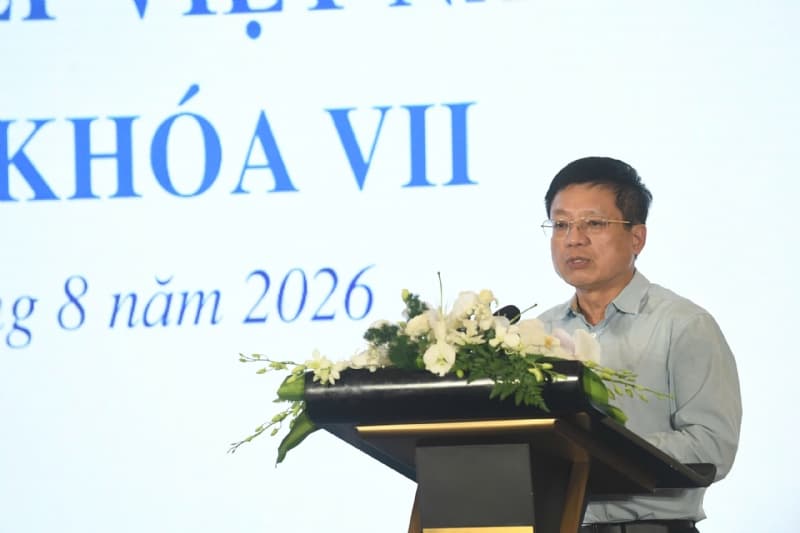
VCCI President Ho Sy Hung, a delegate of the Hanoi National Assembly Delegation, comments on the draft Resolution during the group discussion on the afternoon of August 21.
“To ensure consistency with the Law on Personal Income Tax while accurately covering the actual categories targeted by the Resolution, I propose retaining the phrase ‘income from production and business activities of resident business households and business individuals’ in both the Resolution and the Decree. This would help standardize drafting techniques while also adding a definition to clarify that the provision applies to both the declaration method and the presumptive tax method, in line with practical circumstances,” the delegate said.
In his second proposal, the delegate called for codifying the anti-tax avoidance mechanism under the Law on Corporate Income Tax and comprehensively addressing the policy gap in Clauses 1 and 2, Article 1 of the draft Resolution. Third, he proposed establishing an order of application for tax incentives to ensure the primacy of specific mechanisms under the Law on the Capital at Clause 2, Article 1 and Article 2 of the draft Resolution.
Also commenting on the draft National Assembly Resolution on reductions in personal income tax and corporate income tax for individuals and enterprises, Mr. Ho Si Hung, President of the Vietnam Chamber of Commerce and Industry (VCCI) and a delegate of the Hanoi National Assembly Delegation, expressed his support for the policy of reducing personal income tax and corporate income tax. He considered this a necessary and appropriate measure at the current stage to help address difficulties and stabilize production and business operations, particularly for small enterprises.
However, analyzing the effectiveness of the proposed measure in practical terms, VCCI President Ho Si Hung offered several assessments and proposed fundamental changes to the support mechanism.
Specifically, regarding the effectiveness of the proposed threshold, VCCI President Ho Si Hung noted that with the proposed annual revenue threshold of VND 10 billion, the measure would primarily cover very small enterprises. Based on preliminary calculations, if an enterprise operates efficiently with a profit margin of 10% (equivalent to VND 1 billion), after applying the 20% corporate income tax rate and a 30% reduction in the tax payable, the actual support received by the enterprise would amount to only around VND 60 million. The total support package is expected to be approximately VND 3.5 trillion.
“Although this figure is aligned with the policy objective, it would not create a sufficiently significant impact on enterprises’ operations in practice. Therefore, the focus should shift toward reducing value-added tax (VAT), rather than concentrating solely on corporate income tax reductions,” VCCI President Ho Si Hung emphasized.
Accordingly, the VCCI President proposed that the National Assembly consider reducing value-added tax (VAT) by 2%, similar to the reduction introduced last year. A VAT reduction would be a more comprehensive policy tool, as it would help lower product prices, stimulate consumer demand and, in turn, support inflation control. As market purchasing power increases, enterprises, particularly small and medium-sized enterprises, would have more continuous cash flow, enabling them to maintain operations and overcome capital-related difficulties.
In addition, emphasizing the importance of administrative procedure reform, the VCCI President noted that for small enterprises, the burden of tax declaration procedures can sometimes be greater than the financial pressure itself. He therefore proposed greater focus on simplifying procedures and ensuring consistency and transparency in determining tax liabilities. This would give enterprises greater confidence in conducting business and prevent situations in which tax liabilities are subsequently changed after declarations have already been submitted, thereby creating a more stable legal environment.
Regarding the proposal to separate the Ninh Thuan nuclear power project into independent projects, VCCI President Ho Si Hung also recommended clarifying the legal framework to avoid excessive procedures and repeated rounds of administrative processing. At the same time, flexible adjustments should be made in accordance with different funding sources and technical requirements to ensure synchronization among the projects and facilitate their implementation by relevant authorities.