VIETNAM CHAMBER OF COMMERCE AND INDUSTRY
Liên Đoàn Thương Mại Và Công Nghiệp Việt Nam
Fri, Dec 19, 2025, 10:25:00
The FTZ plan follows a new resolution recently endorsed by the parliament amending and supplementing some articles of its Resolution 98/2023 on piloting special mechanisms and policies for HCMC’s development, said Tran Luu Quang, Party chief of the city.
Alongside plans for an international financial center, the free trade zone is seen as a new and challenging initiative but one that could become a major driver for investment attraction and fiscal revenue, Quang told a city Party meeting on Monday, noting Cai Mep Ha’s strong maritime connectivity to global markets.

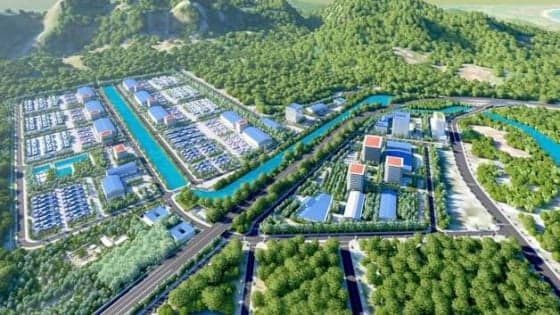
The Cai Mep Ha FTZ is planned in Tan Phuoc ward, the former Ba Ria-Vung Tau province, with a total area of nearly 3,800 hectares divided into three main functional zones.
Ba Ria-Vung Tau and Binh Duong provinces in July merged into HCMC to form the new HCMC.
The first zone, covering more than 1,735 hectares, will serve as a transport hub, incorporating existing seaports, the Cai Mep Ha upstream and downstream container terminals, inland waterway ports, and the Cai Mep Ha railway station on the Bien Hoa-Vung Tau rail line.
The second zone (over 1,178 hectares) will focus on logistics and industrial activities, including the southern area of the Cai Mep Industrial Park and the Cai Mep Ha logistics center.
The third zone (more than 850 hectares) will combine high-tech industry, urban development, and services, with an emphasis on green reserve planning and forest carbon credits.
Duong Ngoc Chau, Party chief of Tan Phuoc ward, said the Cai Mep Ha Free Trade Zone has a strategic location adjacent to the country’s largest deep-sea port cluster, with direct connections to key transport arteries such as National Highway 51 and port access roads.
The area also hosts critical national energy infrastructure, including an LNG terminal and gas pipeline systems, he noted.
These advantages provide a strong foundation to attract logistics operators, high-tech industries, and large-scale investment flows, Chau added.
Local authorities have identified four key tasks to prepare for the project: building public consensus; tightening land and site clearance management, and preventing illegal construction; developing a local workforce through vocational training in logistics, ports, mechanics and services; and advancing sustainable urban planning to create a high-quality living environment for experts and managers.
Tan Phuoc officials have also urged the city to accelerate inter-regional transport projects such as the Bien Hoa-Vung Tau Expressway, the Phuoc An bridge, and a rail link to the port, while encouraging private-sector participation in vocational training.
Beyond Cai Mep Ha, earlier planning by Ho Chi Minh City, Binh Duong and Ba Ria-Vung Tau before their merger also identified three other potential free trade zones at Can Gio, An Binh and Bau Bang, linked to port and rail infrastructure.
Free trade zones are designated areas that typically offer exemptions from import and export duties, simplified customs procedures, and flexible storage and processing rules, aimed at promoting international trade and attracting investment by lowering tariff and non-tariff barriers, officials said.
The parliament last Wednesday passed a resolution introducing a breakthrough legal framework for the HCMC FTZ model. Accordingly, the HCMC FTZ, set to be located in the Cai Mep Ha area, is established to pilot exceptional mechanisms and policies to attract investment, finance, trade, services, and high-quality human resources. Another content is the list of priority sectors and policies to attract strategic investors.