VIETNAM CHAMBER OF COMMERCE AND INDUSTRY
Liên Đoàn Thương Mại Và Công Nghiệp Việt Nam
Fri, Mar 21, 2025, 07:36:00
General Secretary To Lam recently worked with the Central Economic Committee and set the following goals: Reduce at least 30% of administrative procedure processing time; at least 30% of business costs, especially customs, regulatory compliance costs, informal costs, abolish at least 30% of unnecessary business conditions; strive for Vietnam's investment environment to be in the Top 3 of ASEAN within 2-3 years.
Regarding this content, Investor e-Magazine interviewed Mr. Dau Anh Tuan, Deputy Secretary General, Head of the Legal Department of the Vietnam Chamber of Commerce and Industry (VCCI)
Important lessons on reform thinking and policy implementation
Sir, the Party and Government leaders are urgently and resolutely introducing policies and guidelines with a strong reform spirit, creating breakthroughs in improving the business environment and developing enterprises. This spirit is very similar to the late last century, especially when we built the Enterprise Law 1999. What was your impression of that period?
Mr. Dau Anh Tuan: The period of building and implementing the Enterprise Law 1999 was an important turning point in reforming the business environment in Vietnam. At that time, the spirit of innovation was very strong, with the goal of removing unnecessary barriers, granting freedom of business to enterprises and promoting the development of the private sector. The policy of "eliminating sub-licenses" has created a breakthrough change, making it easier for enterprises to enter the market.
The most profound impression of this period is the determination in the actions of the Government and the head of the Government. The reduction of hundreds of business conditions and the simplification of procedures for establishing enterprises not only demonstrate the determination to reform but also create great confidence for the business community. The number of newly established enterprises has increased sharply, reflecting the positive impact of a more open business environment. In addition, the 1999 Enterprise Law not only has legal significance but also demonstrates a pioneering reform mindset, laying the foundation for subsequent reforms, spreading to many other areas. This period also witnessed a significant change in the way the state manages, emphasizing the freedom of business, people are allowed to do what the law does not prohibit, shifting from pre-control to post-control... This helps to minimize unnecessary administrative intervention in business operations. This is an important lesson in reform thinking and effective policy implementation...

The 1999 Enterprise Law and its implementation emphasize the freedom of business, people are allowed to do anything that is not prohibited by law. Photo: PLVN
But then, this spirit has waned and some experts compare the reduction of business conditions to "cutting off Pham Nhan's head", that is, every time a business condition is cut, a few more business conditions "grow". Along with that, costs related to businesses also increase. What do you think is the main reason?
Mr. Dau Anh Tuan: The stagnant reform spirit and the phenomenon of "cutting off Pham Nhan's head" in cutting business conditions can stem from many causes. One of the main reasons is the local interests of some management agencies. Business conditions are often linked to management power and economic interests, so even though some conditions are cut, new regulations are added to maintain control. This leads to a situation of "reduce one, grow three", reducing the effectiveness of reforms.
In addition, the trend of increasing costs related to enterprises also comes from the lack of uniformity in policy implementation between levels of government. Although some legal regulations have been amended in a more open direction, the way they are implemented creates new barriers. In addition, legal compliance costs, costs from inspections, audits or informal costs are still a heavy burden for enterprises.
According to the latest survey results of VCCI, many enterprises still reflect the situation of complicated business conditions, cumbersome administrative procedures and high informal costs. In particular, in the context of many economic fluctuations, the biggest difficulties of enterprises today lie not only in the legal environment but also in the ability to access capital, find markets and maintain operations in increasingly fierce competition. Small and medium-sized enterprises are under greater pressure due to their lower ability to adapt to the costs and risks arising from policies. To overcome this situation, there needs to be closer supervision in the policy-making process, ensuring the reduction of business conditions in reality, avoiding changes in the form of control. At the same time, it is necessary to continue reforming administrative procedures, increasing transparency and reducing informal costs to create a truly favorable business environment for enterprises.
Management thinking must change from control to support business development
In a recent working session with the Central Economic Committee, General Secretary To Lam set out very specific goals on reducing business costs, compliance costs, informal costs, and eliminating business conditions... According to him, in the current context, are these goals feasible and what are the necessary and sufficient conditions to achieve this goal?
Mr. Dau Anh Tuan: The goal of reducing business costs, compliance costs, administrative procedure costs, and eliminating business conditions that General Secretary To Lam set out is a particularly important direction to improve the business environment. The feasibility of this goal depends on many factors, especially political determination, monitoring mechanisms, and synchronous coordination among state management agencies.
We already have political determination, as is clear from the conclusions of the leaders of the Party and State. The important thing in the coming time is the implementation plan.
It is necessary to ensure that the reduction of business conditions is not just a formality but actually facilitates businesses. This requires a thorough review of the entire regulatory system, avoiding the situation of "cutting one, growing three". At the same time, it is necessary to have the participation of the business community and independent organizations in the process of assessing the impact of new policies.
It is also important to change the management mindset from control to supporting business development. Reducing compliance costs is not simply cutting procedures but also requires applying technology, digitizing processes, reducing direct contact between businesses and management agencies to limit informal costs. In addition, there needs to be an effective monitoring mechanism to ensure that reforms are implemented in practice, avoiding the situation of "hot above, cold below".
If the above solutions are implemented synchronously, the goal of reducing business costs and abolishing business conditions is completely feasible, creating great motivation for businesses to develop and contribute to economic growth.

Visiting and working with the Central Economic Committee, General Secretary To Lam suggested many contents, asking the Central Economic Committee to focus on in-depth and comprehensive research to advise and propose to the Central Committee in the coming time - Photo: VNA
General Secretary To Lam also proposed the goal of striving for Vietnam's investment environment to be in the Top 3 of ASEAN within 2-3 years. In your opinion, is this goal too much? What is the most important factor?
Mr. Dau Anh Tuan: According to the old assessment method of the WB in Doing Business, in ASEAN, Vietnam ranked 5th. Currently, Vietnam is among the 50 economies assessed in the "Business Ready 2024" (B-READY) Report of the World Bank (WB). In the ASEAN region, Vietnam ranks 4th, after Singapore, Malaysia and Thailand.
The goal of entering the Top 3 ASEAN in the next 2-3 years is ambitious but not impossible, if there is strong determination to reform and effective implementation. Countries such as Malaysia and Thailand have a stable business environment, Indonesia and the Philippines are also promoting reforms to attract investment. Therefore, to quickly move up the rankings, Vietnam needs a breakthrough strategy, focusing on areas that have a great impact on competitiveness.
The most important factor to achieve this goal is institutional reform and improving the effectiveness of policy implementation. This includes substantially reducing unnecessary business conditions, simplifying administrative procedures, reducing compliance costs and increasing transparency in state management. At the same time, improving infrastructure, improving the quality of human resources and promoting digital transformation also play an important role in creating a more attractive investment environment.
If Vietnam implements the above solutions synchronously with high determination, the possibility of reaching the Top 3 ASEAN in the investment and business environment is completely feasible, contributing to enhancing the country's economic position in the international arena.
Strengthening the voice of businesses and investors
On the part of businesses and investors, what advice do you have to contribute to improving the business environment?
Mr. Dau Anh Tuan: To contribute to improving the business environment, businesses and investors not only need to adapt to policy changes but also proactively participate in the reform process.
One of the most important things is to strengthen the voice of businesses through industry associations and representative organizations, to reflect practical difficulties and propose practical solutions to management agencies.

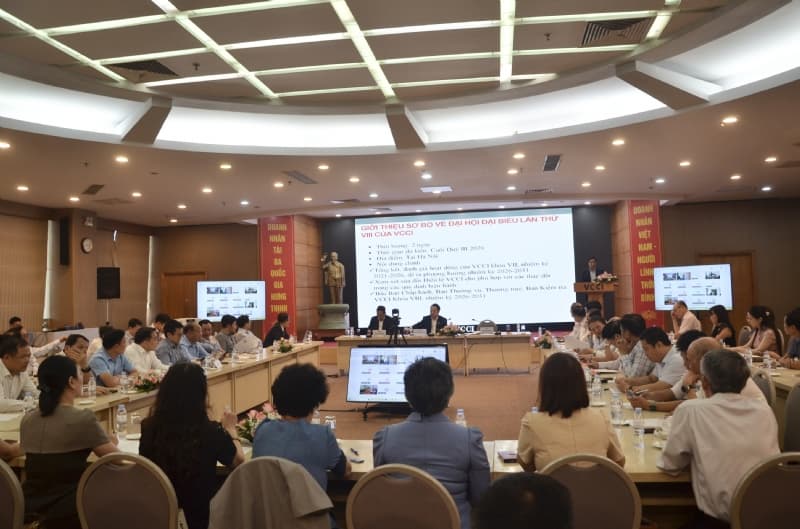
Strengthening the voice of enterprises through industry associations, representative organizations... Photo: NDT
Besides, enterprises need to improve their capacity to comply with the law and manage risks, especially in the context of rapidly changing regulations. Proactively applying technology, digitizing processes, and being transparent in operations not only helps reduce compliance costs but also enhances competitiveness.
In addition, investors need to have a long-term strategy, not only looking at short-term incentives but also need to assess the overall stability of the business environment and the adaptability of enterprises. Close cooperation with management agencies to ensure transparency and promote reforms that benefit both enterprises and the economy is a key factor in creating a more sustainable and attractive business environment.
Thank you very much!