VIETNAM CHAMBER OF COMMERCE AND INDUSTRY
Liên Đoàn Thương Mại Và Công Nghiệp Việt Nam
Mon, Jan 26, 2026, 15:49:00
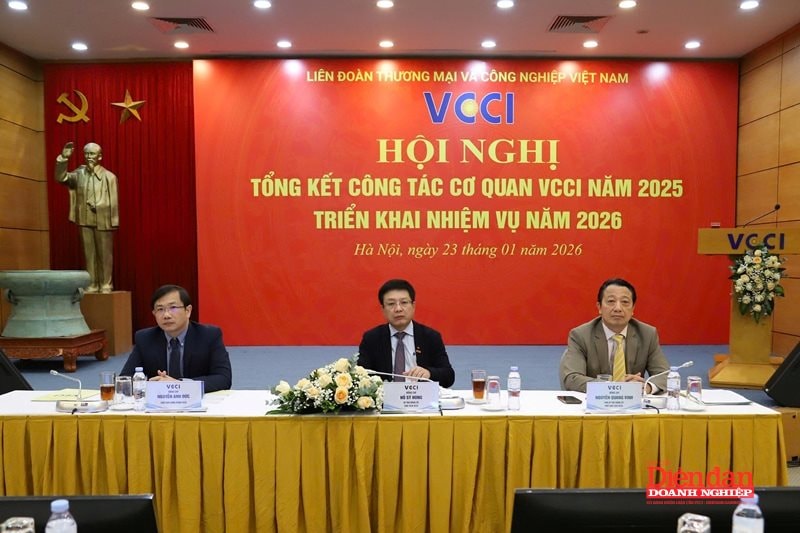 On the afternoon of January 23, VCCI organized a conference to review its work in 2025 and outline orientations and tasks for 2026.
In his opening remarks at the Conference, Assoc. Prof., Dr. Ho Sy Hung, Secretary of the Party Committee and President of the Vietnam Chamber of Commerce and Industry (VCCI), stated that 2025 was a year of particularly important significance – a year of streamlining and a year of pillar decisions to enable the country to move forward into a new era.
“For VCCI, 2025 was a real ‘trial by fire’, as we carried out the most extensive restructuring ever while still having to ensure the fulfillment of the targets set out in the Resolution of the 7th VCCI National Congress,” President Ho Sy Hung shared.
According to President Ho Sy Hung, in terms of fulfilling political tasks and policy consultation, in 2025 VCCI’s role as a “bridge” was clearly affirmed, as it contributed comments on 446 draft legal normative documents, achieving 106% of the plan.
Beyond the numbers, VCCI closely followed “hot” issues such as the Law on Value Added Tax and the Land Law. In particular, VCCI’s voice created an immediate impact, exemplified by Official Dispatch No. 63/CĐ-TTg of the Prime Minister issued right after VCCI announced the PCI and PGI 2024 indices.
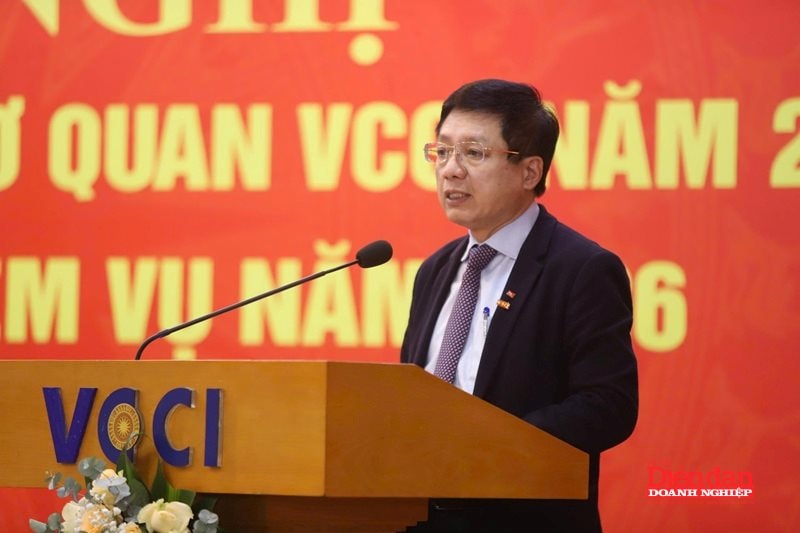
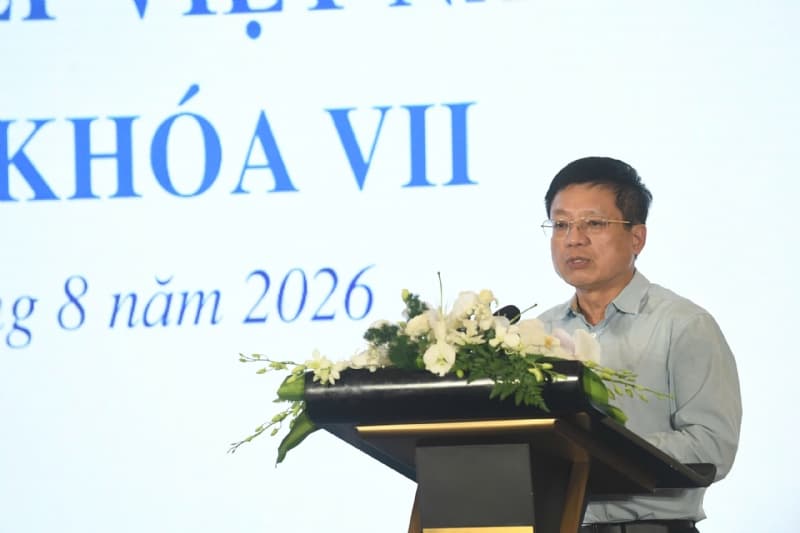
Assoc. Prof., Dr. Ho Sy Hung, Secretary of the Party Committee and President of VCCI, delivering the opening speech at the Conference.
“This proves that what VCCI does is substantive and reflects the real pulse of the business community,” President Ho Sy Hung emphasized.
At the same time, the President of VCCI noted that in terms of business support and innovation promotion, in 2025 VCCI strongly shifted toward supporting enterprises in the digital era. With 821 training courses for more than 46,000 business participants (an increase of 43% compared to 2024), VCCI truly accompanied enterprises in applying AI, digital transformation and implementing green commitments (ESG, Net Zero). Programs such as the “Forum 68” and “Entrepreneurs’ Café” have become established brands, creating close connections between the Party, the State and the business community.
Regarding VCCI’s position and external relations, a notable highlight in 2025 was the image of a marching bloc of 170 exemplary entrepreneurs at the ceremony commemorating the 80th anniversary of the founding of the country. That image affirmed the position of entrepreneurs as “peacetime soldiers”.
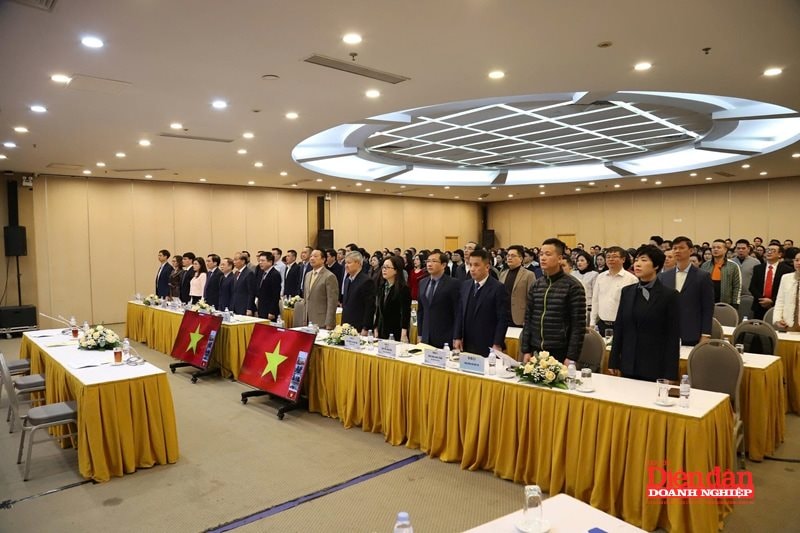
Delegates performing the flag-saluting ceremony at the Conference
On the international stage, the successful organization of ABAC III Conference with the attendance of the President of the State, along with MOU signing activities in the Republic of Korea, Algeria, South Africa and other countries, enhanced VCCI’s prestige and opened new doors for Vietnamese goods to reach global markets.
Regarding internal renewal and streamlining of the organizational apparatus, in 2025 VCCI took a decisive step by reducing the number of units from 34 to 24. The merger of branches and centers was not merely a reduction in numbers, but a move to concentrate resources and enhance professionalism.
Alongside the achieved results, President Ho Sy Hung also called for a serious assessment of limitations and existing issues, in order to change the mindset from “supporting” to “serving” enterprises in the most professional manner.
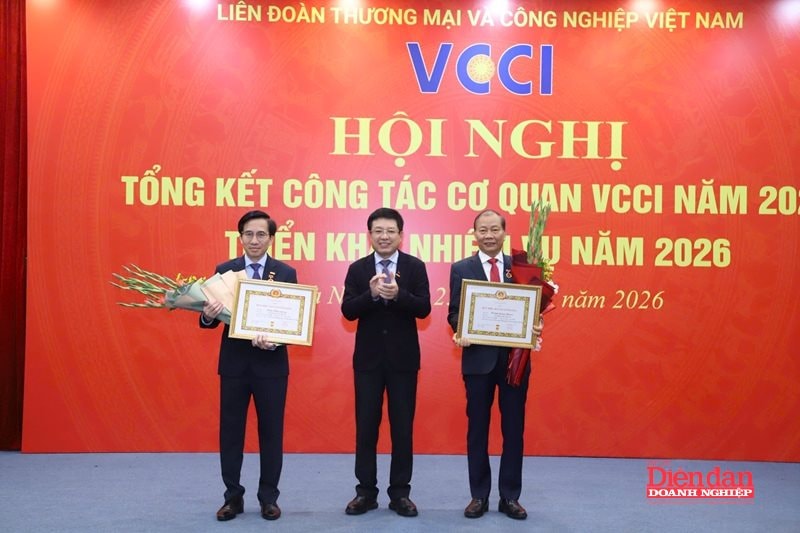
At the Conference, Assoc. Prof., Dr. Ho Sy Hung, Secretary of the Party Committee and President of VCCI, awarded Party membership badges to Vice President of VCCI Hoang Quang Phong and Deputy Secretary General, Head of the Organization and Personnel Department Phan Hong Giang.
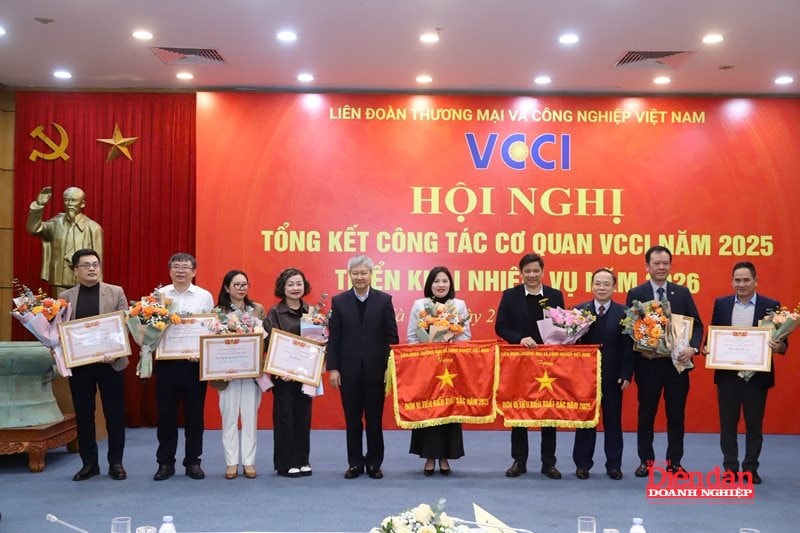
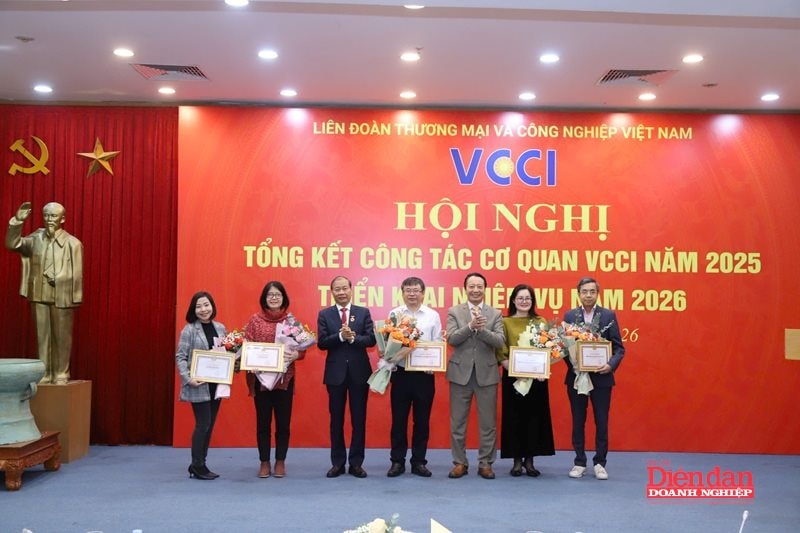
The Conference also announced decisions and carried out commendation activities for collectives and individuals with outstanding achievements in 2025.
In the Report on the Summary of VCCI’s Agency Activities in 2025 and orientations and tasks for 2026, the Standing Board assessed that the key and focal tasks of VCCI in 2025 were basically completed as planned, in accordance with assigned functions and duties, and aligned with the objectives and targets set out in the Resolution of the 7th VCCI National Congress.
All areas of work were implemented comprehensively, ensuring the completion of regular tasks as well as additional assigned tasks; the quality of activities was consolidated and enhanced; many new and innovative activities were implemented and delivered practical results. During implementation, activities were updated and aligned with important contents of the “four pillar resolutions” for national development. Key operational indicators recorded growth compared to 2024, with many exceeding the set targets.
Typical basic indicators include: contributing comments on 446 draft legal documents and organizing 52 seminars, conferences and policy dialogues with more than 5,300 business participants (achieving 167% of the planned target); organizing 43 outbound delegations with 271 Vietnamese enterprises to survey markets, attend international conferences and seek investment and business opportunities, representing a 13% increase compared to 2024 in terms of participating enterprises.
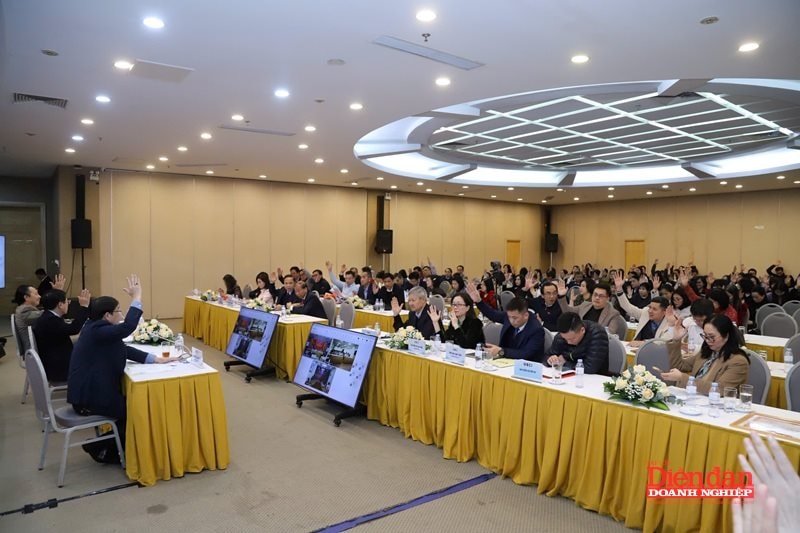
VCCI organized receptions and working programs for 213 inbound delegations with nearly 1,700 foreign enterprises to exchange, survey markets and enhance business cooperation with Vietnamese enterprises, exceeding the planned targets, with a 32% increase in the number of delegations and a 15% increase in the number of enterprises compared to 2024; organized 227 trade and investment promotion conferences and seminars (including online events) by thematic areas with more than 26,300 business participants, an increase of 2% compared to 2024.
Regarding leadership and management, the Standing Board and leaders of units ensured democracy and transparency, implemented the principle of “collective leadership with individual accountability”, and upheld the role and responsibility of heads of units.
In 2025, the Standing Board promptly directed the supplementation of several activities in line with the directions and orientations of the Party and the State, and implemented important resolutions of the Politburo, the National Assembly and the Government on enterprise development and the private economy.
Organizational and personnel work and apparatus consolidation were implemented in compliance with prescribed procedures; training and capacity building for staff continued to receive attention. The implementation of internal regulations and working rules contributed to improving organizational discipline awareness among staff and employees, enhancing professionalism in working styles; coordination among units within the system showed positive improvements.
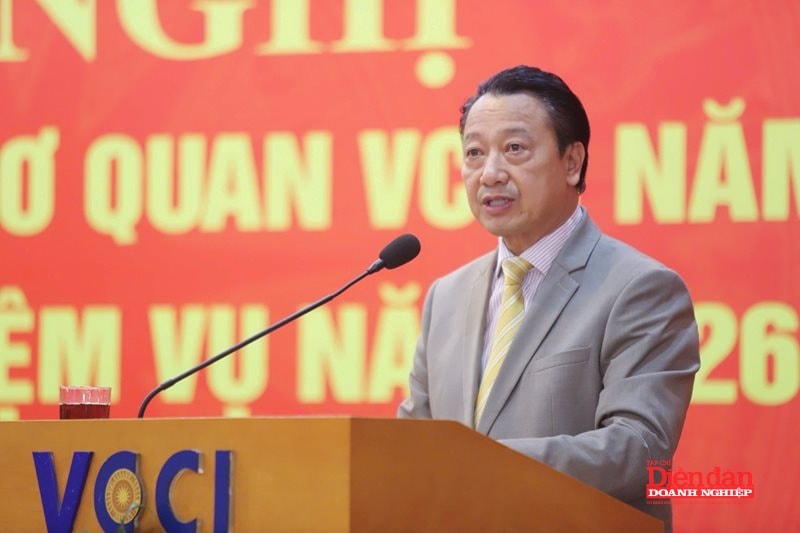
Vice President of VCCI Nguyen Quang Vinh launching the emulation movement for 2026 at the Conference.
Financial management, asset management and office administration were gradually standardized through the development of new regulations and rules. The livelihoods of staff and employees were ensured.
Alongside the positive results achieved, the Report on the Summary of VCCI’s Agency Activities in 2025 and orientations and tasks for 2026 also pointed out existing shortcomings, limitations and their underlying causes. On that basis, tasks and solutions for 2026 were proposed.
Specifically, regarding political tasks, in 2026 VCCI will continue to implement political tasks in line with the key priorities identified in the Resolution of the 7th VCCI National Congress. The Standing Board will advise the Executive Committee to develop the 2026 Working Program, continuing to adhere to six groups of key tasks and solutions, striving to meet and exceed the targets set at the beginning of the term.
Some specific tasks and solutions include: continuing to promote the implementation of resolutions of the Party, the National Assembly and the Government; the Resolution of the 14th National Party Congress; the Resolution of the 7th VCCI National Congress; particularly the pillar resolutions including Resolution No. 57-NQ/TW of the Politburo on promoting science, technology and innovation; Resolution No. 59-NQ/TW on proactive and deep international integration; Resolution No. 68-NQ/TW on strong development of the private economic sector; Resolution No. 66-NQ/TW on comprehensive reform of law-making and law enforcement; and Resolution No. 41-NQ/TW on building and promoting the role of entrepreneurs in the new period.
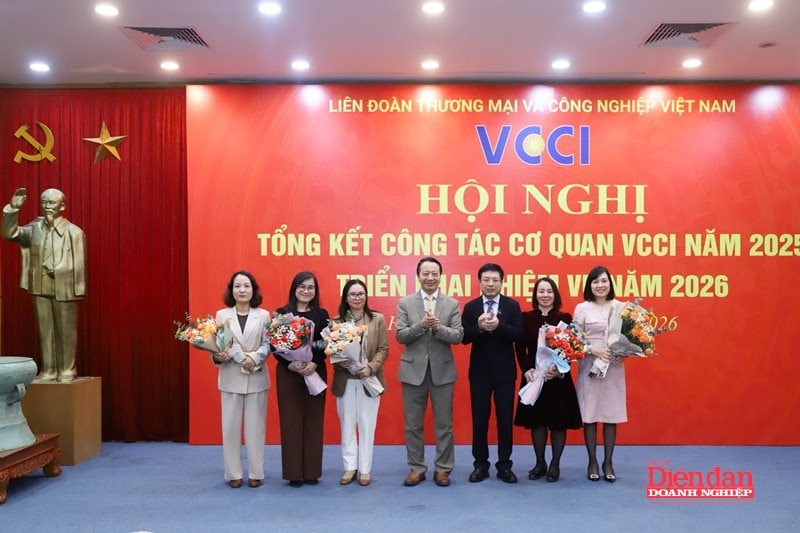
The People’s Inspection Board for the 2026–2028 term was elected and introduced at the Conference.
Regarding VCCI’s agency work, in 2026 the Standing Board will continue to promote strengths and gradually address the shortcomings and limitations identified, striving to build an effective VCCI agency system that fulfills political functions and tasks assigned by the Party, the State and the 7th Congress; closely supervise and urge units to accelerate implementation and strive to meet and exceed targets set at the beginning of the term; strengthen internal unity, promote collective strength and intelligence, practice democracy, and demonstrate consistency and cohesion in leadership and management, based on the principle of “collective leadership with individual accountability”; and enhance decentralization and delegation of authority.
The Standing Board will advise the Executive Committee on organizing the implementation of the 2026 Working Program; monitor and review the implementation of the full-term program, striving to achieve targets set from the beginning of the term; develop plans and successfully organize the 8th VCCI National Congress for the 2026–2031 term; review and evaluate the implementation of cooperation agreements with domestic and international partners, projects and programs to enhance efficiency in resource utilization and avoid waste.
To further improve operational effectiveness, the Conference also heard presentations from agencies and units under and affiliated with VCCI.
In addition to the above contents, the Conference announced decisions and carried out commendation activities for collectives and individuals with outstanding achievements in 2025; elected and introduced the People’s Inspection Board for the 2026–2028 term; and launched the emulation movement for 2026.
In his closing remarks, President Ho Sy Hung stated that the Conference played an important role in reviewing the past year and setting directions for the new year.
Highlighting the contents and operational objectives for 2026, President Ho Sy Hung emphasized the role of plans and targets in the activities of agencies and units under and affiliated with VCCI, while providing operational orientations for 2026. He also expressed expectations that plans and targets for 2026 would undergo meaningful changes, become more substantive, and deliver the best possible results.