VIETNAM CHAMBER OF COMMERCE AND INDUSTRY
Liên Đoàn Thương Mại Và Công Nghiệp Việt Nam
Mon, Jun 15, 2026, 17:52:00
On 8 June 2026, at the headquarters of the Vietnam Chamber of Commerce and Industry (VCCI), Vice President Nguyen Quang Vinh received and held discussions with a high-level Cambodian business delegation led by Neak Oknha Kith Meng, President of the Cambodia Chamber of Commerce and Chairman of ASEAN-BAC Cambodia. The Cambodian business delegation visited Vietnam while accompanying the Prime Minister of the Kingdom of Cambodia on his official visit to Vietnam.
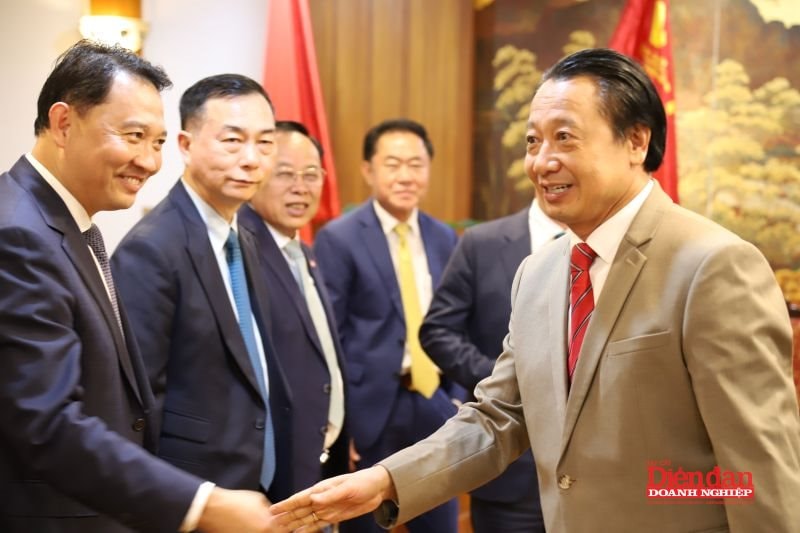 Vice President of VCCI Nguyen Quang Vinh received and met with the high-level Cambodian business delegation led by Neak Oknha Kith Meng. (Photo: Truong Dang)
During the meeting, Cambodia Chamber of Commerce President Kith Meng highly appreciated the traditional friendship and the economic, trade, and investment cooperation between Vietnam and Cambodia. He affirmed that there remains significant potential for cooperation between the business communities of the two countries, particularly as bilateral relations continue to develop positively and both countries strengthen regional economic connectivity.
The Cambodian side noted that Vietnam–Cambodia economic relations are currently at a favorable stage, supported by strong political and diplomatic ties and considerable potential for advancement. Nearly 60 years have passed since the establishment of diplomatic relations between the two countries. Vietnam is currently Cambodia’s leading trading partner within ASEAN and one of Cambodia’s largest trading partners globally.
Regarding trade, the Cambodian side stated that bilateral trade reached a record level of approximately USD 11.33 billion in 2025, reflecting the resilience and growing integration of supply chains between the two countries. In the first quarter of 2026, bilateral trade reached approximately USD 3.44 billion, an increase of 4.3% compared to the same period of the previous year. On that basis, Cambodia believes that the target of increasing bilateral trade to USD 20 billion is realistic and achievable if both sides continue removing barriers and promoting economic connectivity.
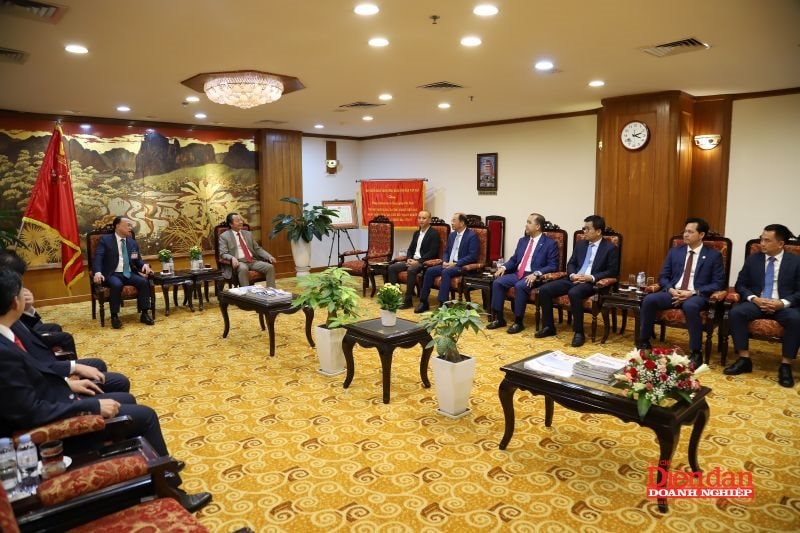 Cambodia Chamber of Commerce President Kith Meng proposed several measures to help realize cooperation goals in the coming period. (Photo: Truong Dang)
Regarding investment, the Cambodian side noted that Vietnam currently has more than 200 active investment projects in Cambodia. In 2025 alone, Vietnamese enterprises launched six new investment projects in Cambodia with a total capital value of approximately USD 62 million, mainly in the agriculture and industrial sectors. Cambodia assessed that Vietnamese investment in Cambodia is becoming increasingly strategic and diversified, supported by bilateral agreements, cross-border banking networks, and Cambodia’s modern and competitive Investment Law.
The Cambodian side also emphasized that future cooperation should extend beyond traditional sectors such as rubber and telecommunications to include circular agriculture, digital transformation, compliance with green supply chains, and cross-border logistics infrastructure. Cambodia wishes to be viewed as a reliable production base, a dependable source of raw materials, and a strategic expansion destination for Vietnamese investment.
During the meeting, President Kith Meng also put forward several proposals to help achieve cooperation objectives in the years ahead.
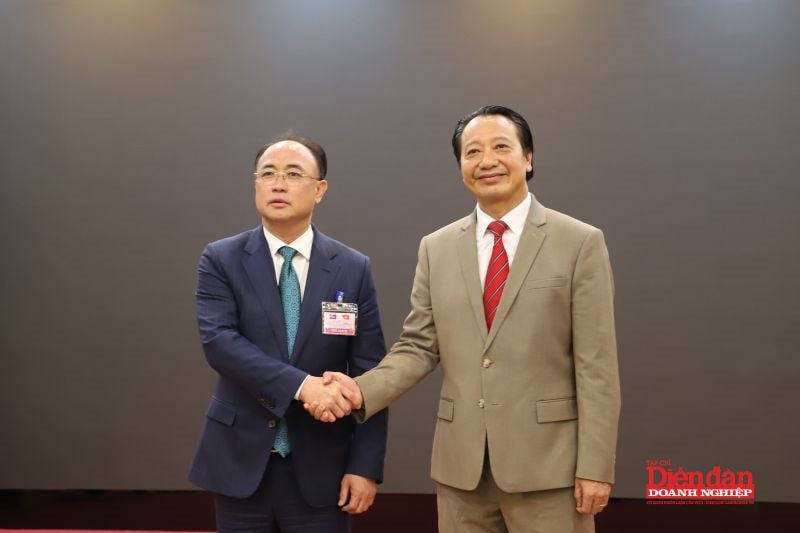 President of the Cambodia Chamber of Commerce Kith Meng presented several proposals aimed at strengthening Vietnam–Cambodia economic cooperation. (Photo: Truong Dang)
First, he proposed that the two governments continue promoting infrastructure connectivity, particularly expressways, border gates, and customs procedures, to facilitate trade, investment, tourism, and people-to-people exchanges between the two countries.
Second, Cambodia proposed that the two governments consider upgrading the remaining border crossings to international border gates. According to the Cambodian side, this would be an important step in removing bottlenecks in cross-border trade, reducing logistics costs, improving supply chain efficiency, and strengthening economic connectivity in border regions.
Third, Cambodia encouraged Vietnamese enterprises to expand investment in Cambodia, viewing the country not only as a market of 18 million people but also as a gateway to regional and partner markets through the Regional Comprehensive Economic Partnership (RCEP), the Cambodia–China Free Trade Agreement, and the Cambodia–South Korea Free Trade Agreement.
Fourth, Cambodia recommended that Vietnamese enterprises pay greater attention to four sectors with high potential in the coming years: digital transformation; renewable energy and green industries; high-value-added agricultural processing; and high-quality services and tourism.
Fifth, Cambodia expressed its desire for the business communities of both countries to strengthen practical and long-term cooperation, leveraging geographic proximity, strong political relations, complementary markets, resources, and supply chains to develop concrete joint projects.
On behalf of VCCI, Vice President Nguyen Quang Vinh reaffirmed VCCI’s commitment to its long-standing partnership with the Cambodia Chamber of Commerce, praised the leadership role of President Kith Meng within the Cambodian business community and ASEAN-BAC, and emphasized that cooperation between VCCI and CCC serves as an important bridge connecting the business communities of the two countries.
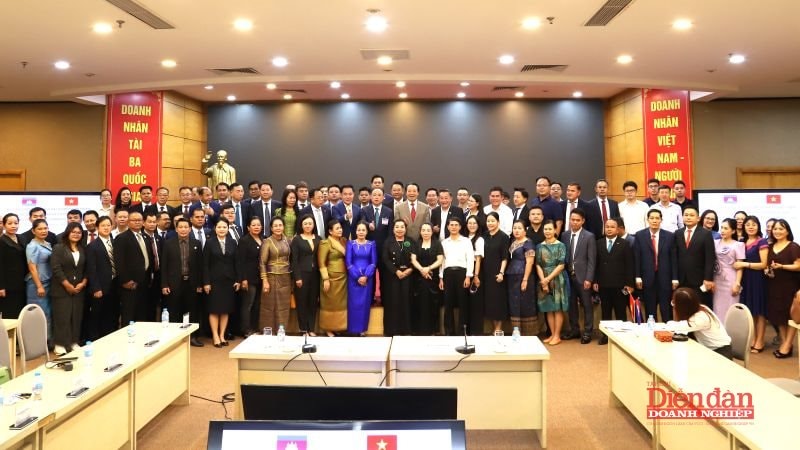 Cooperation between VCCI and CCC serves as an important bridge between the business communities of the two countries. (Photo: Truong Dang)
VCCI believes that Vietnam–Cambodia cooperation should be viewed not only within a bilateral framework but also in connection with Mekong subregional cooperation, ASEAN integration, and the deeper participation of businesses from both countries in regional and global value chains.
VCCI proposed three key areas of cooperation.
First, strengthening trade cooperation and market connectivity through business networking activities, supply-demand matching programs, market information exchanges, product promotion, and trade promotion initiatives in sectors and localities with strong potential.
Second, promoting investment cooperation and the development of shared value chains, where the two countries can complement each other in agriculture, food production, logistics, tourism, energy, infrastructure, and supporting industries.
Third, enhancing the capacity of enterprises, particularly small and medium-sized enterprises, through training programs, information sharing, standards support, market advisory services, digital transformation initiatives, sustainable development programs, and improved corporate governance.