VIETNAM CHAMBER OF COMMERCE AND INDUSTRY
Liên Đoàn Thương Mại Và Công Nghiệp Việt Nam
Thu, Feb 12, 2026, 16:48:00
VCCI President: The momentum of Vietnam’s business community is very strong
2026 will be a pivotal year for businesses not only to recover but also to rise, integrate more deeply, and contribute positively to the economy’s sustainable growth objectives.
Although still cautious, most businesses are proactively transforming themselves, seeking new opportunities, investing in technology, and enhancing their capacity to meet global standards.
“This is an important foundation to enter the new year with a positive mindset and determination to break through,” VCCI President Ho Sy Hung told the Finance and Investment Newspaper ahead of the Lunar New Year of Binh Ngo.
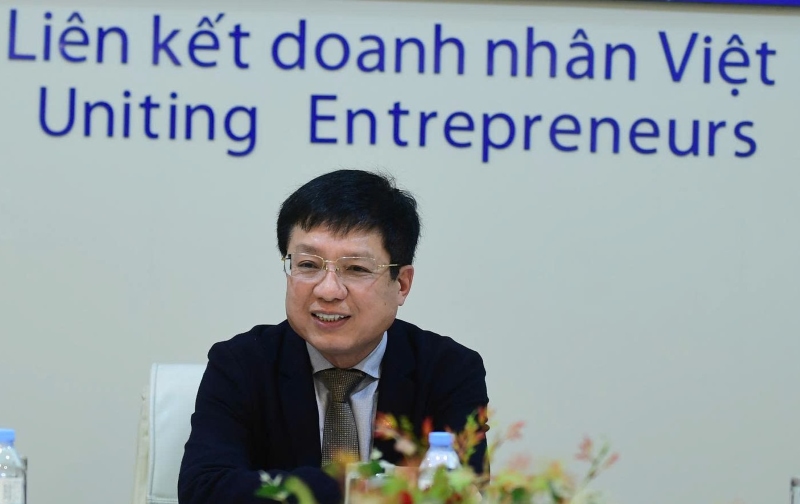 VCCI President Ho Sy Hung
Sir, this year marks the beginning of a new development phase with a target of double-digit growth. This is a highly ambitious goal?
Highly ambitious, but entirely feasible if we awaken and maximize the role of the private economic sector. The entrepreneurial spirit of Vietnamese businesses and entrepreneurs has always been very strong...
The question is how to transform that spirit into action, into projects and works that contribute to the growth target of over 10%, sir?
The first thing to mention is that business confidence is recovering. This can be clearly seen in the increasing proportion of businesses planning to expand their scale this year. According to a VCCI survey, up to 31.3% of businesses plan to expand operations in the next two years, a promising figure in the context of ongoing global economic uncertainties.
It must also be affirmed that, for businesspeople, this confidence does not come from sentiment. Businesses have mentioned the practical impacts of substantive reforms currently being implemented. For example, the digitalization of administrative procedures, especially those related to tax, land, and insurance, has helped shorten processing time and reduce compliance costs for businesses. The transformation of the government apparatus under a two-tier model has also streamlined the administrative system, centralized processing focal points, and increased accountability.
Businesses also appreciate the transparency and effectiveness in implementing new policies. In many localities, the time for processing investment dossiers has been shortened, planning information has become more publicly available, and the public service system has begun to interconnect data across administrative levels.
I believe that if we continue to maintain the current reform momentum, while focusing on removing bottlenecks related to capital, land, and legal procedures, the momentum of Vietnam’s business community in 2026 will be very strong. This will be a pivotal year for businesses not only to recover but also to rise, integrate more deeply, and contribute positively to the economy’s sustainable growth objectives.
From the perspective of a national organization representing the business community, VCCI clearly identifies three foundational conditions for the private sector to effectively contribute to high and sustainable growth targets.
First, it is necessary to ensure a stable, transparent, and predictable legal environment. Businesses can only make long-term investments, innovate, and expand their scale when they feel secure, protected, and supported.
VCCI recommends that the Government continue to accelerate institutional reforms, particularly issuing legal documents on schedule, obtaining substantive feedback from businesses, and establishing a legal mechanism that is accessible, easy to understand, and easy to implement.
Second, it is necessary to create more favorable conditions for businesses to access essential resources such as credit, land, and technology. This requires a more flexible fiscal and monetary policy system, while accelerating administrative reform and digital transformation in key sectors.
Third, it is necessary to enhance the internal capacity of businesses by supporting them to effectively integrate into global value chains.
Of course, this recovery comes not only from efforts to improve the business environment and State support policies, but also from the internal efforts of businesses themselves, from restructuring operations, investing in technology, improving governance capacity, to proactively approaching international standards.
The first two points can be considered recommendations to the Government, ministries, sectors, and localities in efforts to improve the business environment. The third point, meanwhile, is the responsibility of businesses and the role of business associations, sir?
Not exactly. VCCI, as well as businesses and entrepreneurs, also has responsibility and a proactive role in improving the business environment, especially in promoting the effective implementation of Politburo resolutions, particularly Resolution 68-NQ/TW on private economic development.
After more than half a year of implementation, Resolution 68 has created clearly positive movements both in state management thinking and in concrete actions in institutional reform. To implement Resolution 68, the National Assembly quickly passed Resolution 198 and related laws, and the Government urgently issued a series of guiding documents, accelerated administrative reform, and promoted digital transformation, demonstrating strong political determination in realizing the spirit of the Resolution.
The business community acknowledges significant improvements in administrative procedures, the companionship of authorities, and greater clarity in the legal framework. However, challenges remain very large. Businesses need more favorable solutions in accessing capital, land, and administrative procedures. In addition, competitiveness and the ability to adapt to new requirements from international markets, such as green standards and carbon taxes, remain limited.
Therefore, for Resolution 68 to truly come into life, it is necessary to continue decisively removing these bottlenecks, while creating conditions for businesses to receive more effective, fair, and practical support.
This year, VCCI will establish inter-sectoral task forces coordinating with business associations in localities to quickly resolve obstacles, especially in land, investment, credit, and planning. We will also expand the online feedback system and organize annual dialogue forums between businesses and authorities in areas such as tax, customs, land, and credit…
Regarding improving internal capacity of businesses, VCCI is actively coordinating with domestic and international organizations to implement training and consultancy programs on ESG, green transformation, digital transformation, and traceability so that Vietnamese businesses can meet increasingly stringent international market standards.
In 2026 and the coming years, VCCI will implement several action-oriented initiatives closely aligned with business needs. For example, information programs supporting business integration, integrating data on trade barriers, international standards, and export opportunities under FTAs.
And many other programs supporting small and medium-sized enterprises, such as supplier programs and promoting connections between small businesses and large corporations.
VCCI will continue to strengthen programs providing training services, legal consultancy, support for credit access, and governance training for startups and micro-enterprises.
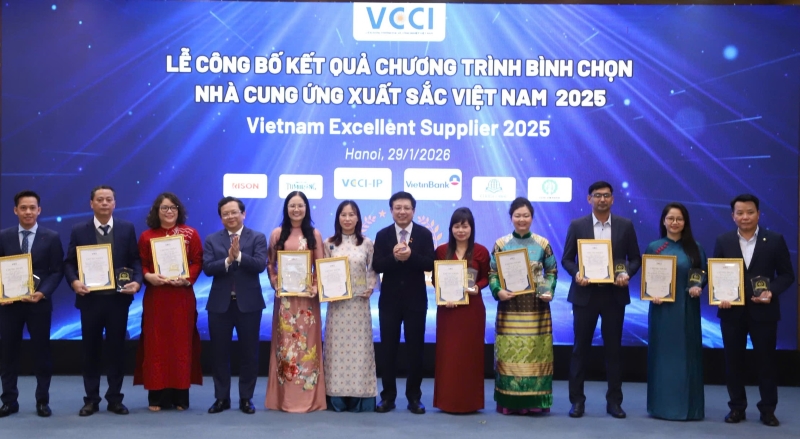 In 2026 and the coming years, VCCI will implement action-oriented initiatives closely aligned with business needs
What about large enterprises and leading enterprises? Resolution 68 also mentions the role of this group of enterprises?
Leading enterprises are the driving force, paving the way for sustainable economic growth. This group of enterprises usually has large scale, high technological capacity, strong innovation capability, and good compliance with international standards. In recent years, VCCI has established the Vietnam Leading Business Council to connect and spread sustainable development thinking and social responsibility across the entire private sector.
In 2026 and the coming period, VCCI plans to mobilize leading enterprises, first of all enterprises in the VCCI Executive Committee, to participate more actively and proactively in policy forums and dialogues with the Government on important topics such as the digital economy, green transformation, and international integration.
VCCI also plans to organize periodic discussion programs where leading enterprises share governance models, experiences in responding to global risks, and sustainable development strategies.
Through these activities, I expect the leading enterprise group to become the locomotive pulling the economy to rise strongly in 2026.
This year, when talking about Vietnam’s business community, it is impossible not to mention household businesses and enterprises converted from household businesses, sir?
2026 will be a year with many major changes for the household business sector as tax management policies shift toward transparency and strong digitalization, including the abolition of lump-sum tax and the expansion of electronic invoices directly connected with tax authorities.
These changes are necessary to build a fair tax system, but at the same time pose significant challenges for small household businesses, which are accustomed to operating in a simple and less regulated management environment.
Therefore, transitioning to the enterprise model is not only an inevitable trend but also an opportunity for household businesses to step up to a new development level. This is also a sector with very large potential to form a dynamic, innovative, and highly competitive class of private enterprises, contributing to the successful realization of the target of 2 million enterprises by 2030 in the spirit of Resolution 68-NQ/TW.
From VCCI’s perspective, the key factor to encourage household businesses to transition to the enterprise model is to create clear and substantive economic incentives for them. When household businesses see specific and long-term benefits of operating within a full legal framework, they will proactively choose the path of transformation.
Therefore, policies should not only be calls or formal encouragement but should be designed toward creating a favorable environment, lower costs, and higher profitability for formal enterprises.
One of the important priorities is to maximize the simplification of procedures for transformation and operation of small enterprises. We need to build a transparent, easy-to-implement process, with simple forms, quick resolution time, and low administrative costs. In addition, there should be support packages for credit access, governance training, and tax incentives during the early formation stage so that household businesses can confidently enter the formal sector of the economy.
VCCI has been coordinating with ministries and sectors to propose policies consistent with practical realities, while implementing many communication, training, and technical support programs to accompany household businesses in the transformation process. We believe that, if supported properly, the household business sector will become a strong driving force promoting economic growth and creating sustainable jobs in the coming period.
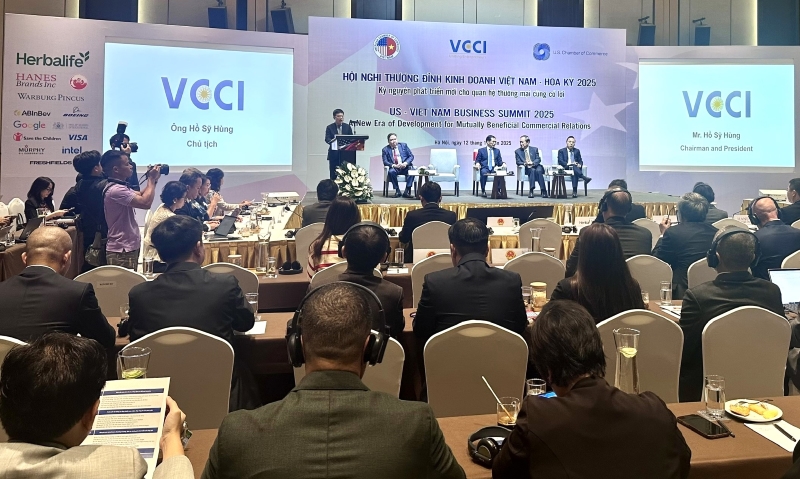 VCCI commits to continue being a reliable bridge and a close companion alongside businesses throughout every stage of development
The moment of entering the new year of Binh Ngo is very near. At this time, what would you like to share with Vietnam’s business and entrepreneur community?
The moment of entering a new year always brings us special emotions. It is excitement, optimism, and expectation for a new and stronger development journey.
For me, 2026 is not only a time milestone but also a signal marking the beginning of an “era of rising” with great confidence for the nation, in which the business community continues to play a central role, leading and shaping the country’s economic future.
This is the first year of implementing the new objectives of the 14th National Party Congress term and also a pivotal year to realize the major orientations of Resolution 68-NQ/TW on private economic development. The spirit of entrepreneurship, innovation, and sustainable development thinking will spread more widely within the business community, from large corporations to small and medium-sized enterprises, from urban to rural areas, from traditional sectors to high technology.
I hope that every Vietnamese business, whether large or small, will maintain optimism, remain steadfast in its mission, and continuously innovate to adapt to global trends.
I also hope that policy-making agencies will continue to listen and accompany businesses more closely so that the existing potential of the private economy can be fully promoted, contributing practically to the double-digit growth target that the country is aiming for.
With institutional reforms being accelerated, especially strategic changes in governance thinking — from “management for control” to “management for service” — Vietnam’s business community will gain greater confidence to make long-term investments, expand scale, improve product quality, and gradually conquer new heights on the global economic map.
With its role as a national organization representing the business community, VCCI commits to continue being a reliable bridge and a close companion alongside businesses throughout every stage of development. We will strengthen substantive support activities, promote higher business standards, business ethics, and spread the spirit of integration, innovation, and responsibility throughout Vietnam’s entire business ecosystem.