VIETNAM CHAMBER OF COMMERCE AND INDUSTRY
Liên Đoàn Thương Mại Và Công Nghiệp Việt Nam
Thu, Aug 31, 2023, 07:55:00
According to VCCI, many businesses have raised concerns about the significant costs and time required for submitting applications and receiving Certificates of Eligibility for business operations. This is especially pronounced for rice export enterprises located mainly in the Mekong Delta provinces.
Meanwhile, the inspection of conditions related to storage and milling facilities is currently conducted by the Department of Industry and Trade on a regular basis. Therefore, in order to streamline administrative procedures and enhance decentralization, VCCI proposes that the drafting agency adjusts regulations to delegate the authority to issue Certificates of Eligibility for rice export business to the provincial People's Committees or the Department of Industry and Trade.
The Department of Industry and Trade will be responsible for reporting the licensing process to the Ministry of Industry and Trade, and enterprises will still need to periodically report their activities to the Ministry of Industry and Trade.

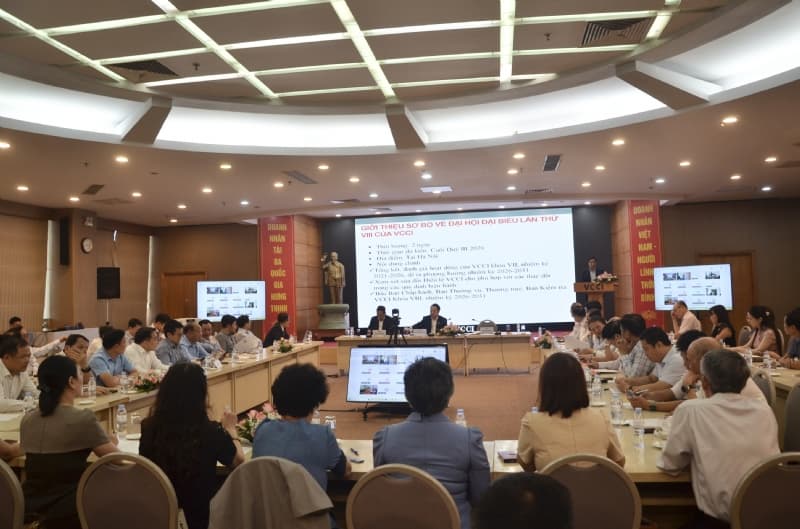
Illustrative image
In addition, Article 6.5 of Decree No. 107 stipulates that the validity period of the Certificate of Eligibility for rice export business is 5 years. After every 5 years, enterprises must apply for a new Certificate of Eligibility with procedures similar to the initial application to demonstrate their business qualifications.
However, according to the regulations in Decree No. 107 and feedback from businesses, local Departments of Industry and Trade still regularly conduct periodic inspections of enterprises to ensure compliance with business conditions (storage and milling facilities) and promptly identify and revoke Certificates of Eligibility for businesses that do not meet the requirements.
Therefore, given the regular compliance checks in place, the requirement for enterprises to reapply for a new Certificate of Eligibility every 5 years is unnecessary. Hence, VCCI suggests that the drafting agency should eliminate the provision regarding the validity period of the Certificate of Eligibility for rice export business.
In the long term, VCCI proposes that the drafting agency continues to reduce investment and business conditions for rice export, moving towards market liberalization. The mandatory rice reserve should be managed through a state-order mechanism where enterprises respond to market demand, rather than relying on administrative measures as currently practiced.
VCCI evaluates that compared to the provisions of Decree No. 109/2010/ND-CP, Decree No. 107/2018/ND-CP has removed the requirements for warehouse scale (5,000 tons of paddy) and milling capacity (10 tons/hour). Decree No. 107 only mandates that enterprises have storage and milling facilities that comply with the corresponding national technical standards.
In practice, since the issuance of Decree No. 107, farmers have had more choices in selling the rice they produce, reducing instances of price pressure. Furthermore, many enterprises have discovered and penetrated challenging markets that Vietnamese rice couldn't access previously.
However, according to feedback from some enterprises, in order to meet the Technical Standards for rice storage and milling facilities outlined in Circular 12/2013/TT-BNNPTNT, substantial investment is still required by businesses, even in cases of leasing.
Circular 12 still imposes numerous conditions with a scale-oriented nature, such as the capacity of rice silos, the milling capacity of 10 tons/hour, and various other requirements. These conditions are suited for large-scale rice export enterprises but prove challenging for smaller businesses attempting to enter new markets.
Meanwhile, according to VCCI, many Vietnamese enterprises are very proactive in seeking new markets such as Europe, Canada, the Middle East, etc. These markets demand high-quality rice in smaller quantities, with stringent storage specifications, excellent packaging, and competitive pricing.
Furthermore, customers in these markets (such as supermarkets, retail chains, etc.) often require suppliers that offer a variety of agricultural products simultaneously, not just rice alone.
These enterprises are unable to fulfill the rigorous conditions for rice export as mentioned above and are thus compelled to outsource their export activities to qualified enterprises.
According to reports from these enterprises, the current outsourcing fee for exports is around 1 to 5 USD per ton of goods. In other words, businesses with Certificates of Eligibility have the authority to lease out these certificates to be eligible for receiving this fee.
According to PV (Financial and Business Magazine).