VIETNAM CHAMBER OF COMMERCE AND INDUSTRY
Liên Đoàn Thương Mại Và Công Nghiệp Việt Nam
Wed, Oct 01, 2025, 09:13:00

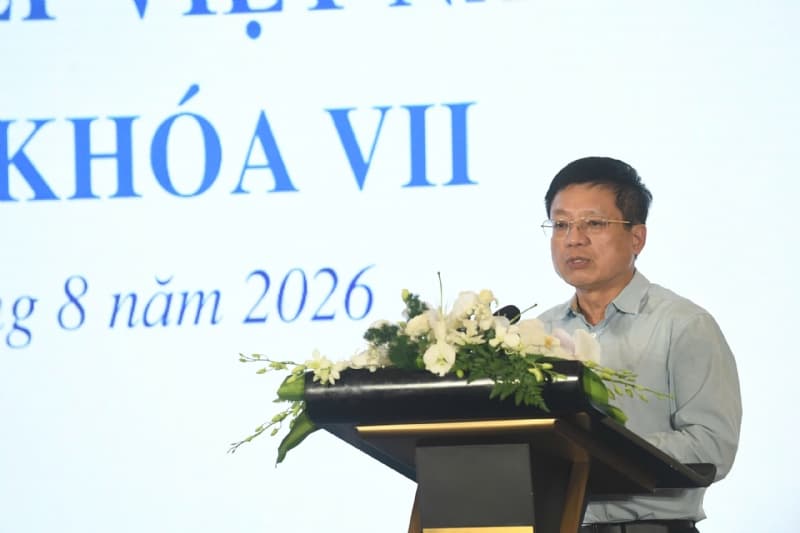
Deputy Secretary General, Head of the Legal Department of VCCI Dau Anh Tuan.
Deputy Secretary General, Head of the Legal Department of VCCI Dau Anh Tuan affirmed: “PCI is a product that has accompanied private enterprises for the past 20 years, it is the aspiration and voice of this region. I have been to many localities and felt the satisfaction of enterprises with the government, and the government also made efforts to meet that satisfaction. What is proud is that PCI not only conveys those aspirations, but also contributes to raising the position of private enterprises in the eyes of the authorities”.
Mr. Tuan emphasized that even in difficult times, PCI has never been interrupted, demonstrating its perseverance and will to reform. The fact that PCI 2.0 has been built entirely with domestic resources, not depending on foreign funding, further affirms the confidence of the Vietnamese people and the cooperation of the business community.
Mr. Tuan said that, facing a new stage with the process of local mergers, along with the birth of the "quad resolutions" that have a direct impact on business operations, the need for methodological innovation is urgent. "We have consulted experts, listened to opinions from 29/34 provinces and cities and hundreds of businesses, to build PCI 2.0 into the best and highest quality reform tool, accurately reflecting the strengths and weaknesses of each locality," he emphasized.
PCI 2.0 - a breakthrough for the new development stage
Different from the old version that mainly measured administrative procedures and compliance cost burdens, PCI 2.0 is designed to comprehensively reflect the private economic development ecosystem. According to the presentation of Mr. Pham Ngoc Thach, Deputy Head of the VCCI Legal Department, PCI 2.0 has a structure of three major pillars: a favorable business environment; promoting fair, open and safe competition; and sustainable growth drivers and the creative role of local governments.

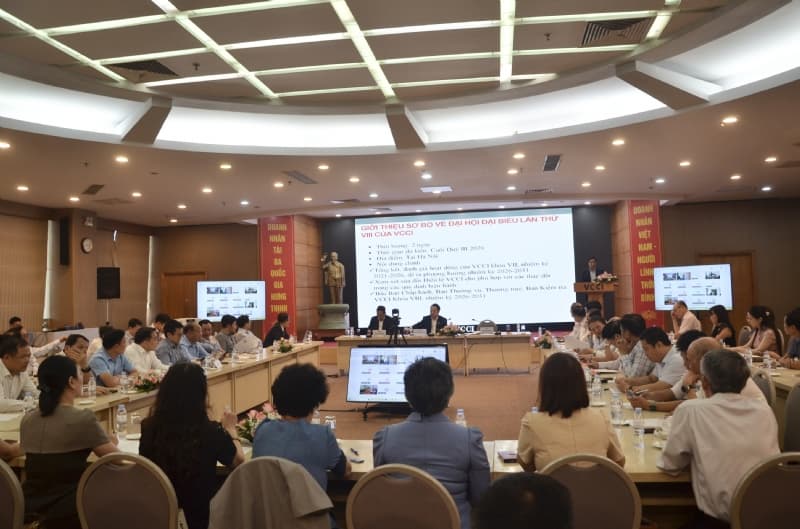
Mr. Pham Ngoc Thach – Deputy Head of the VCCI Legal Department presented the PCI 2.0 methodology.
There are a total of 137 indicators, of which 111 are built from business surveys and 26 are from official statistical data, inheriting 103 indicators from the old PCI and adding 34 new indicators. This is not only a quantitative expansion, but also a qualitative innovation, as the index has integrated key elements of the era such as digital transformation, innovation, green and sustainable development.
According to Mr. Thach, PCI 2.0 is built on the principles of substantive measurement, closely following national policies, integrated and comprehensive, while ensuring feasibility and balance between perceived data and objective data. The index is also designed in a modular form, which can be deployed down to the department, branch or commune level (DDCI), thereby expanding its impact to the grassroots level.
Compared to the “unleashing” reforms of the 1986 Doi Moi period and the 1990 Company Law – which paved the way for private enterprises to form and enter the market – or the PCI 2005 with its role of “measuring to promote reform”, PCI 2.0 is a new step towards raising the standards of Vietnam’s business environment in the context of global competition. If the initial reform was to kick-start the market, the current reform requires higher standards: transparency, fairness, creativity and sustainability.
Expectations from stakeholders
PCI 2.0 initiatives and methods have received widespread consensus. Ms. Trinh Thi Huong, Deputy Director of the Department of Private Economic Development (Ministry of Planning and Investment), commented: “The innovation of the PCI 2.0 method is timely and suitable for the context of the country entering a new development stage. This is a tool to help make policies stronger and more innovative, contributing to creating a favorable business environment for private enterprises.”

Overview of the signing ceremony for cooperation in developing the annual Vietnam Private Economic Report.
As of September 9, 2025, 29/34 provinces and cities have sent comments, along with 148 opinions from experts, associations and management agencies. The comments focus on important issues such as classifying support policies by scale and sector, measuring private economic contributions in both social security and employment, separating land access between industry and agriculture, building specific criteria for innovation and digital transformation, or a roadmap for applying sustainable development according to the characteristics of each region. Labor training and the connection between schools and business needs are also highlights that need to be added to the measurement method.
Mr. Nguyen Trung Hau, Central Policy and Strategy Committee, commented: “PCI 2.0 is a step in the right direction, reflecting the strategic requirements of the Central Government, especially after the administrative unit arrangement. This is an open-design index that can be replicated in localities.”
Mr. Le Duy Binh, Director of Economica Vietnam, added: “PCI 2.0 inherits the rich data foundation from PCI, and changes the approach to make it easy to use, with a clear structure, integrating major resolutions on innovation, private economic development, digital transformation and green economy. This is a big step forward in bringing practical breath into policy.” He also proposed to increase the use of secondary statistical data, especially from public service portals, but it is necessary to pay attention to sectors and localities that do not have complete information. Some areas such as tax and customs also need to be separated and evaluated separately to ensure objectivity. At the same time, the business sentiment index must be exploited more deeply, reflecting the comprehensive view of businesses about local authorities. Market entry needs to be measured clearly and separately, thereby giving the most realistic picture.

Signing ceremony of cooperation between VCCI and Tan Hiep Phat on the Annual Private Economic Report, Hanoi, September 11, 2025.
In this initiative, Tan Hiep Phat accompanies VCCI as a founding partner. Tan Hiep Phat understands that a transparent and fair competitive environment is a prerequisite for sustainable development. “To have good policies, comprehensive and accurate data is needed. To have a sustainable market, trust is needed between participants. And trust is only built through transparency, dialogue and commitment” - Mr. Nguyen Duy Hung, Chairman of the Board of Directors, ensuring the operation and reputation of Tan Hiep Phat Company emphasized.
Tan Hiep Phat hopes that through the Annual Private Economic Report, the business community, especially small and medium enterprises, will have more opportunities to improve their competitiveness, and at the same time form corporations strong enough to lead the domestic supply chain and reach out to the world. This is also a way for private enterprises to join hands to contribute to the national goal: building a strong, self-reliant, self-reliant Vietnam, becoming a developed, high-income country by 2045.
Towards a transparent and sustainable business environment
According to the plan, PCI 2.0 will start surveying enterprises from the fourth quarter of 2025, and the first annual Private Economic Report is expected to be published in the second quarter of 2026. In addition to the national report, VCCI will organize seminars, provincial-level diagnoses, training and provide information to disseminate research results.
PCI 2.0 is not simply a ranking tool, but a reform guideline, helping the government and enterprises clearly recognize strengths and weaknesses to take action. This is also the foundation for creating a transparent, fair, open and safe business environment, thereby promoting private enterprises to break through and become the main growth driver of the economy.
If PCI 2005 once contributed to “awakening” many localities about the role of business environment reform, PCI 2.0 today sets a higher vision: creating global standards for the development of Vietnam’s private sector. That is an inevitable step for Vietnam to realize its aspiration of becoming a developed, high-income country by 2045.