VIETNAM CHAMBER OF COMMERCE AND INDUSTRY
Liên Đoàn Thương Mại Và Công Nghiệp Việt Nam
Fri, Jul 12, 2024, 03:14:00
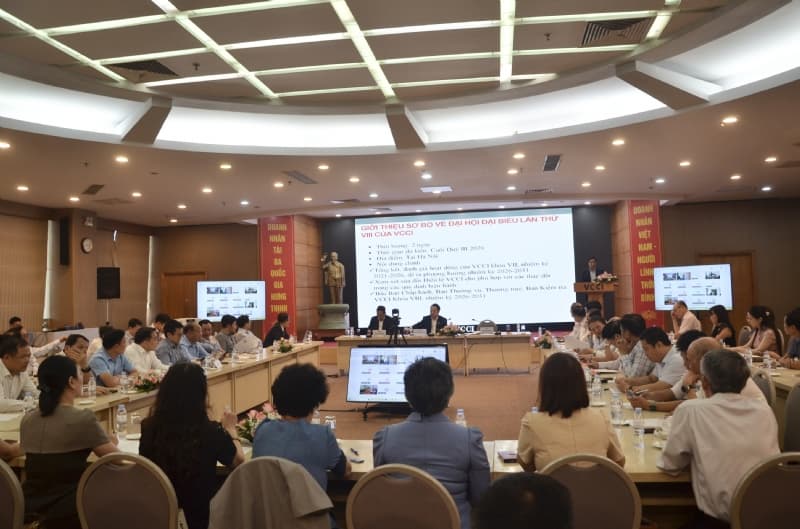
To gather feedback from the business community and contribute to the improvement of the (revised) Special Consumption Tax Law, ensuring it aligns with market principles, conforms to international practices, maintains the fairness and neutrality of the tax policy, and contributes to stabilizing state budget revenues, the Vietnam Chamber of Commerce and Industry (VCCI) held a workshop on the morning of July 11 titled "Suggestions for Improving the Draft Revised Special Consumption Tax Law." Mr. Dau Anh Tuan, Deputy Secretary General and Head of the Legal Department of VCCI, delivered the opening speech at the workshop.

Mr. Dau Anh Tuan - Deputy Secretary General and Head of the Legal Department of VCCI Delivers Opening Speech at the Workshop
In his opening speech at the workshop, Mr. Dau Anh Tuan, Deputy Secretary General and Head of the Legal Department of VCCI, stated that the revised Special Consumption Tax Law project is being drafted by the Ministry of Finance with many significant changes. These changes include the addition of certain goods to the list of items subject to special consumption tax, adjustments to tax rates with specific schedules, changes to tax calculation methods, and the modification of certain regulations to ensure the consistency of the legal system.
These amendments will have a substantial impact on businesses involved in the production, trading, and consumption of the goods and services covered by the law, as well as on consumers.
According to Mr. Tuan, the Draft Revised Special Consumption Tax Law is perhaps one of the shortest drafts in terms of text but has a significant impact on businesses and industries. The drafting and finalization of this tax law are becoming increasingly challenging and are facing much opposition, especially as the Ministry of Finance plans to add more taxable items or increase tax rates. The drafting committee is currently under significant pressure, with prolonged discussions; therefore, it is necessary to listen to diverse opinions to choose the optimal approach.
This time, the Government and the Ministry of Finance are striving to present the draft at the 8th session of the National Assembly in October 2024. After discussions over two sessions, the revised Special Consumption Tax Law is expected to come into effect on January 1, 2026.

The workshop attracted the attention of many delegates from National Assembly committees, ministries, business associations, experts, and enterprises.
"The impact of tax laws will soon be felt, which is why businesses and associations are very concerned about these amendments," emphasized Mr. Tuan.
According to Mr. Tuan, VCCI has not yet officially provided feedback but is awaiting consultations with businesses and associations to gather more substantial opinions. He believes that businesses will provide the most comprehensive and accurate information regarding current production and business activities, contributing positively to future drafts. Consequently, government agencies will consider selecting the most optimal approach...
Sharing at the workshop, many expressed concerns about the proposals put forward by the drafting agency regarding special consumption tax policies.

Ms. Chu Thi Van Anh - Vice Chairwoman and Secretary General of VBA Speaks at the Workshop
Offering her input at the workshop, Ms. Chu Thi Van Anh, Vice Chairwoman and Secretary General of the Vietnam Beverage Association (VBA), proposed that the Ministry of Finance should refrain from including sugary drinks and soft drinks under Vietnam's standards in this current draft.
According to Ms. Van Anh, sugary beverages are not the sole or primary source of sugar and calories. They are also not the sole or primary cause of overweight, obesity, and non-communicable diseases. Imposing a special consumption tax on sugary beverages and the effectiveness of this tax policy in health protection objectives are unclear. Moreover, this could lead to significant disruptions in the recovery of the beverage industry, affecting employment and the overall economy.

Ms. Nguyen Viet Ha - Vice Chairwoman of AmCham Hanoi Provides Input at the Workshop
In agreement with others, Ms. Nguyen Viet Ha, Vice Chairwoman of the American Chamber of Commerce in Hanoi (AmCham Hanoi), expressed that businesses support the goal of protecting public health through tax policies but emphasize the need for appropriate modifications.
"Do tax instruments truly contribute to health protection and prevent non-communicable diseases like obesity and diabetes? Referring to international experience, reducing consumption of sugary beverages does not necessarily correlate with a reduction in non-communicable diseases because these diseases have multiple causes," Ms. Ha stated.
Providing practical examples, Ms. Ha cited Denmark's decision to abolish taxes on sugary beverages. Subsequently, monitoring rates of obesity did not increase. Due to the tax, Danish consumers crossed borders to purchase cheaper beverages in other European markets, resulting in a loss of 5,000 jobs in Denmark.
Similarly, in Norway, where such taxes have been in place since 1981, they have not achieved desired outcomes. Adult obesity rates doubled by 2019, reaching 15.5% among men and 12.7% among women.
At the workshop, concerns were raised not only by businesses but also by experts regarding the proposed application of special consumption tax policies by the drafting agency.

Mr. Nguyen Van Phung - Executive Committee Member of the Vietnam Association of Accountants and Auditors Provides Information at the Workshop
Assessing the policy, Mr. Nguyen Van Phung, Executive Committee Member of the Vietnam Association of Accountants and Auditors, noted that the special consumption tax has a significant impact on the socio-economic landscape, posing risks of reducing revenue from value-added tax and corporate income tax. There is a potential for ripple effects across businesses in the beverage supply chain, notably affecting small and medium-sized enterprises...
Therefore, this expert proposes considering the ripple effects on businesses within the beverage supply chain (retail, packaging, sugarcane, etc.). Small and medium-sized enterprises will be disproportionately affected compared to larger enterprises due to their limited financial capacity.

Assoc. Prof. Vu Sy Cuong - Academy of Finance Provides Information at the Workshop
According to Assoc. Prof. Vu Sy Cuong from the Academy of Finance, the special consumption tax has a significant impact on the economy, society, state budget revenue, and labor income.
Therefore, to enhance the policy, Assoc. Prof. Vu Sy Cuong proposes: expanding the tax base to include goods and services such as sugary beverages, new tobacco products under the special consumption tax; adding provisions on tax calculation basis and methods; specifying tax tables and rates for special consumption tax (additional), including adjusting tax rates for tobacco, alcohol, beer; detailing specific taxed items in the special consumption tax table; and stipulating the content of certain laws to ensure consistency between the Special Consumption Tax Law and related sectoral laws.
In response to feedback from the business community and experts at the workshop, representatives from the drafting agency also presented arguments and counterarguments regarding proposals for the necessity of applying special income taxes as proposed.