VIETNAM CHAMBER OF COMMERCE AND INDUSTRY
Liên Đoàn Thương Mại Và Công Nghiệp Việt Nam
Sat, Sep 13, 2025, 03:41:00
New developments from the US tariff policy have greatly affected global trade flows in general and posed challenges for exports from Vietnam to the US in particular, increasing significant pressure on domestic manufacturing enterprises.
In particular, in the context of many markets applying non-tariff barriers, environmental, social and governance requirements are increasingly strict, requiring businesses to invest resources in green transformation, digital transformation, increase the rate of localization of inputs and reduce dependence on imported materials, in order to meet the rules of origin, transparency of origin, etc.
This issue poses a problem for businesses to urgently seek and approach new markets to not only compensate for revenue, avoid dependence but also increase opportunities to promote production and business activities towards autonomy and sustainable development in the short and long term.

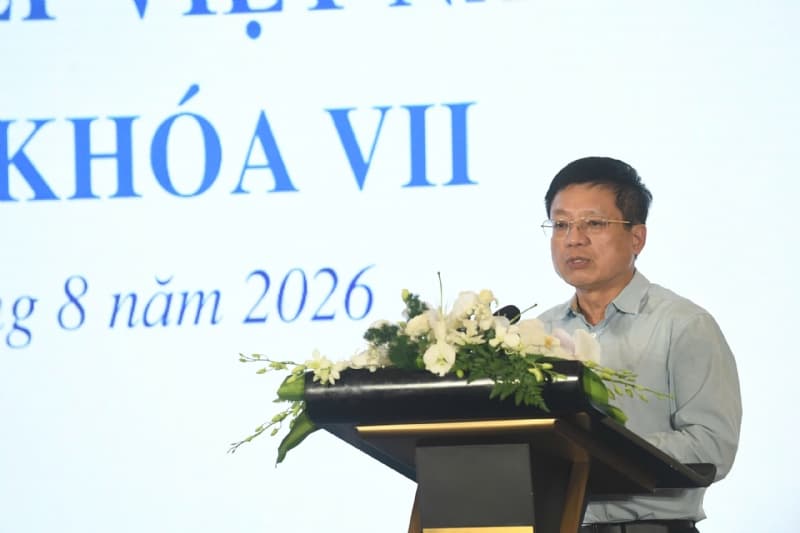
Mr. Hoang Quang Phong, Vice Chairman of the Vietnam Chamber of Commerce and Industry (VCCI). Source: Ngoc Quynh/Bnews/vnanet.vn
Mr. Hoang Quang Phong, Vice Chairman of the Vietnam Chamber of Commerce and Industry, commented that in order for businesses to effectively access and exploit new markets, it must be associated with the restructuring of the economy's export sectors, as well as the restructuring of the production and business activities of the businesses themselves. This transformation process is not easy, and does not happen overnight. It is a transformation of production thinking and strategic, systematic investment in technology and management to improve productivity, quality, and increase product value. On that basis, it enhances competitiveness, adaptability, and expands opportunities for businesses to access demanding markets as well as the fierce and unpredictable competition of global trade and investment.
Currently, many enterprises exporting key industries as well as domestic production and business enterprises are developing plans to seek new markets to cope with tariff risks and uncertainties of the global economy. This is considered a sustainable and long-term strategic direction when Vietnam has participated in 17 free trade agreements with more than 60 countries and territories and 70 bilateral cooperation mechanisms. Effectively exploiting this space and advantage will help enterprises diversify export markets, reducing dependence on the largest market.
Accompanying and supporting enterprises to achieve the above important goal, in Resolution No. 226/NQ-CP recently issued, the Government has directed ministries and branches to proactively deploy trade promotion solutions, support enterprises to access and boost exports for each key industry, key market, niche market, potential... on the basis of effectively exploiting signed FTA agreements. On the other hand, implementing negotiations, soon signing new FTAs, especially with countries in the Middle East, India, Africa, Latin America, upgrading the ASEAN Trade in Goods Agreement...
In addition to their own efforts, businesses also need support from the Government, ministries and branches in building preferential policies on tax, credit, appropriate mechanisms for developing supporting technology, increasing the localization rate. Vice President Hoang Quang Phong said that VCCI has received many feedbacks from businesses about complicated business laws, lack of transparency, lack of uniformity and many points that are not suitable with reality, causing difficulties for production activities and business expansion of businesses; in which, in some areas that are encouraged for investment such as renewable energy, science and technology development... there are also regulations causing difficulties, forcing businesses to consider carefully.
Sharing business practices, Ms. Nguyen Thi Huyen, Director of Vietnam Cinnamon Production and Export Joint Stock Company (Vinasamex), said that, facing the opportunity to elevate Vietnamese brands in the international market, the organic agricultural and spice industry is facing many technical barriers. When approaching new markets, Vinasamex faces three major challenges: increasingly strict quality and sustainability standards - customers not only buy products, they also buy stories about social and environmental responsibility; technical and trade barriers in each market have their own requirements for quarantine, labeling, traceability; in addition, price fluctuations and global competition - especially from countries with low production costs.
To overcome this, Vinasamex has implemented a number of "breakthrough" solutions such as building internationally certified raw material areas (EU Organic, USDA Organic, FairTrade), ensuring traceability for each batch of products; investing in deep processing technology at modern factories in mountainous areas, helping to increase added value and create sustainable jobs for ethnic minorities; applying digital transformation in order management, international marketing and cross-border e-commerce; developing the global brand "The Touch of Nature" - selling not only cinnamon, star anise or spices, but also the quintessence of Vietnamese flavors associated with the philosophy of living in harmony with nature. Thanks to that, over the past time, despite the volatile world market, Vinasamex has still expanded its customers in Europe, North America and recently the Middle East; while maintaining a positive export growth rate.
From a business perspective, Vinasamex representatives believe that, in order to approach new markets, businesses need to be steadfast in quality and core values, proactively adapt and improve product standards according to international requirements; at the same time, build sustainable links between businesses - farmers - the State and supporting organizations.

Producing leather shoes for export at Thai Binh Kien Giang Joint Stock Company. Photo: Van Sy - VNA
Ms. Tran Thi Thu Trang, Chairwoman of Hanel Manufacturing and Import-Export Joint Stock Company (Hanel PT NextTech., JSC) said that opening a new market is not just about selling to another country, but about creating an ecosystem of trust with five pillars: standard products, strong brands, international standards, inspirational stories and after-sales services beyond expectations. If the Government, associations and businesses work together, Vietnam can completely not only catch up but also lead many new markets in the world.
Through the practice of running businesses and opening international markets, Ms. Thu Trang recommended that the State continue to expand negotiations on new-generation FTAs with potential blocs such as MERCOSUR (South America) and GCC (Gulf Cooperation Council) to reduce tariffs, opening the door to markets with large purchasing power but little competition. In addition, establish an international trade risk insurance fund according to the public-private model, specifically in Japan, there is NEXI (Nippon Export and Investment Insurance) to insure businesses when partners go bankrupt, do not pay, or encounter political risks in more than 100 markets or in the European Union (EU) market, there is Euler Hermes/Allianz Trade to insure exports for businesses in more than 50 countries, combining global risk data and supporting compensation for 80-90% of losses.
In addition, build an operating mechanism, where businesses pay insurance premiums at 0.5-1% of the contract value so that when risks occur, the fund compensates most of the damage. The State also needs to support part of the fees for small and medium-sized enterprises in the stage of opening new markets. At that time, businesses will feel secure to explore high-risk markets without worrying about losing capital; at the same time, accelerate export expansion.
Investing in smart logistics infrastructure, international transit warehouses in Rotterdam (EU), Dubai (Middle East), Singapore (ASEAN) to reduce delivery time by 30-40%, optimize costs and increase competitiveness also needs to be taken seriously and training of sales teams in companies with 3-5 star certification to build a team of global trade experts, creating a global sales expert profession in each export region. The most important thing is to promote training of international human resources, understanding digital trade, green standards and local culture, Ms. Thu Trang emphasized.
It can be seen that, in order for Vietnamese enterprises to go further on the world trade map, new strategies, new connections and new spirit are needed. When the Vietnamese business community stands together, Vietnam's export goods not only step through the door of new markets, but can also expand them, reaching out globally.