VIETNAM CHAMBER OF COMMERCE AND INDUSTRY
Liên Đoàn Thương Mại Và Công Nghiệp Việt Nam
Fri, Dec 19, 2025, 11:06:00
On December 16, 2025, the Vietnam Chamber of Commerce and Industry (VCCI) officially opened a four-day international workshop series (December 16–19, 2025) on ‘Reforming the pharmaceutical regulatory system and enhancing the capacity of health regulatory authorities in good drug registration practices’ at VCCI headquarters in Hanoi.
This activity is jointly organized with the Drug Administration of Vietnam (DAV), Ministry of Health, with partial support from the Health Working Group (HWG) of the Asia-Pacific Economic Cooperation (APEC) forum, focusing on sharing international experiences (from the WHO, APEC economies, and several other Asian countries)
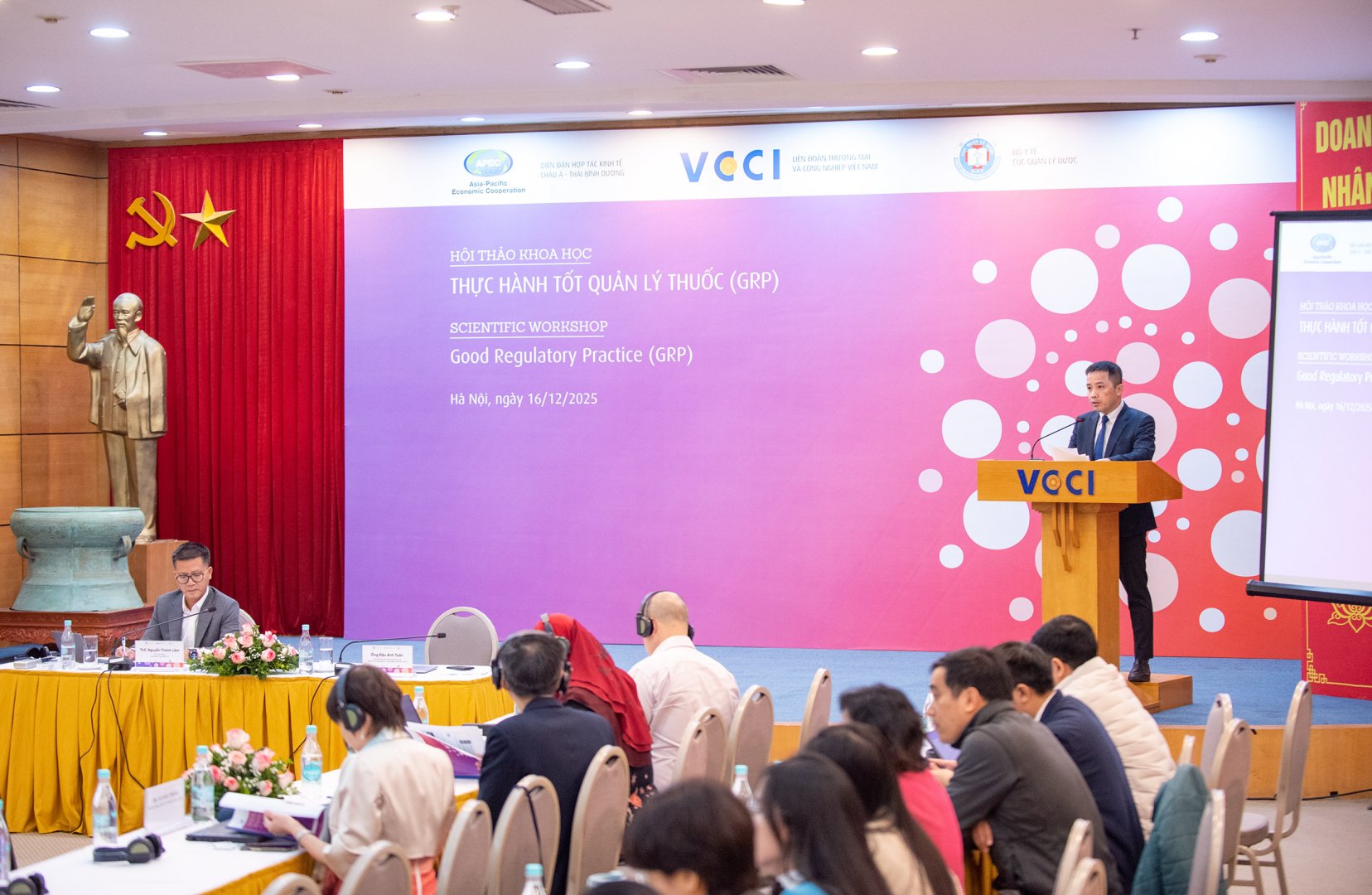
In his opening remarks, Mr. Dau Anh Tuan, Deputy Secretary General of VCCI and Director of the Legal Department, emphasized: ‘The pharmaceutical sector is an indispensable pillar of the healthcare system, especially in the context of pandemics and climate change.’ He particularly underscored the importance of Politburo Resolution No. 72-NQ/TW (dated September 9, 2025) on strengthening the protection and care of public health, aiming toward a modern, equitable, and effective healthcare system.
Mr. Tuan reviewed Vietnam’s achievements, noting that the Ministry of Health has promoted administrative reforms, applied information technology, and shortened the processing time for drug registration dossiers. The pharmaceutical market is experiencing strong growth, with several facilities having mastered biotechnology for the production of specialized therapeutic medicines. In terms of digital transformation, 34 provinces and cities have been interconnected, more than 50,000 medicines have been publicly disclosed, and information on 68,000 manufacturing and trading establishments has been fully updated.
However, he acknowledged that the pharmaceutical legal and regulatory system of Vietnam and many APEC economies still needs further improvement and updating in line with global scientific and technological trends.

Mr. Nguyen Thanh Lam, Deputy Director of the Drug Administration of Vietnam (DAV), Ministry of Health, emphasized that the pharmaceutical sector is one of the most highly regulated and standardized industries. Across all activities of enterprises and healthcare facilities, compliance with Good Practices standards is required, such as GDP for distribution establishments, GMP for manufacturing facilities, GSP for import–export operations, GPP for pharmacies, and GLP for quality control and testing.
For regulatory authorities, the Ministry of Health and the Drug Administration of Vietnam are likewise required to comply with Good Regulatory Practices (GRP). In practice, the DAV has implemented many aspects of GRP and has moved closer to international standards. For example, all processes for developing legal and regulatory documents are conducted transparently, with public consultation of relevant stakeholders.
Good medicines management practices and good practices in the assessment of drug registration dossiers are key components, requiring both a sound legal basis and consistent, public, and transparent application, while also allowing flexibility in management, ultimately ensuring scientific rigor and regulatory effectiveness.
The project aims to: (i) establish a sustainable, harmonized regulatory framework that is conducive to trade and investment; (ii) enhance the capacity of health authorities through the sharing of good practices from APEC economies, improve the efficiency of drug registration, and enhance patients’ access to medicines; (iii) promote the production of high-quality medicines in Vietnam; and (iv) improve the effectiveness of enforcement of pharmaceutical legislation.
The project is being implemented in the context of the National Strategy for the Development of the Pharmaceutical Industry to 2030, with a vision to 2045 (Decision No. 1165/QD-TTg), which aims to position Vietnam as a regional hub for high-value pharmaceutical manufacturing.
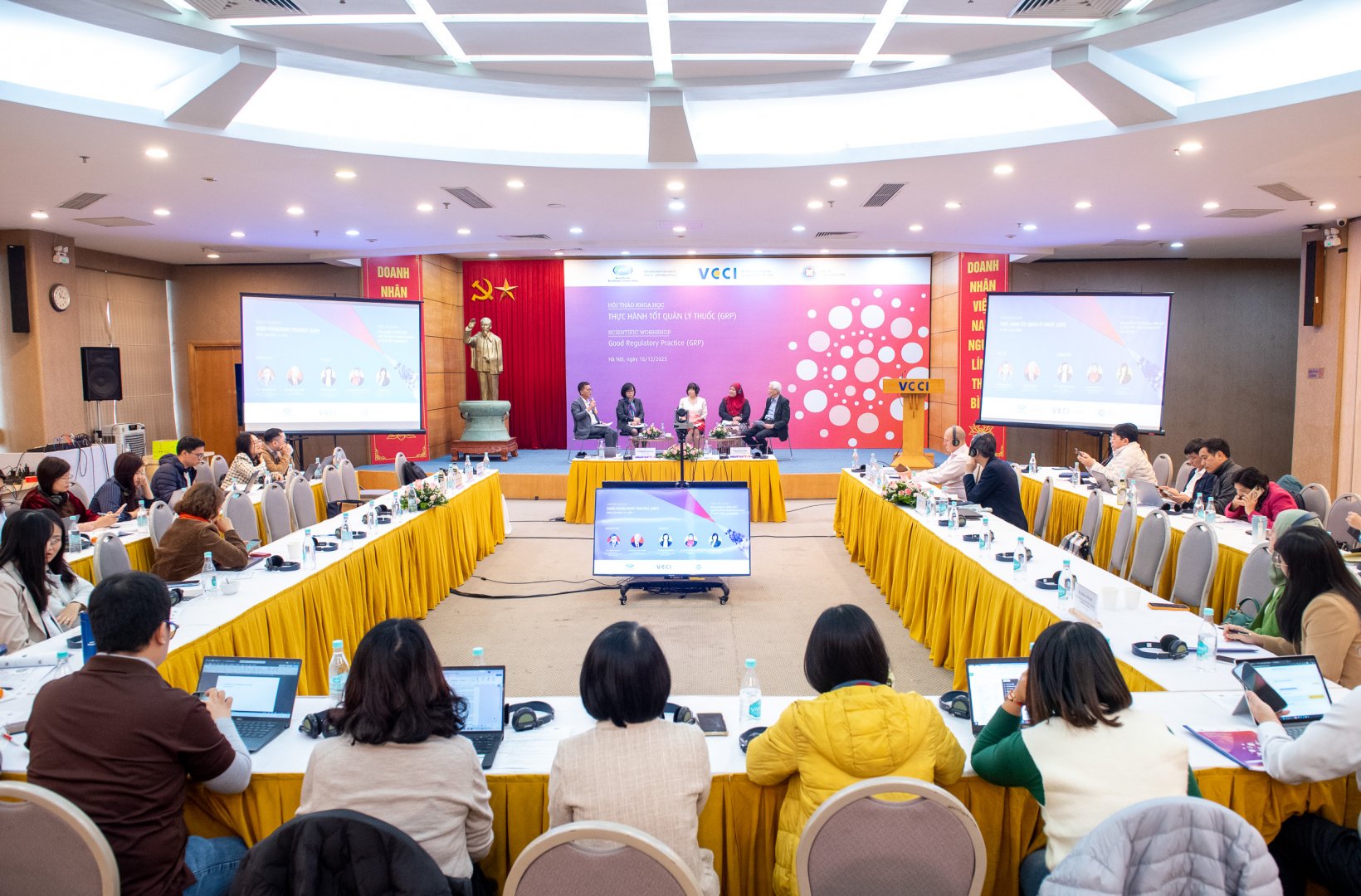
The workshop created a forum for the exchange of experience, knowledge, and good practices among ASEAN and APEC economies and domestic experts, with the aim of promoting a strong, effective, and sustainable pharmaceutical regulatory system.
At the workshop, Dr. Sannie Chong, Senior Director of Global Policy at MSD and a member of the APEC Regulatory Harmonization Steering Committee (APEC–RHSC), shared insights on the concept, key principles, and implementation of Good Regulatory Practices (GRP) for medicines in line with the World Health Organization (WHO) guidelines. Dr. Chong particularly emphasized that good medicines regulatory practices and good reliance practices are two important tools supporting regulatory system strengthening. Her presentation also introduced new approaches to Good Review Practices and Good Submission Practices, with a view to further improving the submission and assessment of drug registration dossiers.
Ms. Maslinda, Head of Policy and Strategic Planning at the National Pharmaceutical Regulatory Agency (NPRA) of Malaysia, also shared valuable experiences from the Agency’s implementation of Good Regulatory Practices. Five practical lessons highlighted by Ms. Maslinda included: the essential role of risk-based and proportionate regulation; the particular importance of post-implementation evaluation of regulations for medicines; the need to ensure flexibility within the GRP framework; enhanced stakeholder engagement to improve outcomes; and, last but not least, the application of digital transformation as a key factor for the success of GRP.

The workshop was held actively, featuring a thematic discussion on ‘Key Points of WHO GRP, Global Implementation of WHO GRP, and GRP Implementation in Vietnam,’ chaired by Mr. Nguyen Thanh Lam, Deputy Director of the Drug Administration of Vietnam, Ministry of Health, and Assoc. Prof. Dr. Le Van Truyen, Senior Expert and former Deputy Minister of Health, with invited experts including Dr. Nguyen Khanh Phuong, Director of the Institute of Health Strategy and Policy, Ministry of Health, and two international experts who had just presented.
Mr. Lam highly appreciated the insights shared by the speakers and guests, and affirmed that GRP is a priority area that the Drug Administration has been actively implementing. The discussion session focused on the following topics:
The success of the workshop promises to generate numerous ideas for regulatory authorities to continue modernizing and enhancing transparency in the pharmaceutical management system, ensuring that the management and licensing of medicines are increasingly effective and flexible in the context of rapidly evolving science, technology, and international developments.