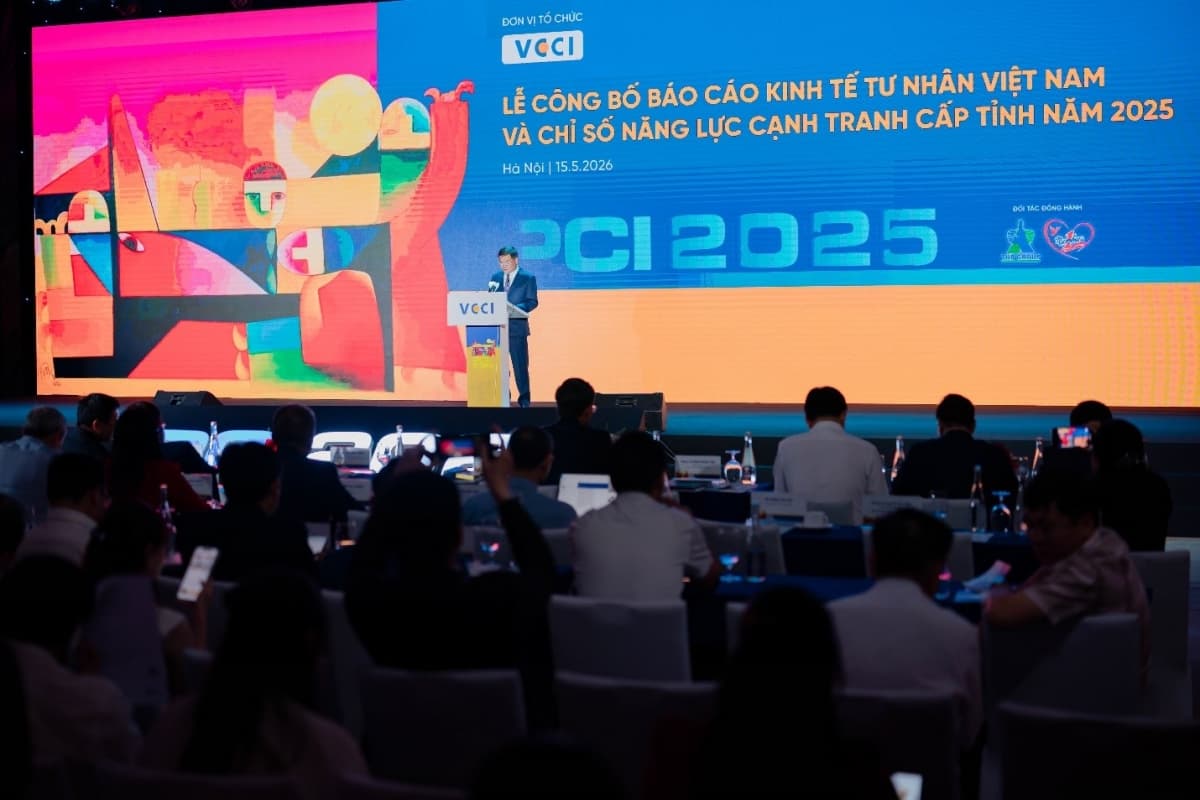
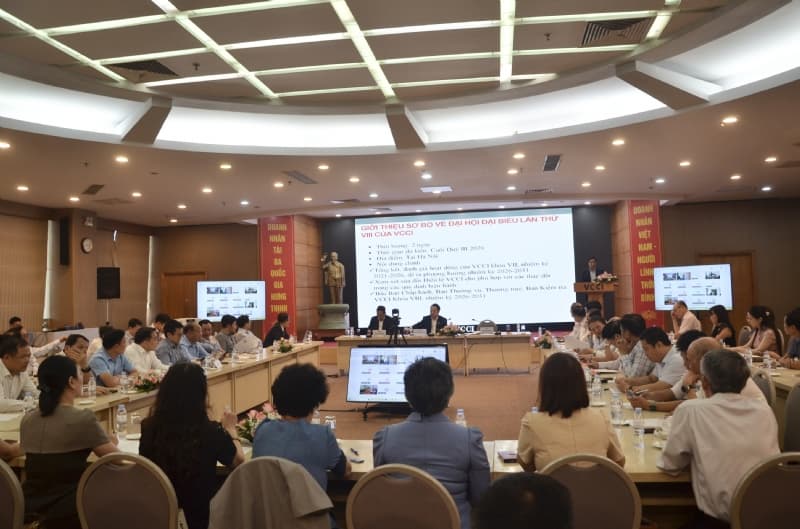
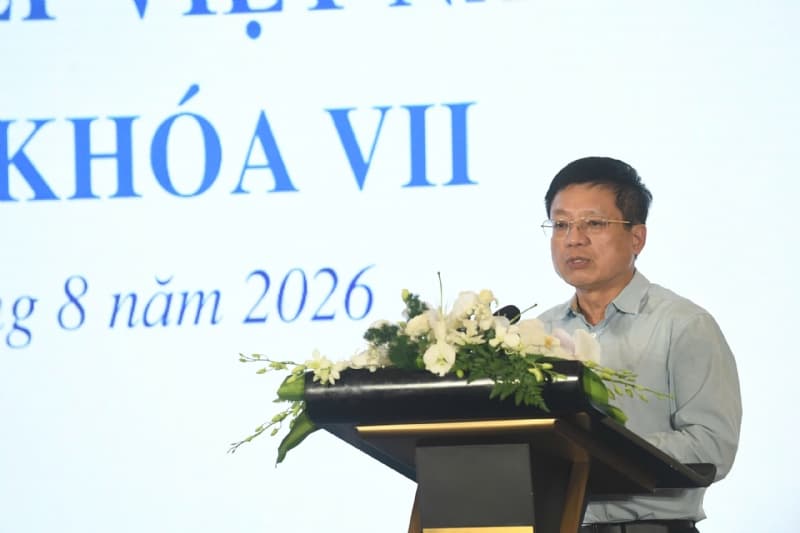
Photo: Mr. Hoang Quang Phong, Vice President of VCCI, speaks at the congress.
On May 8, 2026, in Hanoi, the founding congress of the Vietnam Mergers & Acquisitions Association (VMAA) was held, marking the first time Vietnam has established a specialized professional organization in the field of mergers and acquisitions.
The congress announced the establishment decision of the association, approved its charter and operational program for the 2026–2031 term, elected the first Executive Committee, Inspection Board and leadership apparatus, while also signing a number of strategic cooperation agreements.
According to VMAA, Vietnam’s M&A market recorded around 367 deals in 2025 with a total value of US$8.7 billion, up 26% compared to the previous year, reflecting a clear recovery trend and substantial growth potential.
At the same time, demand for corporate restructuring among domestic enterprises has been increasing as the number of newly established and resumed businesses reached nearly 297,500, while 227,200 enterprises exited the market.
However, despite the rapid expansion of the market in recent years, M&A activities in Vietnam still lack a synchronized development foundation. Many deals continue to rely heavily on personal relationships and fragmented connections, while market data systems, professional standards, specialized training and legal support mechanisms remain underdeveloped.
Speaking at the congress, Mr. Hoang Quang Phong, Vice President of VCCI, said the emergence of a connecting organization in the M&A sector comes at a time when the business community needs additional momentum for restructuring and enhancing competitiveness.
According to Mr. Hoang Quang Phong, amid ongoing volatility in international markets and numerous internal challenges faced by domestic enterprises, stronger cooperation, linkages and restructuring have become almost inevitable.
“M&A should not merely be understood as simple buying and selling or mergers. It should also be seen as a process of restructuring cooperation models and upgrading corporate governance toward greater modernization,” he emphasized.
The VCCI Vice President also noted that alongside institutional reforms, administrative procedure simplification and the implementation of major resolutions on innovation, international integration and private sector development, Vietnam’s M&A market is gaining more room to develop in a more transparent and professional direction.
“What matters is building trust among businesses and creating collective strength to enhance the competitiveness of Vietnamese enterprises,” Mr. Hoang Quang Phong stressed.
 Photo: The VMAA Executive Committee makes its debut at the congress.
Sharing a similar view, Mr. Pham Dinh Doan, Chairman of Phu Thai Holdings Group, said that amid rapid changes driven by technology, AI and new business models, many Vietnamese enterprises are simultaneously facing pressures related to capital, governance, technology and expansion.
According to Mr. Doan, what businesses need today is not only additional financial resources but also stronger linkages to avoid fragmented competition and self-weakening.
“M&A is no longer simply about buying and selling businesses. It should be regarded as a restructuring tool, a growth solution and a means of mobilizing resources,” he said.
Mr. Pham Dinh Doan predicted that over the next 5–10 years, many Vietnamese enterprises will enter phases of generational transition, capital raising, strategic partnerships, joint ventures or mergers in order to adapt to new competitive pressures.
Therefore, the market needs more mechanisms for connectivity, resource sharing and governance standardization. A market-connecting organization should not stop at facilitating transactions, but should also connect knowledge, businesses, investors and experts, while promoting transparency, governance standardization and risk reduction in M&A deals.
Meanwhile, Dr. Nguyen Duc Kien, Executive Vice Chairman of VMAA and former head of the Prime Minister’s Economic Advisory Group, said the biggest bottleneck of Vietnam’s M&A market today is not the lack of demand for transactions, but the absence of a synchronized operational ecosystem.
According to him, the market still lacks reliable data, professional standards, specialized advisory teams and effective coordination mechanisms among enterprises, investors and regulatory agencies.
Dr. Nguyen Duc Kien said VMAA’s long-term focus will be on developing a sustainable M&A ecosystem, strengthening connections among businesses, investment funds and consulting organizations, thereby helping Vietnamese enterprises improve governance capacity, expand scale and integrate more deeply into emerging value chains.
Under its operational orientation for the 2026–2031 term, VMAA will prioritize building a national M&A database, publishing annual market reports, promoting professional training and standardization in the M&A field, and forming networks of experts, lawyers, banks, investment funds and advisory organizations to support transactions.
Notably, a specialized M&A investment fund model has also been identified as a long-term direction to support key transactions and accompany Vietnamese enterprises in restructuring, expanding operations and enhancing competitiveness.