VIETNAM CHAMBER OF COMMERCE AND INDUSTRY
Liên Đoàn Thương Mại Và Công Nghiệp Việt Nam
Fri, Feb 13, 2026, 23:22:00
The Guidance is the result of a year-long process of rigorous and responsible research, with extensive consultation and practical exchanges involving a wide range of business representatives across the food and beverage supply chain. The content of the Guidance has been developed through a balanced integration of international standards on responsible business conduct and Viet Nam’s current legal framework, with the aim of supporting enterprises in ensuring legal compliance while progressively enhancing governance quality, operational efficiency, and the achievement of sustainable business values.
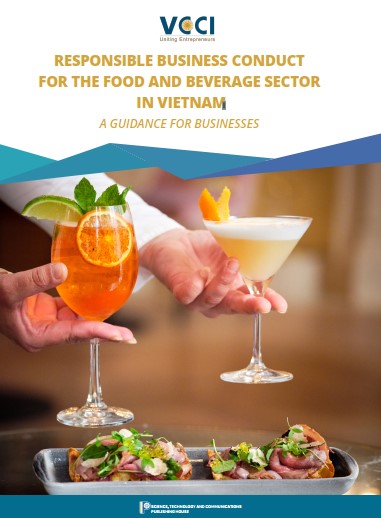
According to the consultancy team, the Guidance does not focus solely on principle-based requirements, but places particular emphasis on practicality and applicability. The guidance content is designed with flexibility, taking into account differences in enterprise size, resources, and levels of readiness—from large enterprises with complex supply chains to small and medium-sized enterprises that are gradually approaching sustainable development standards. Accordingly, enterprises can select appropriate pathways to integrate responsible business principles into their production, business operations, and risk management practices.
The launch of the Guidance takes place at a time when responsible business practices are undergoing significant transformation, driven by international standards, increasingly stringent market requirements, and rising expectations from investors. At the domestic level, the National Action Plan for law and policy improvement to promote responsible business practices (RBP) in Viet Nam for the period of 2023 - 2027 demonstrates the strong commitment of the Government of Viet Nam to internalizing and advancing international standards, thereby enhancing corporate governance quality and strengthening transparency and supply chain oversight.
Accordingly, the Guidance is expected to become a valuable reference for the food and beverage business community, not only in complying with domestic legal requirements but also in proactively adapting to emerging demands from export markets, international partners, and investors with a strong focus on environmental, social, and governance (ESG) factors. In doing so, the Handbook contributes to supporting enterprises in building a solid foundation for sustainable development, while enhancing their credibility and long-term competitiveness.