VIETNAM CHAMBER OF COMMERCE AND INDUSTRY
Liên Đoàn Thương Mại Và Công Nghiệp Việt Nam
Thu, Feb 05, 2026, 16:37:00
Presenting at the Forum, Dau Anh Tuan – Deputy Secretary General and Head of the Legal Department of the Vietnam Chamber of Commerce and Industry (VCCI) – stated that the Southern Key Economic Region comprises Ho Chi Minh City, Dong Nai, Tay Ninh and Lam Dong. Ho Chi Minh City serves as the region’s hub for R&D, finance, technology and maritime logistics; Dong Nai is a logistics centre and a destination for next-generation FDI; Tay Ninh functions as a gateway along the East–West corridor connecting the Mekong Delta and Cambodia; while Lam Dong acts as the region’s green hinterland, focusing on high-tech agriculture and tourism.
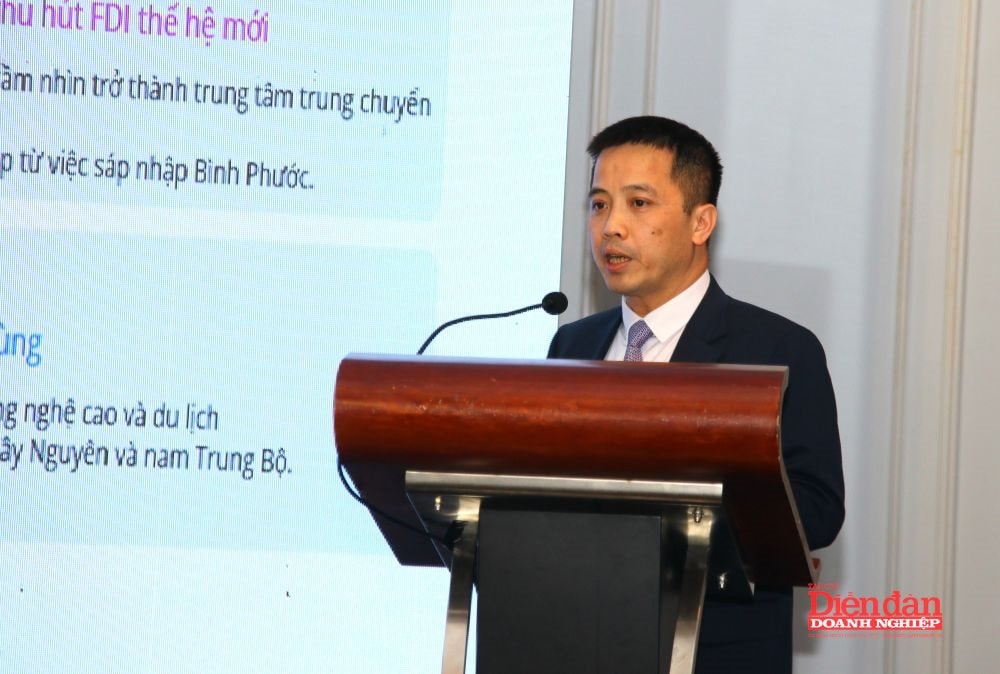 Mr. Dau Anh Tuan – VCCI Deputy Secretary General and Head of the Legal Department – delivering remarks at the Forum.
Regarding the region’s competitive advantages, Dau Anh Tuan noted that following administrative restructuring, infrastructure and logistics – previously fragmented – have been strategically synchronised, from seaports, airports, road and rail networks to inland container depots. This has generated significant economic benefits, including reducing and gradually eliminating overlapping infrastructure port fees and BOT charges among previously separate localities, and lowering logistics costs by an estimated 10–15%. If infrastructure is planned in an integrated and unified manner, enterprises could further reduce logistics expenses by approximately 10–15% compared to previous levels. The region also has the potential to become an important international transshipment hub in Asia thanks to enhanced multimodal connectivity.
However, Dau Anh Tuan also pointed out several challenges that need to be addressed. Following administrative restructuring, the consolidation of organisational structures, changes in authority, and the absence of guiding documents have created risks of administrative procedures being delayed. Enterprises have had to spend additional time and effort to facilitate documentation through newly formed administrative bottlenecks. Projects approved under previous administrative frameworks may also require review to ensure alignment with new planning frameworks, while inter-sectoral coordination has become more complex due to transitional uncertainties in authority.
Additional challenges include infrastructure development constraints, uneven public investment disbursement among localities, and cases where major transport routes have been completed while feeder roads and connecting routes to industrial zones remain unfinished due to land clearance obstacles. The region also faces increasing pressure to pursue green development and address climate change risks.
Based on these challenges, Dau Anh Tuan proposed four groups of recommendations for the region.
First, strengthening regional governance mechanisms and public-private dialogue. This includes shifting from a control-based approach to a facilitation-oriented mindset, establishing regional coordination mechanisms, creating specialised strategic task forces to implement “one-stop” administrative procedures for major investors, and strengthening coordination in transport infrastructure planning and joint investment promotion.
Second, accelerating connectivity and infrastructure development. This involves ensuring the completion of key regional transport infrastructure projects as planned, while allocating sufficient funding and land resources for the construction of feeder roads and connecting routes linking major transport corridors with industrial zones.
Third, promoting the digital economy and innovation ecosystems.
Fourth, reforming approaches to private sector development. This includes implementing Resolution 68 through specific action programmes and improving market development and institutional reforms by transitioning from pre-inspection to post-inspection mechanisms.
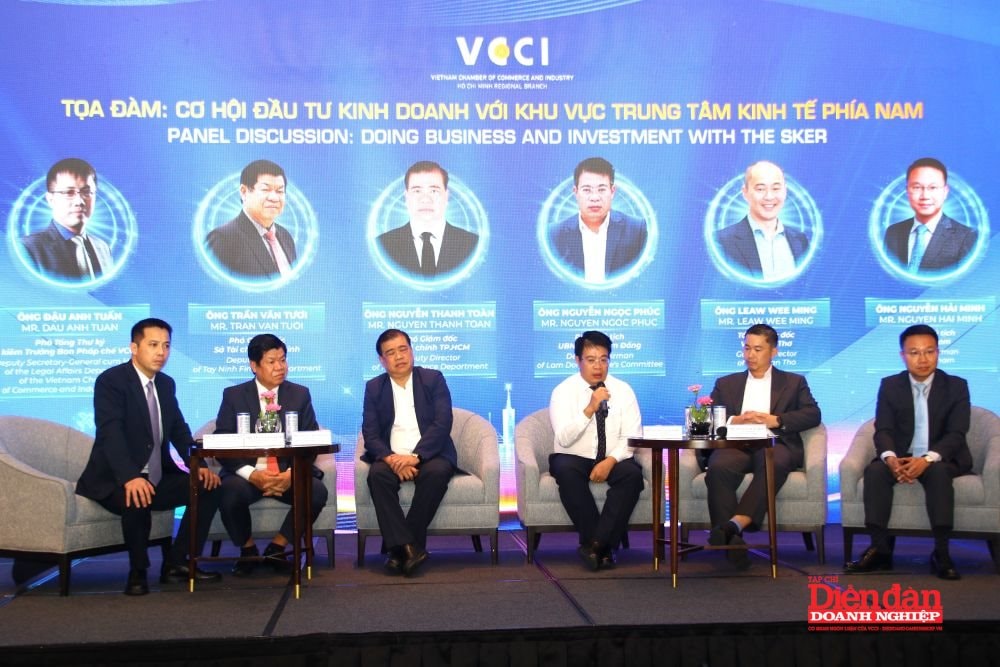
Speakers at the discussion session.
During the discussion session, Nguyen Hai Minh – Vice Chairman of EuroCham Viet Nam – noted that Viet Nam has consistently been a reliable European partner in Southeast Asia, supported by multiple pillars, including the EU–Viet Nam Free Trade Agreement, which has delivered significant benefits after five years of implementation.
Regarding investors, Nguyen Hai Minh said they recognised Viet Nam’s strong transformation, particularly in introducing new policies and, more importantly, adopting a new mindset and approach towards private sector development.
According to Minh, most investors have expressed confidence and optimism regarding Viet Nam’s development and reform prospects. However, he also noted that many investors still encounter administrative procedure-related obstacles when investing in Viet Nam.
“For localities, investors are interested in understanding each locality’s advantages, market potential and trade environment, which ultimately influence their investment decisions. For southern localities in particular, European investors show strong interest in infrastructure sectors, including road networks, railways, high-speed rail, airports and especially seaport infrastructure,” Nguyen Hai Minh said.
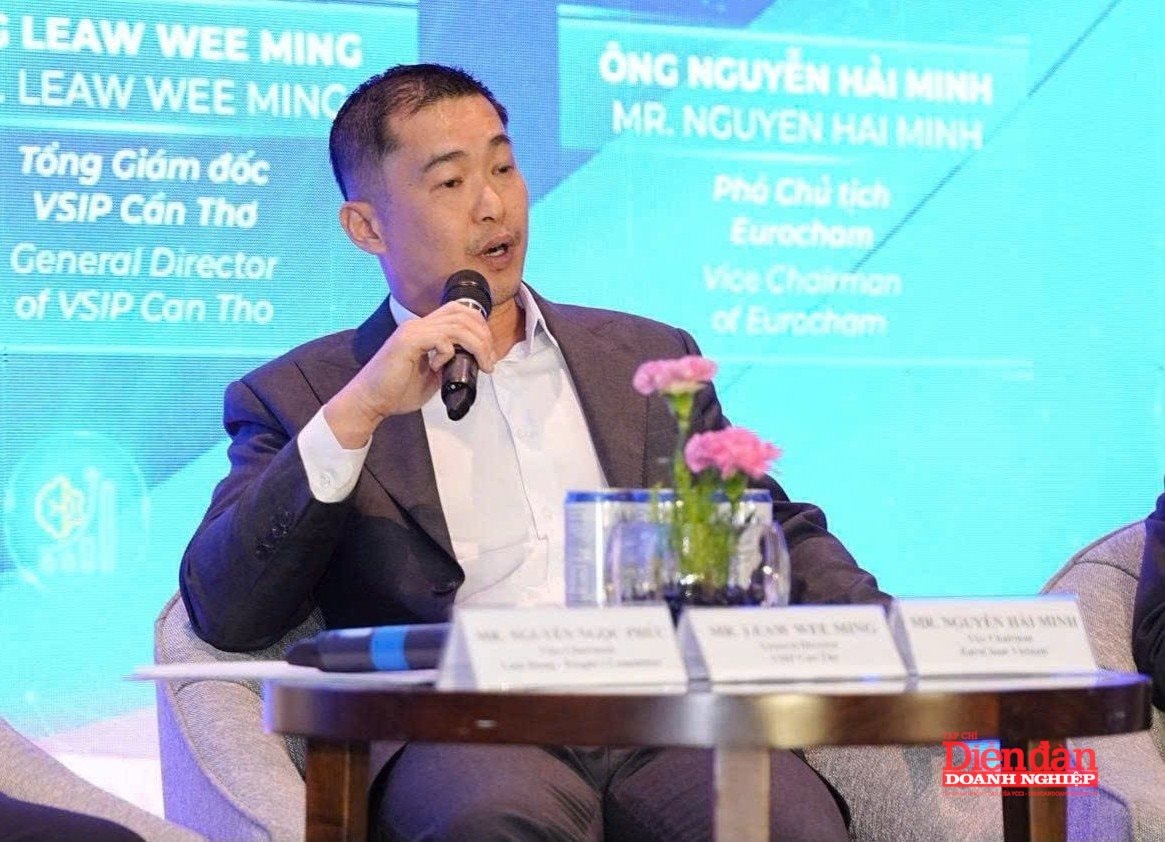
Leaw Wee Ming – General Director of VSIP Can Tho Joint Stock Company – speaking at the discussion session.
From an investor perspective, Leaw Wee Ming – General Director of VSIP Can Tho Joint Stock Company – emphasised that amid intense competition in investment attraction, high-quality investors typically seek three key factors: reliable infrastructure, a transparent and trustworthy operating environment, and long-term partnership opportunities.
He noted that VSIP Can Tho prioritises investors engaged in sustainable production and business activities, committed to long-term investment, particularly enterprises aligned with green transformation and high value-added production. At the same time, VSIP Can Tho focuses on building investor confidence through strong implementation capacity, timely support, clear and transparent procedures, and consistent operational standards.