VIETNAM CHAMBER OF COMMERCE AND INDUSTRY
Liên Đoàn Thương Mại Và Công Nghiệp Việt Nam
Thu, Feb 05, 2026, 16:34:00
As part of a series of activities accompanying localities in the Southern Key Economic Region to affirm their roles, positions and development potential, while promoting local images and investment environments to domestic and international partners, the Vietnam Chamber of Commerce and Industry – Ho Chi Minh City Branch (VCCI-HCM) organised the Forum on “Investment and Business in the Southern Key Economic Region” on the afternoon of February 4.
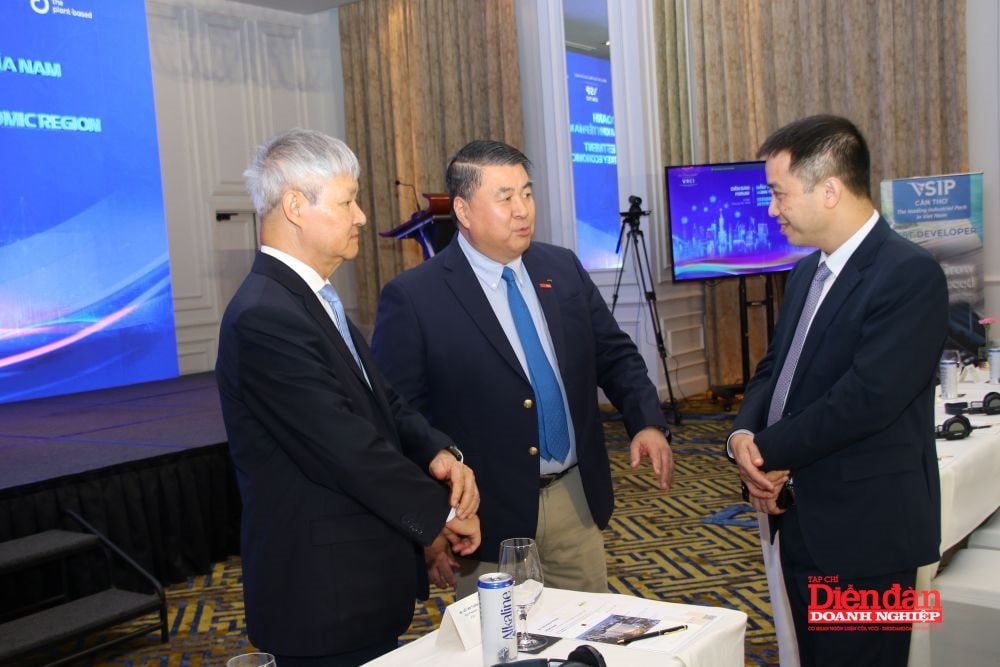
VCCI Vice President Vo Tan Thanh and VCCI Deputy Secretary General Dau Anh Tuan exchanged views with delegates ahead of the Forum.
Speaking at the Forum, Vo Tan Thanh, Vice President of the Vietnam Chamber of Commerce and Industry (VCCI), stated that 2025 was a year of special significance for Viet Nam’s economy. It marked the final year of the 2021–2025 Five-Year Socio-Economic Development Plan, while also laying an important foundation for the country to enter a new development phase with higher aspirations and stronger reform requirements.
Against the backdrop of continued global economic volatility – including slowing global growth, prolonged geopolitical conflicts, increasing protectionism and economic fragmentation, as well as the increasingly visible impacts of climate change and natural disasters – Viet Nam’s economy recorded a remarkable breakthrough.
In 2025, Viet Nam’s GDP growth reached 8.02%, among the highest in the region and globally. The size of the economy officially surpassed USD 514 billion, placing Viet Nam 32nd in the world.
“Per capita income was estimated at USD 5,026, an increase of USD 326 compared to 2024 – a figure demonstrating that growth quality is gradually improving. Notably, inflation was controlled at 3.31%, lower than the target set by the National Assembly, contributing to macroeconomic stability and strengthening investor confidence,” said Vice President Vo Tan Thanh.
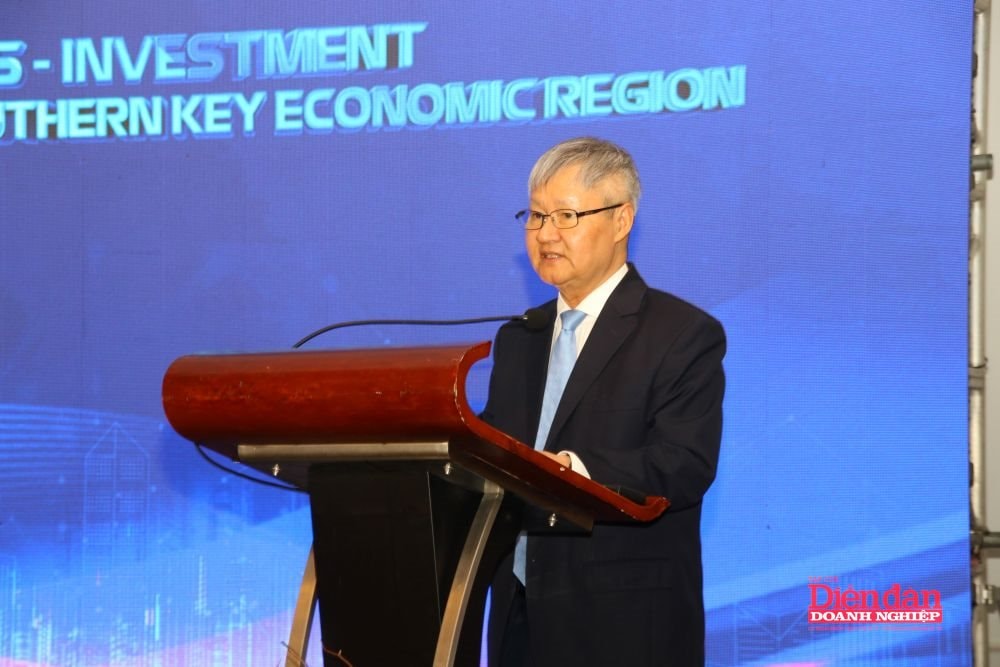
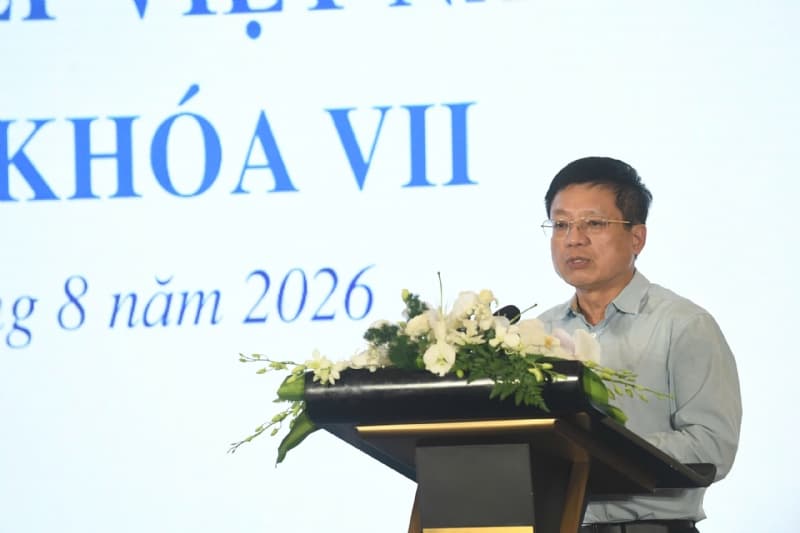
VCCI Vice President Vo Tan Thanh speaking at the Forum.
According to Vice President Vo Tan Thanh, international trade continued to be a bright spot, with total import-export turnover reaching a record USD 930 billion, up more than 18%, including a trade surplus of over USD 20 billion, placing Viet Nam among the world’s top 20 economies in terms of trade volume.
Disbursed foreign direct investment reached approximately USD 27.6 billion, up 9%, reflecting growing confidence among international investors in Viet Nam’s long-term prospects. Tourism also recovered strongly, welcoming nearly 21.2 million international visitors, up more than 20% compared to the previous year, contributing positively to service sector growth, consumption and employment.
He noted that these results demonstrate that Viet Nam’s economy has not only recovered but regained strong growth momentum, creating an important foundation for the next development phase.
However, Vice President Vo Tan Thanh also emphasised the need for a frank and realistic assessment that the economy still faces numerous challenges.
Domestic demand has not yet recovered sustainably; many enterprises, especially small and medium-sized enterprises, continue to face difficulties in accessing capital; production and business costs remain high; and consumption markets still contain potential risks. Several institutional bottlenecks related to administrative procedures, public investment, logistics infrastructure and high-quality human resources have yet to be fully resolved.
“This requires a very clear direction: the road ahead cannot rely solely on recovery but must focus on fundamentally transforming the growth model, improving productivity, quality, efficiency and competitiveness of the economy,” Vice President Vo Tan Thanh stated.
He added that within this overall context, the Southern Key Economic Region continues to affirm its role as one of the country’s most important growth drivers. With Ho Chi Minh City and neighbouring localities as its core, the region serves as a major hub for industry, trade, services, finance, logistics and innovation. It is home to a dynamic business community, large domestic and international corporations, and a rapidly growing startup ecosystem.
Vice President Vo Tan Thanh further noted that in 2025, the southern region continued to contribute significantly to GDP, state budget revenues and export turnover, while maintaining a leading role in attracting investment, promoting international integration and driving innovation.
However, as the country’s growth engine, the region is also facing major challenges, including pressure on transport and logistics infrastructure, limited development space, intensifying competition for high-quality investment, and increasing requirements for green growth, sustainable development and digital transformation.
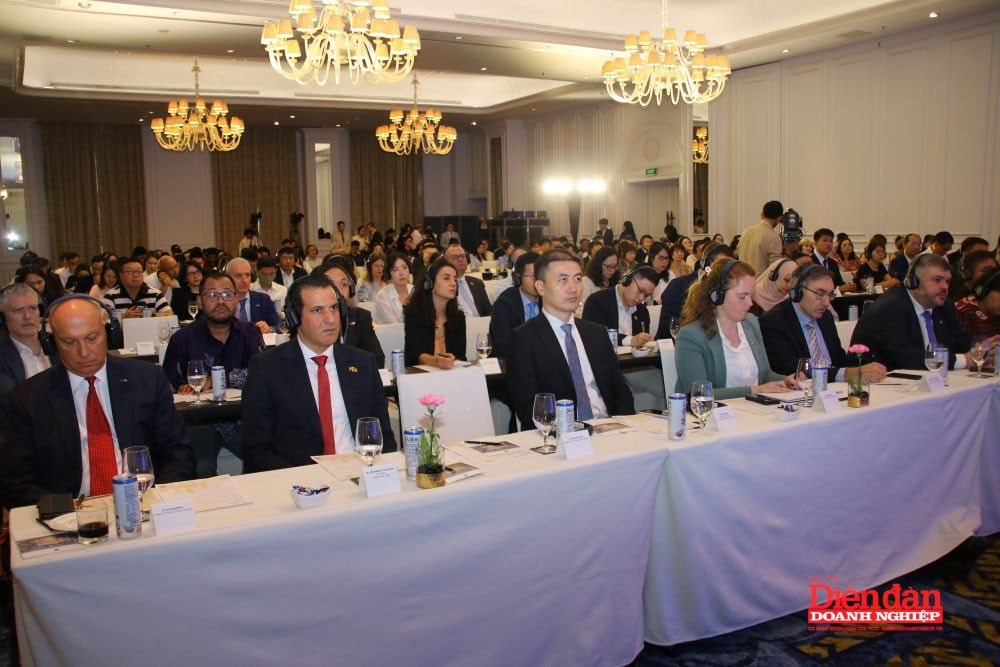
Delegates and enterprises attending the Forum.
Regional connectivity is also a crucial issue. Without coordination and synchronisation, the overall advantages of the region will be difficult to maximise. Conversely, strengthening regional linkages, resource sharing, coordinated planning and development orientation will create significant room for the Southern Key Economic Region to accelerate growth in the coming period.
According to Vice President Vo Tan Thanh, entering 2026, Viet Nam has set ambitious development targets, aiming towards a new era with a focus on science and technology, innovation and sustainable development.
The Government targets GDP growth of 10% or higher, per capita GDP of approximately USD 5,400–5,500, labour productivity growth of around 8%, and an increase in the share of manufacturing and processing industries to nearly 28% of GDP.
To achieve these goals, he highlighted several key policy priorities that are of particular interest to the business community and investors.
First, breakthroughs in infrastructure development and regional connectivity – not only highways, railways and seaports, but also logistics infrastructure, digital infrastructure and supply chain connectivity.
Second, science and technology, the digital economy and semiconductors will be prioritised sectors, requiring more proactive participation from the business sector, particularly in developing high-quality human resources.
Third, stronger institutional reform to remove bottlenecks related to land, investment and administrative procedures, thereby unlocking and effectively mobilising social resources, especially from the private sector.
Fourth, green transformation and sustainable growth are no longer optional but mandatory requirements for Vietnamese enterprises to maintain and expand their presence in international markets.
“In this context, the role of VCCI and organisations representing and supporting enterprises must continue to be innovated towards more substantive engagement with enterprises and localities. VCCI commits to continuing as a trusted bridge between enterprises and the Government, as well as between Vietnamese enterprises and the international investment community, while promoting activities to enhance enterprise capacity, market connectivity, trade promotion and investment facilitation,” Vice President Vo Tan Thanh emphasised.