VIETNAM CHAMBER OF COMMERCE AND INDUSTRY
Liên Đoàn Thương Mại Và Công Nghiệp Việt Nam
Tue, Mar 24, 2026, 10:22:00
According to Mr. Tran Ngoc Liem, Director of the Vietnam Chamber of Commerce and Industry (VCCI) – Ho Chi Minh City Branch, the design community, especially in creative design, plays a crucial role in the furniture, wood and wood products sector – one of Vietnam’s key billion-dollar export industries.
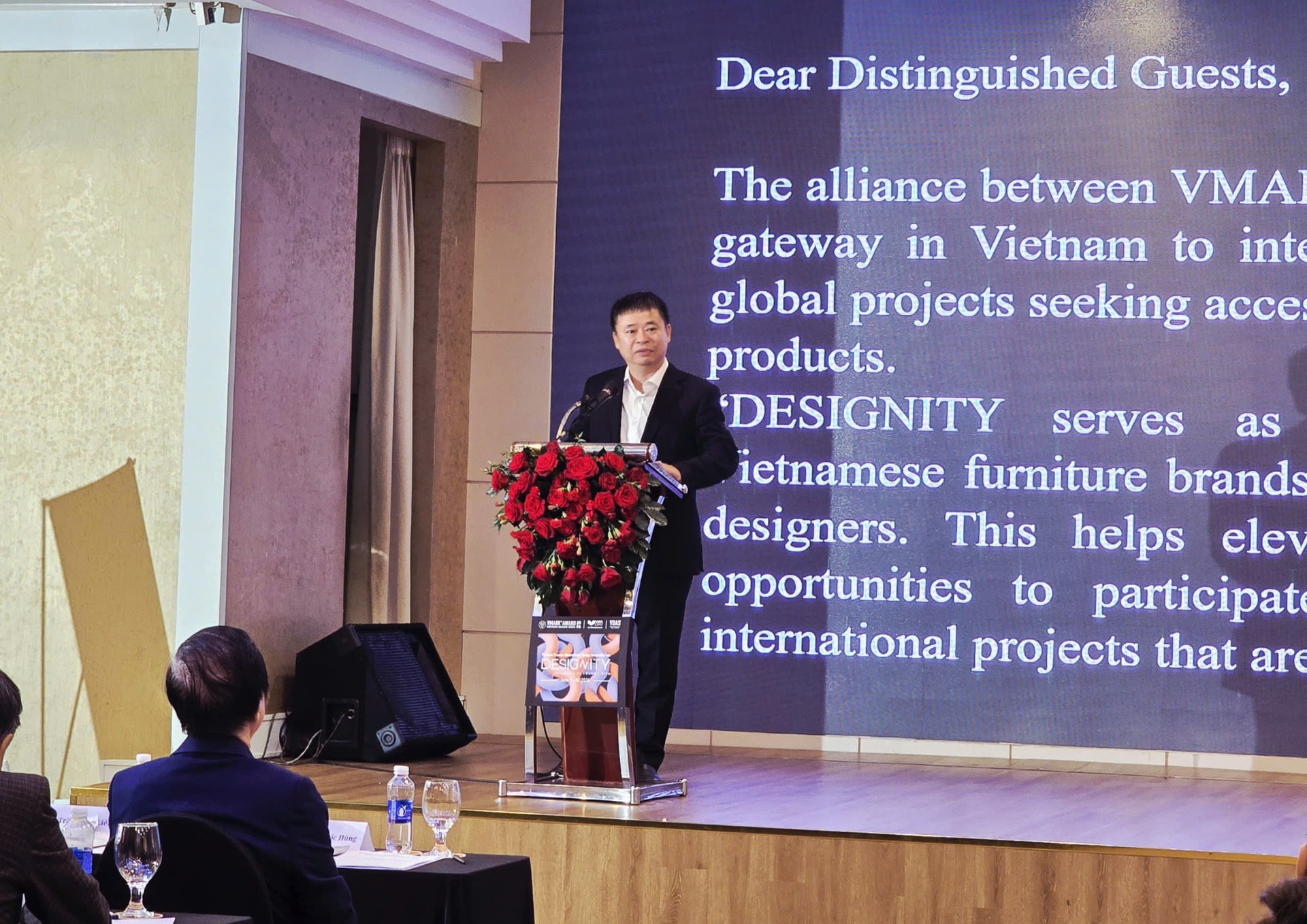 Mr. Tran Ngoc Liem, Director of VCCI – Ho Chi Minh City Branch, speaking at the event.
Speaking at the official launch of Vietnam Design Week and Awards (VMARK) 2026, alongside the debut of DESIGNITY – the International Design and Creative Products Exhibition, Mr. Tran Ngoc Liem noted that Ho Chi Minh City and the Southern Key Economic Region serve as the country’s economic engine. With a consumer market of around 25 million people—accounting for one quarter of the national population—this region is home to 43% of operating enterprises nationwide. Its contributions of 35% of GDP, 34% of total exports and more than half of total foreign direct investment (55%) underscore its strategic importance to national economic development and the business community.
“I highly appreciate the role of the design community, particularly creative design. For businesses, design is not just form but a core strategic factor that creates competitive advantages and enhances revenue and profit,” Mr. Liem emphasized. Surveys show that companies investing in creative design for products and services can achieve growth rates five to six times higher than those that do not.
If businesses previously focused mainly on product quality, global trends have now shifted toward sustainable development. In the era of science, technology and innovation, design has become a decisive factor for the long-term survival and growth of enterprises in the modern economy.
Mr. Tran Ngoc Liem added that the launch of VMARK 2026 and DESIGNITY, co-organized by VMARK and VIFA under the theme “Design / Recreating the World,” represents a concrete and promising linkage between the creative design sector and the wood, furniture and handicraft industries. Ho Chi Minh City and surrounding provinces are currently the production hub of this sector, helping Vietnam rank among the world’s top five wood exporters, recently rising to second place.
However, he pointed out that 55% of Vietnam’s wood export value and 45% of its furniture exports depend on the United States market. Overreliance on a single market poses significant risks amid global uncertainties. Moreover, while overall exports have grown by over 17%, the wood industry has only increased by about 6–7% and shows signs of slowing. Without creating innovative, differentiated, high-value products, Vietnam risks losing its position in the global market.
“The combination of VMARK and VIFA Expo—one of the region’s leading furniture exhibitions and among the world’s top seven—will open direct access for international partners to Vietnamese creative products.
Designity serves as a key bridge enabling Vietnamese furniture brands to connect directly with leading designers, enhance product value and participate in large-scale projects in real estate, hospitality and F&B. This is not merely a short-term event but a long-term journey aimed at building an ecosystem, fostering multi-sector connections between designers, architects and manufacturers; transforming mindset by embedding design into business value; and nurturing a resilient Vietnamese design community capable of competing globally and positioning Vietnam as a new creative hub in Asia,” Mr. Liem stated.
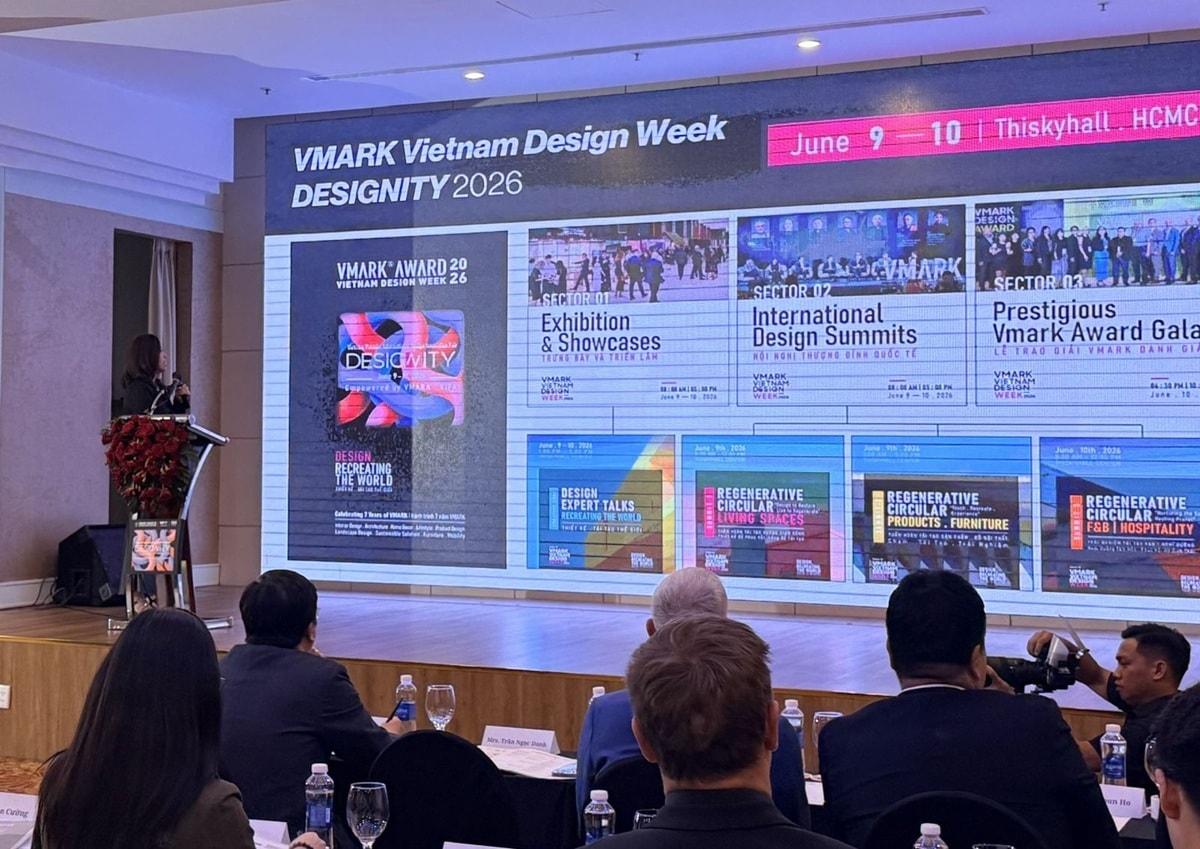 Organizing committee representatives introducing VMARK 2026 in Ho Chi Minh City.
In practice, Vietnam’s furniture industry has built a notable position on the global production and export map. However, according to Mr. Dang Quoc Hung, CEO of Alliance Wood Craft JSC (organizer of VIFA Expo), while manufacturing forms the foundation, design is the key to differentiation and sustainability.
Meanwhile, as highlighted by Mr. Liem, many businesses still operate mainly in the processing stage of the value chain, while higher value lies in design, branding and product development capabilities.
From the design sector’s perspective, Mr. Ho Tan Duong, Chairman of the Ho Chi Minh City Design Association (VDAS), stated that design is no longer limited to aesthetics but has become a tool for economic development and innovation. It directly contributes to improving product quality, brand positioning and even shaping how businesses approach markets.
However, the gap between design and production in Vietnam remains significant. On one side are designers and architects with creative ideas; on the other are manufacturing enterprises with industrial capacity and commercial networks. The lack of a connecting platform means many ideas fail to be commercialized, while businesses lack design resources to upgrade their products.
In this context, creating platforms that connect creativity and production is considered essential. According to Mr. Ho Tan Duong, VMARK 2026 is expected to attract around 200 brands and thousands of designers from Vietnam and abroad. As the design industry undergoes rapid transformation, building a connected creative ecosystem is a key factor, he stressed.
He also noted that in the future, design will play a central role in corporate development strategies, going beyond aesthetics to become a tool for enhancing competitiveness. Establishing a professional, transparent and highly connected platform will help Vietnam’s design industry move closer to international standards.
From a business perspective, Ms. Phan Hoang Anh, representative of An Cuong Wood JSC—the main sponsor of the design awards—shared that in the era of artificial intelligence, where design can be generated faster than ever, the biggest challenge is no longer ideation but execution. Only when designs are realized with suitable, sustainable materials can they fully deliver their value. This highlights the crucial role of the materials sector in the value chain.
“At An Cuong, we do not merely supply materials but position ourselves as solution providers. With more than 30 years of experience since 1994, we aim to bridge the gap between design and execution through a Complete Package ecosystem, from materials and accessories to synchronized technologies. Based on this orientation, An Cuong continues to innovate toward sustainable materials while diversifying textures such as wood grains, stone patterns and modern finishing effects,” she said. She also revealed the company’s breakthrough plan for 2026, including the introduction of 3D Emboss WPB surfaces, featuring metallic finishes like Inox Gloss and Metal Feel, as well as premium wood textures like Veneer, creating depth and sophistication that allow design to “recreate the world.”
“Design can recreate the world, and technology can open new ideas, but the world is only truly recreated when those ideas are realized through practical solutions. An Cuong aims to be the platform that enables design to maximize its value, working with partners and designers to create sustainable, distinctive and long-lasting spaces,” she added.
Vietnam Design Week and Awards (VMARK) 2026, together with the launch of DESIGNITY – the International Design and Creative Products Exhibition, co-organized by VMARK and VIFA, will take place on June 9–10, 2026 at Thiskyhall Convention Center. Under the theme “Design / Recreating the World,” the program promotes the spirit of “Design + Unity,” creating a curated creative exhibition space that goes beyond traditional trade fair models. It aims to build sustainable business relationships based on trust, innovation and design culture, while enhancing the export value of Vietnamese products through design.