VIETNAM CHAMBER OF COMMERCE AND INDUSTRY
Liên Đoàn Thương Mại Và Công Nghiệp Việt Nam
Tue, Oct 21, 2025, 11:39:00
Financial obligations of mineral enterprises
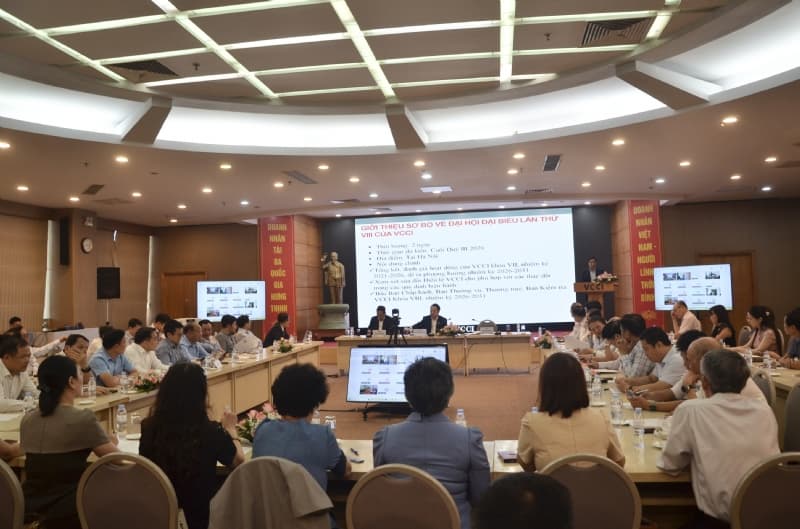
In his opening speech at the workshop, Mr. Dau Anh Tuan - Deputy Secretary General of VCCI said that the event is a forum gathering representatives from state management agencies, businesses and experts to discuss financial policies for the mineral industry, in order to remove difficulties for businesses; Propose solutions to continue perfecting legal policies for the mining industry in the spirit of reform in 4 Resolutions of the Politburo (Resolution No. 57-NQ/TW, Resolution No. 59-NQ/TW, Resolution No. 66-NQ/TW and Resolution No. 68-NQ/TW).

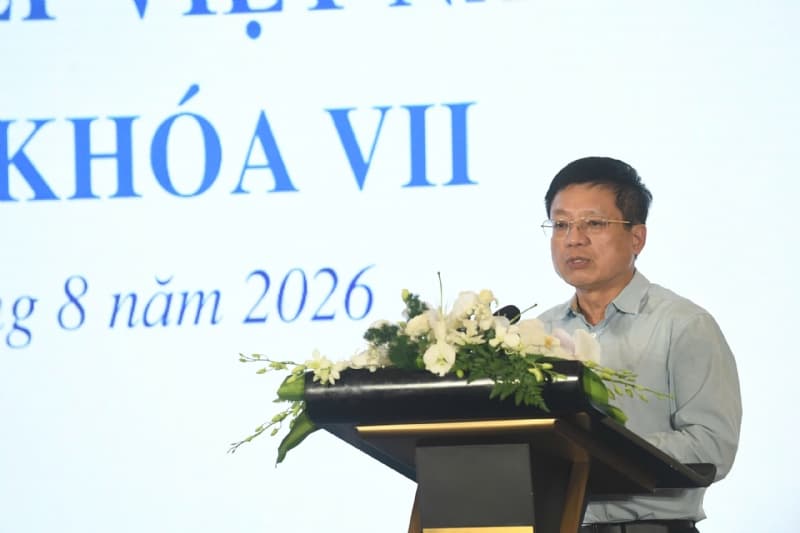
Mr. Nguyen Van Phung spoke at the workshop. Photo: Hai Anh
At the workshop, Mr. Nguyen Van Phung - a senior expert on tax and enterprises clarified the financial obligations of enterprises in the field of mineral exploitation and processing in Vietnam according to current regulations.
Specifically, mineral exploitation and processing enterprises carry out activities according to the provisions of the Law on Minerals, and are responsible for fulfilling financial obligations according to the provisions of the Land Law: paying land rent; land use tax; fees and charges related to land.
At the same time, enterprises are obliged to pay compensation when being allocated land for lease; fulfill financial obligations according to the Law on Environmental Protection; ensure resources for environmental protection activities during the operation period, and for the obligation to restore the environment after exploitation. Enterprises shall perform tax, fee and charge obligations in accordance with the provisions of the law on tax, the Law on Fees and Charges for goods and services used for production and business activities (mineral exploitation and processing); tax on the results of production and business activities...
Thus, according to current regulations, enterprises operating in the field of mineral exploitation and processing must perform many financial obligations. In order to facilitate businesses, according to Mr. Phung, the authorities need to thoroughly grasp Resolution No. 10-NQ/TW dated February 10, 2022 of the Politburo on strategic orientation of geology, minerals and mining industry to 2030, with a vision to 2045, especially the 4 Resolutions recently issued by the Politburo (Resolution No. 57-NQ/TW, Resolution No. 59-NQ/TW, Resolution No. 66-NQ/TW and Resolution No. 68-NQ/TW), review and detect inadequacies of tax laws, the Law on Geology and Minerals to propose appropriate adjustments and supplements. At the same time, research and clarify the content and management methods to unify the policies of the two revenues (mineral exploitation rights and resource tax), thereby reducing administrative procedures in management, reducing social costs in management, enforcement and compliance of enterprises. Mr. Van Phung said that these two revenues have the same basis and calculation method (different in management methods, management agencies, time, and decentralization), creating a feeling of overlapping collection on the same rights/obligations.
Proposal for the Ministry of Finance to unify the management of tax and fee revenues
From the perspective of scientists, referring to two revenues (mineral exploitation rights and resource tax), Dr. Nguyen Tien Chinh - Vietnam Association of Science and Technology analyzed that the two revenues are levied on the same subject - mineral exploitation rights - but have different legal origins. Resource tax belongs to the national tax system (Law on Resource Tax); mineral exploitation rights are implemented according to the provisions of specialized laws on resources and minerals (Law on Geology and Minerals). If the design is not harmonious, it will reduce exploitation efficiency and is not consistent with international practices.
Current resource tax in Vietnam is not the same as in countries with developed mining industries. In other countries, there is usually only one revenue in the form of resource tax (royalty) with flexibility according to output, value, profit or market price.
Proposing solutions to overcome the problem, Dr. Nguyen Tien Chinh said that tax and fee policies should be improved in the direction of prioritizing the exploitation of mineral resources and environmental protection; and studying the consolidation of resource tax and mineral exploitation right tax into one resource tax managed by the Ministry of Finance. The consolidation of the resource tax rate to a single point of contact helps the specialized agency to calculate correctly and fully the resource tax rate, reducing administrative procedures for businesses.
Amending policies to ensure simplicity, transparency, and consistency
According to Mr. Nguyen Van Phung, in order for mining activities to develop according to the direction of the Politburo's Resolutions, it is necessary to amend a number of provisions in the Law on Natural Resources Tax, regulations on environmental protection fees for mineral exploitation, ensuring simplicity, transparency, consistency, and reasonable incentives. Apply mechanisms to encourage businesses to invest sustainably, innovate mining and processing technologies to increase the efficiency of mineral recovery and recovery, save resources, and protect the environment.
Song Linh (Financial Times)