VIETNAM CHAMBER OF COMMERCE AND INDUSTRY
Liên Đoàn Thương Mại Và Công Nghiệp Việt Nam
Tue, Feb 24, 2026, 14:30:00
Resolution No. 68-NQ/TW of the Politburo of the Communist Party of Vietnam on the development of the private economy is an important “push” to promote the private sector, which has been identified as one of the most important driving forces of the national economy, creating breakthroughs. How has the implementation of the Resolution been taking place?
Resolution No. 68-NQ/TW dated May 4, 2025 of the Politburo on the development of the private economy is one of the key Resolutions issued in recent times. The Resolution established the private enterprise sector as one of the most important driving forces of the economy, “a pioneering force promoting growth, innovation, industrialization, modernization, and economic restructuring.”
Affirming the position of entrepreneurs adds confidence for them to boldly invest, accept risks, and plan long-term business strategies. When institutions are stable, consistent, and clear, enterprises have a basis to confidently invest capital, innovate production, and expand markets.
After nearly 10 months, a notable positive point is that the National Assembly of Vietnam adopted Resolution No. 198/2025/QH15 on special mechanisms and policies for the private economy; the Government issued many decrees and action programs, accelerating administrative reform and the digital transformation of state management. Many ministries, sectors, and localities have proactively adjusted policies to be more favorable, focusing on reforming market entry, supporting startups, converting household businesses into enterprises, aiming to have hundreds of thousands of new enterprises in 2026.
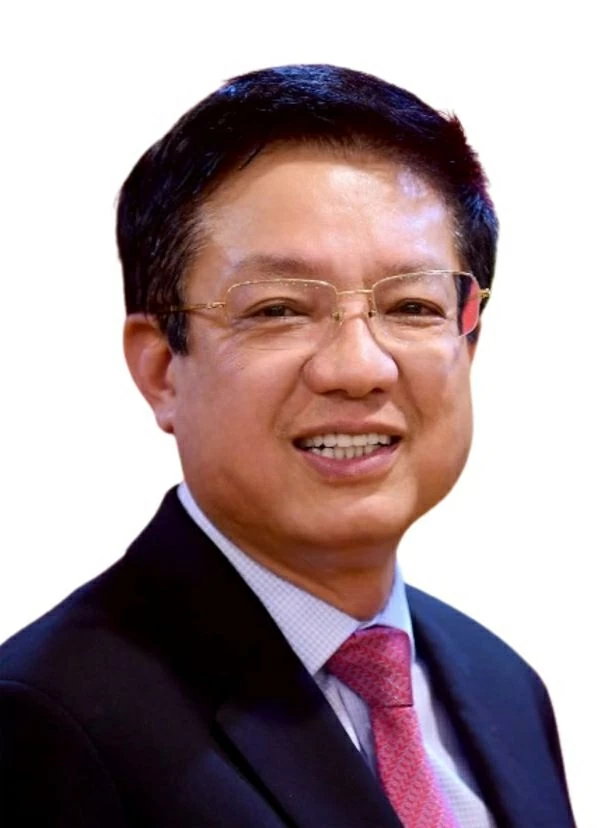
VCCI President Hồ Sỹ Hùng. (Photo: NVCC)
Many expectations are being placed on the milestone year 2026. How do you forecast the impact of Resolution 68 on the development of the business community in 2026?
Entering 2026, the business community expects the contents of Resolution 68 to continue to be concretized, helping to clearly establish the role of entrepreneurs in the economy and creating confidence when making investment decisions. Accompanying this are requirements to maintain macroeconomic stability, control inflation, and ensure consistency in the issuance and implementation of laws.
More importantly, the cooperative relationship between the State and the private sector, especially in public–private investment, needs to operate transparently and smoothly so that enterprises can access and participate in more projects.
Entering 2026, businesses see three fundamental spaces. The first is the domestic market of more than 100 million people. Improved incomes are leading to more diverse consumption demand, creating room for higher value-added products and services.
The second is the international market, where the system of free trade agreements (FTAs), cooperation frameworks, and tariff incentives continues to support enterprises in participating more deeply in global supply chains.
The third is opportunities to access capital. The formation of international financial centers, the upgrading of the stock market, the development of green finance, together with guarantee funds and support funds for small and medium-sized enterprises… open up additional resource options for investment.
At the same time, businesses especially expect a high-quality labor market. A training system linked with practical needs, along with a team of managers with qualifications and skills, will help improve governance capacity, reduce costs, and enhance competitiveness.
The year 2025 can be considered a pivotal year of legal reform. The volume of laws, decrees, and circulars issued has been very large, requiring great efforts to ensure synchronization and feasibility. The scale of changes means that both management agencies and enterprises need more time to adapt. Entering 2026, there will still be many challenges, but policy adjustments are expected to be somewhat “lighter” as the legal framework gradually becomes more complete. However, enterprises continue to face issues related to markets, low-cost capital, and high-quality human resources.
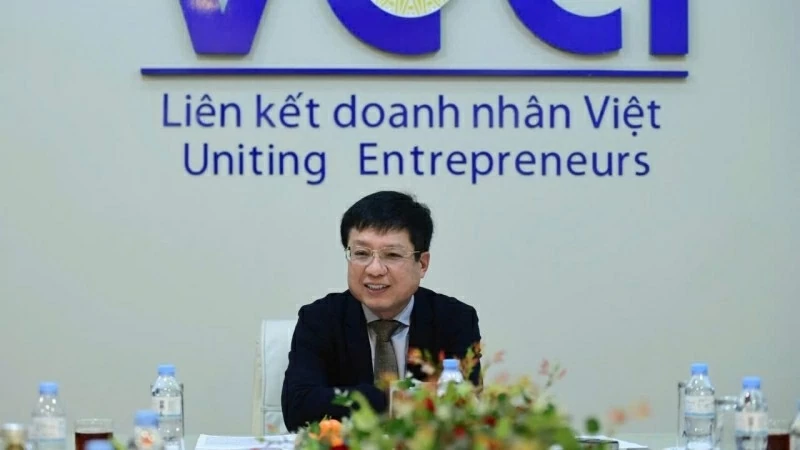
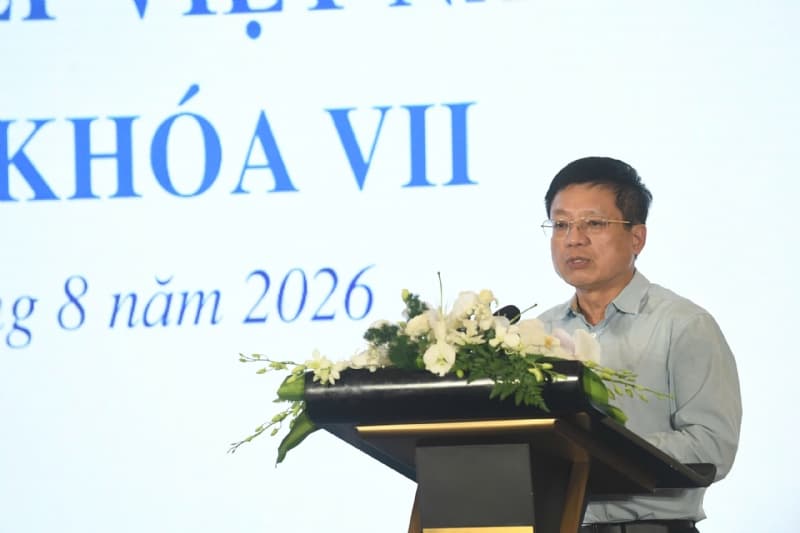
VCCI President Hồ Sỹ Hùng. (Photo: Huy Thế)
In the context of strong growth demand, relying solely on bank credit is no longer appropriate. Developing the stock market, increasing transparency, and improving corporate governance will help open additional legitimate and sustainable capital mobilization channels.
At the recent dialogue conference between the Ministry of Finance of Vietnam and taxpayers on tax and customs policies and administrative procedures, many businesses expressed their desire for VCCI to play an even stronger and clearer role. What message would you like to send to the Vietnamese business community?
Timely, complete, and easy-to-understand communication of the Government’s and the Prime Minister’s directives to the business community is very important. When they clearly understand the orientation, enterprises can strengthen their confidence, coordinate better with management agencies, and be more proactive in administrative procedures.
In reality, there are times when differences in understanding of the same issue still arise between public authorities and enterprises. Therefore, clearer messages from the Government are needed, along with raising awareness among enterprises to coordinate more smoothly.
The business community expects regulatory policies to be issued early and disseminated widely, creating a foundation for macroeconomic stability, controlling inflation, and maintaining growth. Along with that are orientations regarding markets, product standards, and business conditions in new sectors so that enterprises can make appropriate production and investment plans.
Currently, many authorities have been strongly decentralized to local levels, and enterprises mainly work through the grassroots administrative system. Large projects and new strategic orientations are submitted to the Government and the Prime Minister. What businesses want most now is clear, consistent, and practical information so that they can confidently invest in the long term and accompany the policy transition process.
Therefore, maintaining dialogue between the business community and ministries, departments, sectors, and localities… is very important, and dialogue between tax and customs authorities and the business community through conferences organized by VCCI is a typical example.
VCCI expects that conferences and dialogues will be organized regularly, setting out plans and long-term cooperation spaces. At present, we have about one million enterprises and around five million household businesses; questions and concerns related to tax and customs policies that need to be addressed and resolved will also increase significantly.
In 2026, VCCI wishes to continue representing the business community to participate together with departments, ministries, and sectors (especially the Ministry of Finance) in providing policy feedback, starting from the circular level. At the same time, it will coordinate in implementing business support programs, helping enterprises make better use of new mechanisms.
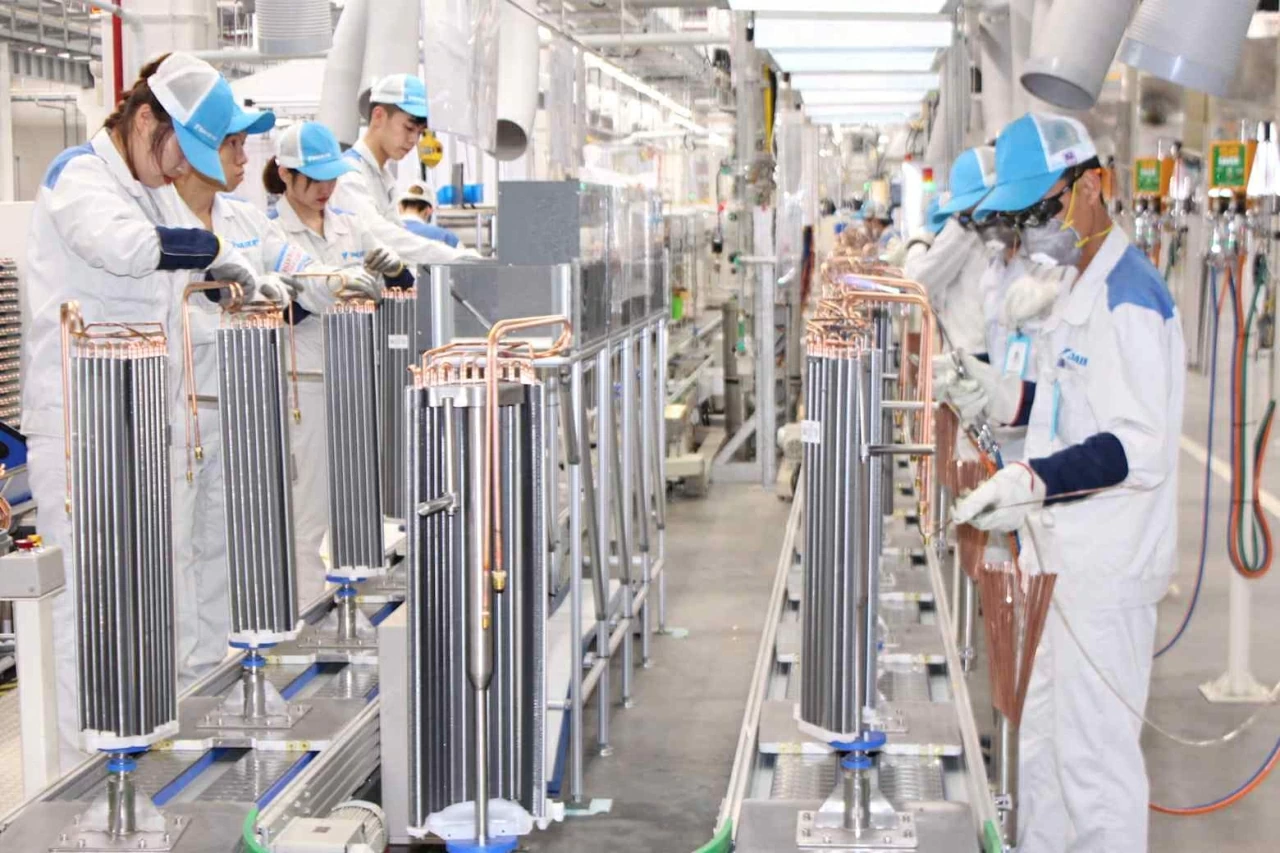
Entering 2026, enterprises continue to face issues related to markets, low-cost capital, and high-quality human resources. (Source: Nikkei Asia)
VCCI will also accompany the business community in implementing strategies, orientations, and development targets set by the Government such as achieving double-digit growth, actively participating in new sectors: green and clean energy; high technology, digital technology…
The index sets including the Provincial Competitiveness Index (PCI) and the Corporate Sustainability Index (CSI) will continue to be improved, associated with the requirements of sustainable development, the green economy, the carbon market, and green finance.
The global economic outlook for 2026 is forecast to continue to fluctuate, opening opportunities but also posing many new requirements for Vietnamese enterprises. In that context, what support will VCCI provide to help enterprises adapt to the new situation and confidently overcome external “headwinds”?
External relations activities and supporting the business community to “reach out to the big sea” will continue to be one of VCCI’s key priorities in the coming time. VCCI commits to accompanying enterprises in seeking investment cooperation opportunities with investors around the world and new investors… in line with the Government’s orientation.
At the same time, the Federation hopes to closely coordinate with departments, ministries, and sectors, especially the Ministry of Foreign Affairs and the Ministry of Industry and Trade, to support enterprises in accessing major traditional markets such as the United States, Japan, the Republic of Korea, China, the European Union (EU)… as well as new and promising markets such as Africa and the Middle East…
In addition, VCCI will continue to work with relevant parties to actively implement external economic activities, specifically through business dialogue activities such as organizing business forums and delegations of enterprises accompanying high-level delegations of Party leaders, Party agencies, the National Assembly, and the Government, effectively combining foreign policy with economic activities and business support…
The new year Bính Ngọ 2026 marks the beginning of the nation’s era of rise. What are your feelings and expectations for the Vietnamese business community?
In the new year, I hope each Vietnamese enterprise will maintain optimism, remain steadfast in its mission, and continuously innovate to adapt to global trends with the spirit of: PERSEVERANCE – SUBSTANCE – EFFECTIVENESS.
I believe that with the aspiration to move forward as their driving force, the Vietnamese business community will not only recover strongly but also achieve remarkable breakthroughs, contributing to bringing the country closer to the goal of becoming a powerful and prosperous nation by 2045.