VIETNAM CHAMBER OF COMMERCE AND INDUSTRY
Liên Đoàn Thương Mại Và Công Nghiệp Việt Nam
Sat, Aug 10, 2024, 07:13:00
Accordingly, in carrying out the task of leading the review of the Draft Amendment to the Electricity Law, the Standing Committee on Science, Technology, and Environment of the National Assembly, in collaboration with the Vietnam Chamber of Commerce and Industry (VCCI), organized a workshop titled “Feedback on the Draft Amendment to the Electricity Law” on August 9, 2024, in Hanoi.

On August 9, 2024, the National Assembly's Committee on Science, Technology and Environment in coordination with VCCI organized a workshop “Feedback on the Draft Amendment to the Electricity Law”
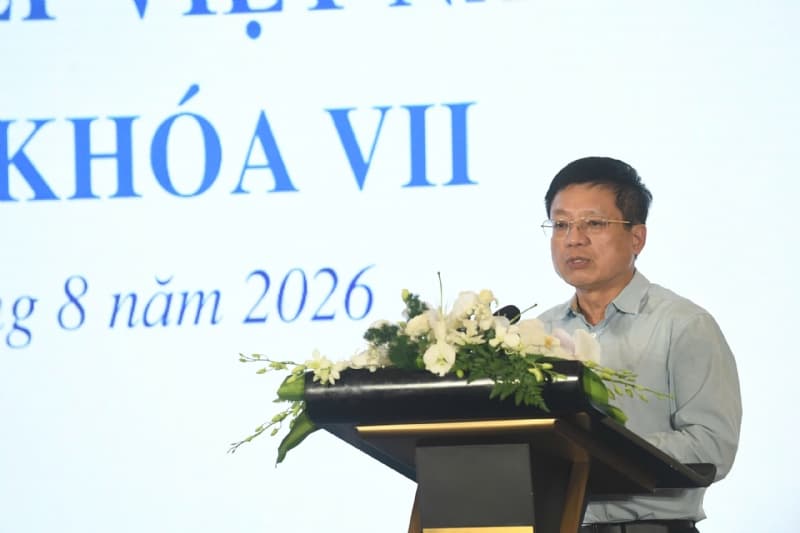
Speaking at the opening of the workshop, Mr. Pham Ngoc Thach, Deputy Head of the Legal Department of VCCI, said that the system of electricity production, transmission, supply and consumption is one of the important and essential infrastructures for the economic development of each country. Vietnam is no exception to that rule. Therefore, Vietnamese enterprises are also very interested in policies and laws in the electricity sector and the amendment of the Electricity Law this time.

Mr. Pham Ngoc Thach, Deputy Head of Legal Department, VCCI, delivered the opening speech at the workshop.
According to Mr. Thach, some issues that businesses are concerned about include the issue of sufficient electricity for production and business. Recently, businesses have been very interested in implementing power source and grid projects, especially in the North, to ensure sufficient electricity.
Or the issue of developing renewable energy. Many businesses in the value chain supplying goods and services to developed country markets have a great need to use renewable electricity to achieve emission reduction certificates.
In addition, there is the issue of quality and stability of electricity supply. This is also an issue that many businesses are concerned about due to concerns about power outages and voltage drops negatively affecting production and business activities; the issue of transparency, fair competition and risk reduction in seeking investment opportunities and implementing projects in the electricity sector, such as power source projects.
In particular, new mechanisms in the electricity sector such as two-component electricity prices, direct electricity purchase and sale mechanisms, and competition in the retail electricity market are also mentioned and are interested in learning about by many businesses. Businesses hope that these mechanisms will be implemented soon to increase the transparency, fairness, reasonableness and efficiency of the electricity market.
“We highly appreciate the preparation work of the National Assembly’s Committee on Science, Technology and Environment for the Draft Laws in the program. Hopefully, through today’s Workshop, we will discuss and build a better law for the community and the whole country,” Mr. Pham Ngoc Thach expressed
At the Workshop, issues on developing renewable energy and new energy received much attention from experts and businesses.

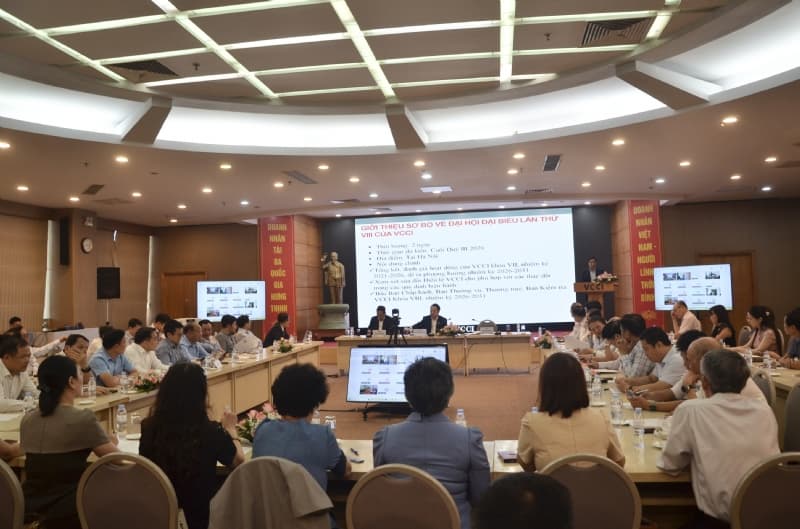
Overview of the workshop
Contributing to the discussion at the Workshop, Mr. Nguyen Ngoc Cuong, CEO of EverSolar Investment Joint Stock Company, said that with the current economic development trend, the Electricity Law (amended) needs to open up mechanisms for developing power sources and grids to ensure sufficient power supply for economic development needs and towards net zero emissions according to Vietnam's commitment at the COP 26 Conference.
According to Mr. Cuong, regarding rooftop solar power, the view of most experts and businesses in the industry is that there is no need for incentives, just do not put up barriers.
“With the current price of solar panels, a rooftop solar power system that is allowed to be connected to the grid costs less than 10 million VND/1kwp. If you add 1kwh of storage battery, the cost will be around 16 to 19 million VND/(kwp + 1kwh). This price is equivalent to the period of 2017-2018 when the FIT1 policy was still in effect, and the cost of battery storage is falling rapidly”,” said Mr. Cuong.
However, the implementation of self-use/self-production and self-consumption rooftop solar power systems is facing many legal barriers.
Therefore, Mr. Cuong suggested that there should be a clear and consistent policy for the development of rooftop solar power and rooftop solar power combined with energy storage. To avoid making it difficult for the grid, there should be a classification and a clear level for self-use/self-production and self-consumption rooftop solar power systems and investment subjects to simplify registration procedures and administrative management.
“At the same time, it is necessary to issue specific support policies for off-grid renewable energy (including microgrids) such as support for construction procedures, land funds, finance, and loan interest. Clearly stipulate that rooftop solar power with storage at a certain rate is entitled to be connected to the national power system,” EverSolar CEO emphasized.
Regarding this issue, to suit the reality, Mr. Pham Le Quang, Project Development Director, BCG Energy Joint Stock Company, proposed to supplement Article 29 of the Draft Law on Electricity (amended) with the contents of prioritizing the development of renewable energy power projects in mountainous provinces, remote areas and islands. At the same time, consider exempting/reducing procedures on electricity planning for waste-to-energy plants based on the urgent need for environmental treatment of this type of energy.
“For types of renewable energy sources, new energy (such as rooftop solar power, small hydropower, waste-to-energy, biomass...) with small scale and other types of energy that do not select investors through bidding, it is recommended to apply a fixed price to encourage and develop investment”, Mr. Pham Le Quang shared.
In addition to the above opinions, the Workshop also listened to many other comments related to planning adjustment; state management of planning and investment at all levels and sectors; electricity trading; or issues related to investor selection...
Concluding the Workshop, Vice Chairman of the Committee for Science, Technology and Environment Ta Dinh Thi affirmed that the comments of delegates, experts, and enterprises on the Draft Law are a very important basis for completing the Draft Law to achieve the highest quality and efficiency.