VIETNAM CHAMBER OF COMMERCE AND INDUSTRY
Liên Đoàn Thương Mại Và Công Nghiệp Việt Nam
Sat, Aug 19, 2023, 15:21:00
However, in practice, only a few PPP projects have been approved due to bottlenecks in the PPP lifecycle, and these are largely in the transportation sector. These bottlenecks need to be addressed to attract the necessary private capital for national infrastructure investment. It is also imperative that the PPP Law is aligned to other related policies and programs for infrastructure development in Vietnam.

Intent and Reality of the PPP Law
Since its inception, the PPP Law has aimed to address three challenges in procurement through PPPs: time overrun, cost overrun, and efficient delivery of services. The PPP Law has also helped diversify capital sources of infrastructure investment. It is therefore becoming an effective cooperation model between the Vietnamese government and the private sector in infrastructure development.
While there are sufficient social resources within the Vietnamese government to deploy for PPP procurement, the current PPP procurement method is not attractive enough for private investors. Factors such as large investment costs, high associated project risks, inadequate policies, insufficient resource allocation, and challenges in policy implementation have limited the practical application of PPP model in Vietnam in recent years.

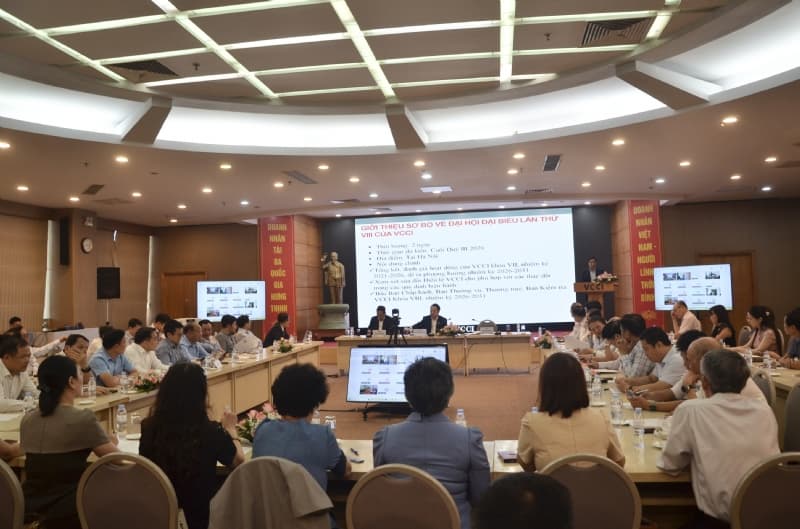
USAID, in collaboration with VCCI, is organizing a PPP training program for university lecturers on April 6 and 7, 2023.
To help address these challenges, the U.S. Agency for International Development (USAID) is providing technical assistance to the Vietnam Chamber of Commerce and Industry (VCCI), as well as the National Assembly and Ministry of Planning and Investment (MPI), to develop the PPP Law. USAID assistance will help introduce international PPP standards and best practices to Vietnam and elevate the voice of the private sector in infrastructure development.
A recent study by VCCI and USAID recommends synchronization in legal channels and mechanisms to support the implementation of legal regulations to ensure and stimulate investment demand. These aspects should be institutionalized in contracts to efficiently handle PPP disputes.
Over the past few years, USAID and VCCI have collaborated to develop several comprehensive solutions, with participation from Vietnamese government ministries across sectors, to support PPP cooperation. This included advisory support for developing Vietnam’s first PPP Law, which was adopted by the government in 2010. They have also coordinated in organizing seminars and workshops on resolving policy barriers to effectively implement PPP Law while seeking effective cooperation methods in PPP projects, with the ultimate goal to prevent and resolve potential disputes arising from PPP projects.

Gregory Leon, Director of Governance and Economic Growth, USAID Vietnam said, “PPP cooperation is a means for local socioeconomic development for the future. The cooperation between USAID and VCCI will further strengthen efforts to enable an environment conducive to investment capital in potential projects in Vietnam. It is helping to identify and recommend solutions to legal barriers and improve the efficiency of PPP Law implementation, ultimately contributing to sustainable economic growth across Vietnam.”
VCCI similarly believes that PPPs are a model that benefits both the state and private investors, improves the country’s infrastructure, and provides improved services to the Vietnamese people. PPP cooperation also stimulates local growth and provides access to new global construction and management technologies.
VCCI Vice Chairman Nguyen Quang Vinh said, “Development of modern transport infrastructure to promote the interregional economy and development of the power sector to serve business and production demands are two key goals in Vietnam’s socioeconomic development. While currently demands for these investments are very large, public capital is not sufficient, so we need to bring in additional private partners. PPPs are one of the best solutions for the development of infrastructure, energy, transportation, education, and healthcare. The government can help improve investment efficiency by being prudent and transparent.”

Bottlenecks remain
VCCI sees four principal limitations that currently create policy barriers and inadequacies in implementation of the 2021 PPP Law: insufficient equity and loans from investors to implement projects; inadequate risk allocation between implementing parties; lack of synchronization in contractual regulations; and inadequate mechanisms for handling disputes. Several procedures in implementing PPP projects are governed by other overlapping laws, leading to difficulties in actual implementation.
VCCI Deputy Secretary General Dau Anh Tuan noted, “Key obstacles include difficulty in accessing loans, inadequacies in regulations of public capital disbursement to support construction items, and infrastructure systems that discourage private investors. Many banks request investors to arrange their respective guarantees and only lend up to 50-60% of total investment amount. Therefore, PPP projects that only rely on bank loans are not bankable. These barriers are more pronounced given that PPP projects often require long-time implementation, up to 20-30 years.”

Some projects have transitioned from traditional procurement to PPP procurement, particularly in the transportation and energy sectors, but these have faced challenges which have not been adequately handled. This negatively impacts the general investment environment and the implementation of new PPP projects. In fact, due to the need to achieve targeted disbursement of public capital to support the economy, several projects which were being prepared for PPP procurement may now be procured through traditional public investment procurement, decreasing the number of ongoing PPP projects.
Another challenge is found in the revenue sharing provision in the PPP Law. While this mechanism has been highly appreciated, its application has faced challenges when demand for services has decreased. Clear guidance and simplification of the revenue sharing mechanism is needed.
Therefore, to improve efficiency of implementation of PPP projects, relevant ministries and sectors should implement solutions to remove the identified obstacles. Capacity building and guidance are required to effectively implement PPP in Vietnam. Changing mindsets, enhancing policies and institutions to promote and develop the PPP market, and establishing national PPP development funds must also occur.
The PPP partnership between the state and private sector should also align with international best practices. Supporting policies to attract international investors in projects, such as exemption of VAT and CIT, and clarity on interest calculation for delayed payments from the state should be considered.
In sum, a complete PPP framework is required to increase project efficiency and bring high economic value. Public and private stakeholders must coordinate to receive the benefits and share the risk for the ultimate interest of the Vietnamese people.
VCCI and USAID are now cooperating to launch a PPP website to provide up-to-date information, share international experiences, and address PPP-related questions. The PPP website is a much-needed tool to improve PPP capacity and knowledge for stakeholders in Vietnam, both public and private enterprises, and features online PPP training, a PPP helpdesk, and many information articles. The website can be visited at https://vcci-ppp.vn