VIETNAM CHAMBER OF COMMERCE AND INDUSTRY
Liên Đoàn Thương Mại Và Công Nghiệp Việt Nam
Sat, Apr 11, 2026, 11:25:00
In the first quarter of 2026, total registered FDI rebounded strongly, driven largely by substantial inflows from Singapore and South Korea. It was $15.2 billion, up 42.9% year-on-year. This marks a sharp turnaround from a 40.6% drop in January and a 12.6% decline in February, according to the Foreign Investment Agency (FIA).
At the National Statistics Office's calculations, registered capital comprises capital for newly-registered projects, additional capital for existing projects, and capital for stake acquisitions.
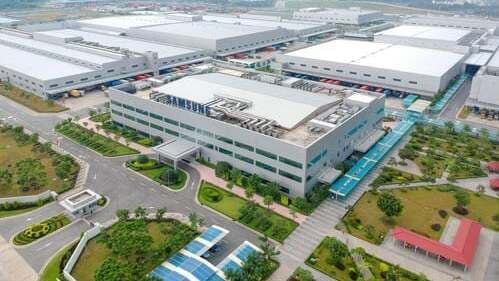
The most prominent newly registered project in March was a high-tech project located in the northern province of Thai Nguyen, with total registered capital exceeding $4 billion.
Another major investment was the Quynh Lap LNG power plant project in the central province of Nghe An, with total capital of more than $2.2 billion. The project, invested by a consortium including PV Power, Nghe An Sugar Co., Ltd, and South Korea’s SK Innovation, will generate electricity from LNG and include LNG storage facilities.
Together, these two projects accounted for more than two-thirds of total FDI registered in March.
The high-tech project also lifted total newly registered and adjusted FDI in Thai Nguyen to $5.72 billion in the first quarter, keeping the province at the top nationwide.

Caution persists despite strong inflows
Despite the surge, the FIA noted that the global investment climate in Q1 remained challenging, shaped by sluggish economic recovery, volatile trade policies, prolonged geopolitical risks, and growing economic fragmentation - all of which continue to weigh on investment decisions by multinational corporations.
Within this context, Vietnam recorded increases across all FDI indicators, including new registrations, capital adjustments, share purchases, and disbursed capital, which exceeded $5.4 billion, up 9.1% year-on-year. Rising disbursement is seen as a positive sign, reinforcing the FDI sector’s role in supporting production, exports, and economic growth.
“The continued attraction of large-scale, high-tech projects points to improving FDI quality,” the FIA said.
However, the agency cautioned that the strong 42.9% increase in registered capital should be interpreted carefully, as it was largely driven by a handful of major projects.
Excluding these two projects, overall FDI growth in Q1 would have been lower year-on-year, suggesting that the broader investment landscape has yet to show a strong, widespread recovery.
This underscores Vietnam’s continued reliance on large-scale investments, while most projects remain small to medium in size. It also reflects a more cautious, step-by-step approach by investors compared to previous periods.
The FIA further noted that 251 projects registered capital adjustments in Q1, down 37.3% year-on-year, with additional capital totaling more than $2.3 billion, a decline of 55.1%.
“The drop in adjusted capital indicates that existing FDI enterprises are taking a more cautious stance on expansion in the short term, particularly amid global economic uncertainty,” the agency said.
Overall, Vietnam’s FDI landscape in Q1 shows encouraging but uneven progress. While the country continues to attract new investment, especially in manufacturing, high-tech industries, and energy, the decline in adjusted capital and reliance on a few mega-projects suggest that investor sentiment remains cautious and broad-based expansion has yet to fully materialize.