VIETNAM CHAMBER OF COMMERCE AND INDUSTRY
Liên Đoàn Thương Mại Và Công Nghiệp Việt Nam
Mon, May 04, 2026, 15:51:00
This marks his second overseas trip since the National Assembly consolidated key state leadership positions, and notably, the first-ever visit to India by a Vietnamese leader concurrently holding the positions of General Secretary and President. The visit takes place as the two countries commemorate the 54th anniversary of diplomatic relations (1972 - 2026) and the 10th anniversary of their Comprehensive Strategic Partnership (2016 - 2026), contributing to a breakthrough and laying the groundwork for a new phase in bilateral relations.
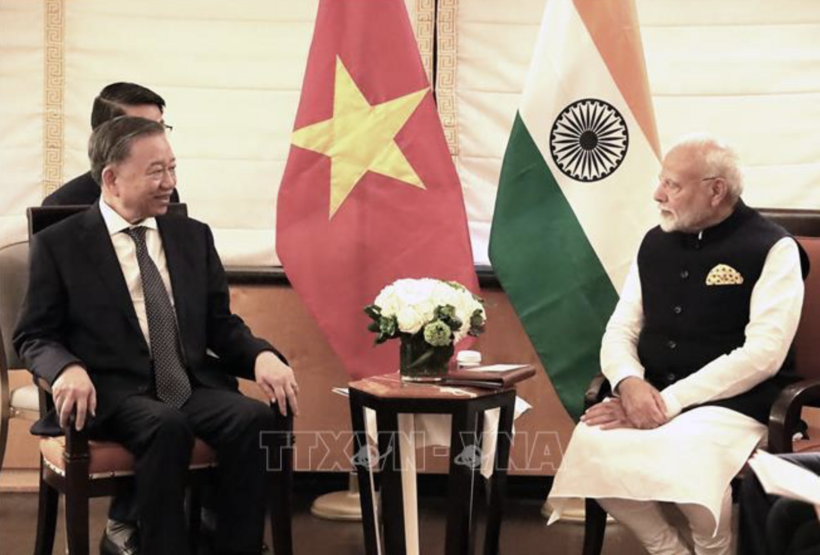
General Secretary and President To Lam met with Indian Prime Minister Narendra Modi on the sidelines of the 79th session of the United Nations General Assembly and during his working visit to the United States, on the afternoon of September 23, 2024 (local time), in New York. Photo: VNA
A trusted and enduring political - diplomatic relationship
Vietnam and India share a long-standing traditional friendship, nurtured and strengthened by successive generations of leaders. On January 7, 1972, at the height of Vietnam’s resistance war against the United States, the two nations established diplomatic relations, opening a new chapter in bilateral cooperation.
This relationship has been deeply shaped by the shared ideals of two towering figures: President Ho Chi Minh and Mahatma Gandhi. Though they never met, their mutual respect and admiration have inspired peace-loving people worldwide.
Equally significant was the close friendship between President Ho Chi Minh and India’s first Prime Minister Jawaharlal Nehru, which laid a solid foundation for enduring bilateral ties.
The two countries have consistently supported each other in their struggles for national independence and, more recently, in reconstruction, reform, and socio-economic development.
Key milestones include the 2003 Joint Declaration on the Comprehensive Cooperation Framework in the 21st Century, the elevation to a Strategic Partnership in 2007, and further upgrade to a Comprehensive Strategic Partnership in 2016. Since then, ties have deepened across Party, State, parliamentary, and people-to-people channels, supported by effective cooperation mechanisms.
In December 2020, both sides adopted the Joint Vision Statement on Peace, Prosperity and People, followed by a Joint Statement on strengthening the Comprehensive Strategic Partnership in August 2024.
High-level exchanges have further reinforced bilateral ties. On Vietnam’s side, Prime Minister Pham Minh Chinh paid a State visit to India in August 2024 and held multiple meetings with Prime Minister Narendra Modi at major international forums including ASEAN Summits, G20 Summits in Brazil and South Africa, and the BRICS Summit. General Secretary and President To Lam also met Prime Minister Modi on the sidelines of the 79th UN General Assembly in New York in September 2024.
From India, notable visits to Vietnam include those by Prime Minister Narendra Modi (2016), President Ram Nath Kovind (2018), Vice President Venkaiah Naidu (2019), and Lok Sabha Speaker Om Birla (2022).
The two countries maintain multiple institutional mechanisms, including the Joint Commission at the foreign minister level, trade sub-committees, strategic and political consultations, and dialogues on defense, security, and maritime issues.
At multilateral forums, both nations coordinate closely, particularly within the United Nations and ASEAN-led frameworks.
Strong momentum in economic, trade, and investment cooperationIndia is currently Vietnam’s eighth-largest trading partner, while Vietnam ranks 21st globally and fourth within ASEAN for India. Bilateral trade has grown significantly from USD 5.43 billion in 2016 to over USD 16.46 billion in 2025. In the first quarter of 2026 alone, trade reached USD 4.8 billion, up 28% year-on-year.
As of March 2026, India has 503 valid investment projects in Vietnam, totaling USD 1.117 billion, ranking 26th among foreign investors. Indian investments span 15 out of 21 economic sectors, with a focus on manufacturing, energy, and mining.
Conversely, Vietnam has invested in 30 projects in India worth nearly USD 150.5 million. Notably, Vingroup is developing an electric vehicle manufacturing plant in Tamil Nadu, with plans to raise total investment in India to USD 6.5 billion.
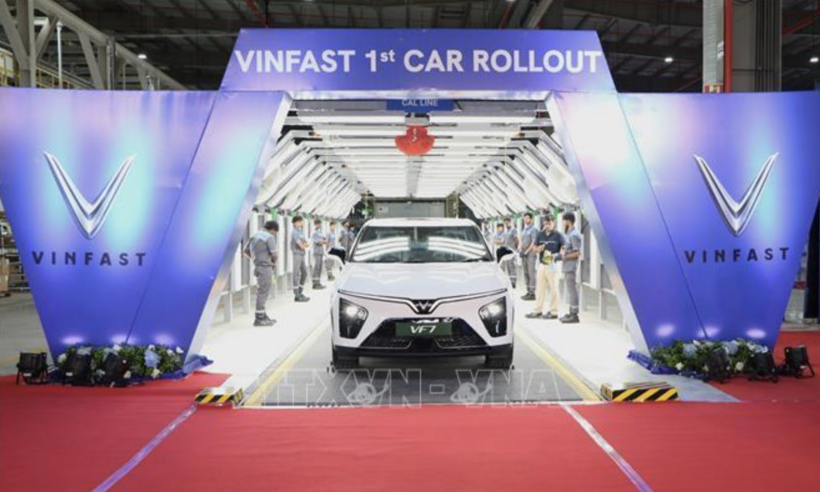
Electric vehicle (EV) models produced at the VinFast factory in India. Photo: VNA
Beyond economics, cooperation extends to education, defense, tourism, and science and technology. India provides numerous scholarships annually under programs such as ITEC and supports training centers in Vietnam.
Defense and security cooperation remains a key pillar, while tourism and people-to-people exchanges have expanded significantly. In 2025, nearly 800,000 Indian tourists visited Vietnam, four times the 2019 figure. Connectivity has also improved, with around 80 direct flights per week.
India has supported the restoration of Cham temple complexes at the UNESCO World Heritage site of My Son and contributed to cooperation in IT, AI, semiconductors, and renewable energy.
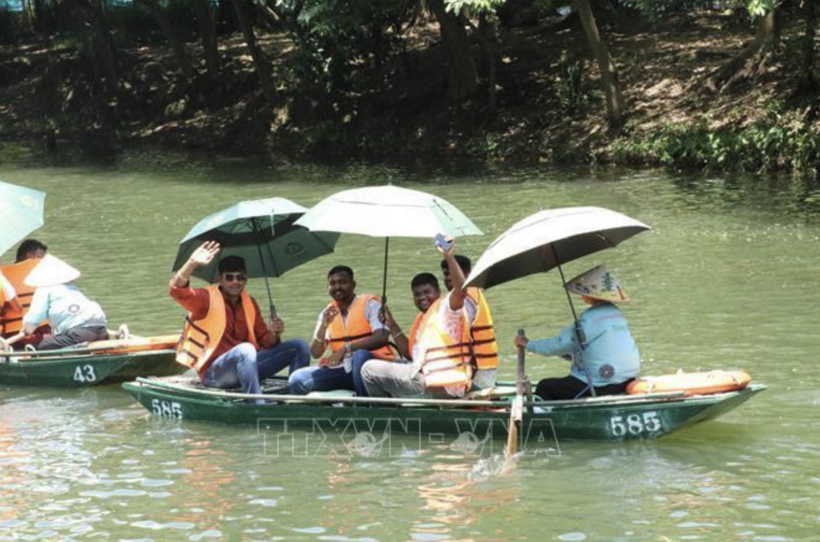
The first visitors in a group of 4,500 guests led by an Indian billionaire during a tour of the Trang An Ecotourism Complex in Ninh Binh. Photo: VNA
Advancing the Comprehensive Strategic Partnership to new heights
The year 2026 marks a decade since the elevation of ties to a Comprehensive Strategic Partnership, ten years of significant progress across political, economic, and cultural dimensions.
India remains one of Vietnam’s leading comprehensive strategic partners, with high political trust and aligned strategic interests. Meanwhile, Vietnam plays a crucial role in India’s “Act East” policy and its Indo-Pacific strategy.
Against this backdrop, the State visit by General Secretary and President To Lam is expected to further consolidate political trust and unlock new avenues for cooperation.
According to Deputy Foreign Minister Nguyen Manh Cuong, the visit underscores Vietnam’s commitment to strengthening ties with India and the broader South Asian region. It also provides an opportunity to review a decade of partnership and shape future cooperation frameworks.
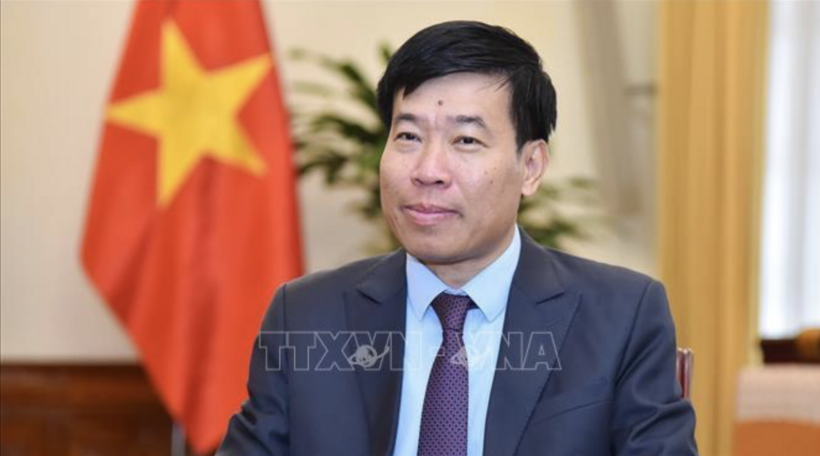
Member of the Party Central Committee, Standing Deputy Secretary of the Party Committee and Deputy Minister of Foreign Affairs Nguyen Manh Cuong. Photo: VNA
Former Indian Ambassador to Vietnam Preeti Saran expressed confidence that the visit will inject fresh momentum into bilateral relations, highlighting the growing mutual understanding between leaders.
Similarly, Professor Reena Marwah of the University of Delhi emphasized that the visit is expected to generate new impetus, fostering deeper, more substantive, and forward-looking cooperation.
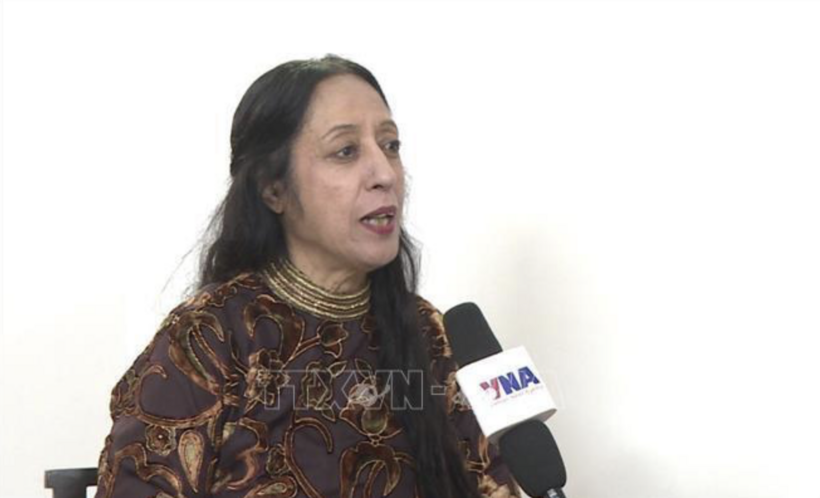
Professor Reena Marwah gives an interview to a Vietnam News Agency (VNA) correspondent. Photo: VNA
The visit also reflects Vietnam’s foreign policy of independence, self-reliance, peace, cooperation, and diversification of international relations, as outlined by the 14th National Congress affirming Vietnam’s role as a responsible and proactive member of the international community.