VIETNAM CHAMBER OF COMMERCE AND INDUSTRY
Liên Đoàn Thương Mại Và Công Nghiệp Việt Nam
Tue, Jun 04, 2024, 02:53:00
What is the ACCA’s long-term plan for sustainable development in the Asia-Pacific region and beyond, and where does Vietnam stand?
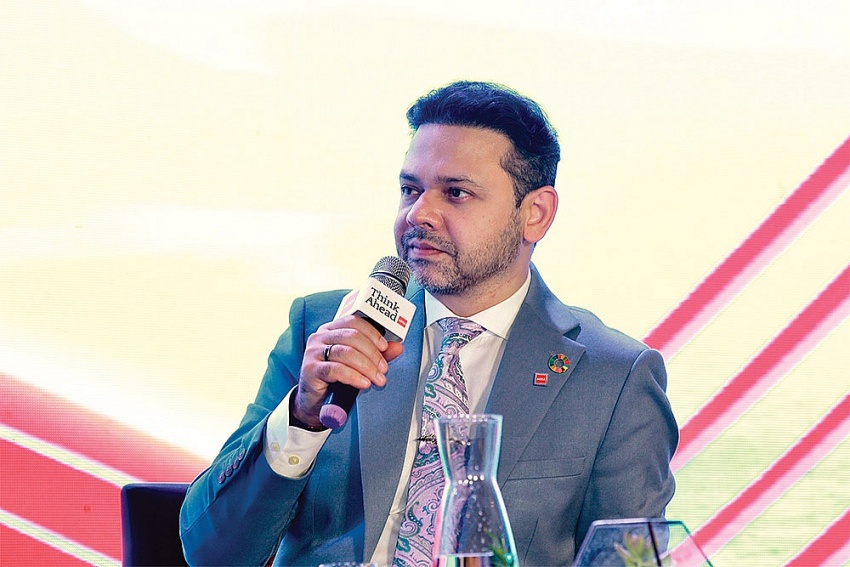
| Pulkit Abrol, regional director for Asia-Pacific at the Association of Chartered Certified Accountants (ACCA) |
From our perspective and our research, one of the key drivers has been the recent release of sustainability standards. Many parts of the Asia-Pacific region are starting to look at government standards or frameworks required by listed organisations and thinking towards their sustainability commitments as well as the performance within their area.
As far as economies are concerned, you can see different parts of Asia-Pacific have a fast shift in the regulatory aspects of government standards. We believe it is time to catch up with the rest of ASEAN.
Many organisations in Vietnam pay great attention to this process. We have been running the Sustainability Reporting Awards for 12 years now and recognise that organisations are focusing on growth, and are creating the necessary demand and skills in this area. We believe that with such progress, the ambition to achieve net-zero emissions by 2050, will become a reality.
We are also seeing rapid advances in the reporting environment. Government policies are focused and create many frameworks to support organisations, and state-owned and private enterprises. So Vietnam is definitely improving its standards as far as its commitments towards sustainability reporting, environmental reporting, and governance standards.
What recommendations does the ACCA have for sustainable development in Vietnam and the wider region?
When it comes to sustainable development, we need to pay attention to relevant aspects in the entire journey of promoting it. One of the important aspects is focusing on sustainable development for everyone and one example to focus on is small- and medium-sized enterprises (SMEs), which are the backbone of many economies, especially Vietnam.
We need to support SMEs in order to support large businesses. People often think that large businesses have advantages in scale, capital, and resources to fulfill their social obligations and responsibilities. But we also need to pay attention to small ecosystems and it is also important to introduce policies to support SMEs.
In ASEAN, we see that authorities in some markets are very aggressively introducing strict mechanisms and mandatory policies on compliance issues.
One such example is in Vietnam. The policy directive since 2020 on application of financial reporting standards in Vietnam looked at International Financial Reporting Standards first, and then looks at slowly integrating new standards on sustainability reporting. And similarly, we’re seeing appetite within policymaking as well as government infrastructure to support organisations.
Meanwhile, banking services and tech companies look at different contributors to their political capital, as well as footprint on carbon emissions. So everyone has to work together to ensure that this transition is the right transition, and ensures that it’s effective for everyone.
The ACCA has played a pivotal role in driving policy innovation for a green and digital Asia-Pacific. How has it contributed to the development of sustainable financial policies in the region?
One of the important aspects of what we are doing is providing training services. All of our accredited accounting qualifications focus on sustainable integration, and we have been doing this for about 10 years now.
Back in the 1990s, we integrated our environmental reporting and raw material consumption reporting, with an overall impact on stakeholders. And in this decade and the next, we will focus even more on supporting and connecting people.
One of those efforts is to organise conferences like the Asia-Pacific Dialogue to create opportunities between the government and businesses, and to recognise gaps in skills, talent, and different fields. And we believe we are providing positive support in financial education and training through our 250,000 members globally.
We are committed to supporting Vietnam and other countries to create talented people and accounting experts, and help make a difference in the roadmap towards net-zero. We also plan to introduce a sustainability course this year to provide essential skills.