Hanoi (VNA) – Vietnam attracted a record nearly 35 billion USD in registered FDI in the first half of 2026, up 61% year on year, reflecting strong investor confidence, however, experts said sustaining this growth will require stronger institutions, greater absorptive capacity, and a greater focus on high-quality investment.
The strong performance came despite persistent global uncertainties, including geopolitical tensions in the Middle East, volatile energy prices, rising logistics costs and shifting US tariff policies, all of which have added to instability in the international investment environment. Competition among regional economies to attract investment in semiconductors, high technology, data centres and energy has also intensified. Against this backdrop, Vietnam has maintained macroeconomic stability and continued to position itself as a preferred destination in the restructuring of global supply chains.
According to official data, registered FDI reached 34.6 billion USD in the first half, while disbursed capital totalled 13.03 billion USD, up 11.2% from a year earlier. Newly registered capital surged by 87.2%, while capital contributions and share purchases rose by 89.5%, indicating sustained investor confidence and more vibrant merger and acquisition (M&A) activity. Additional investment in existing projects also increased by 23.5%, reflecting the continued expansion plans of foreign-invested enterprises.
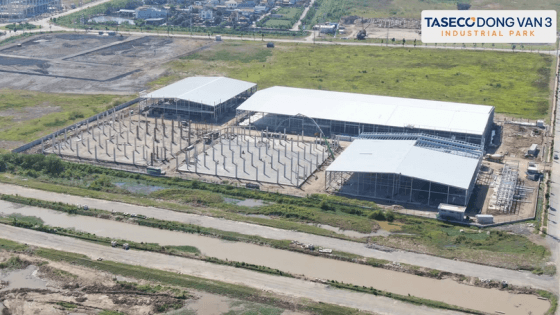
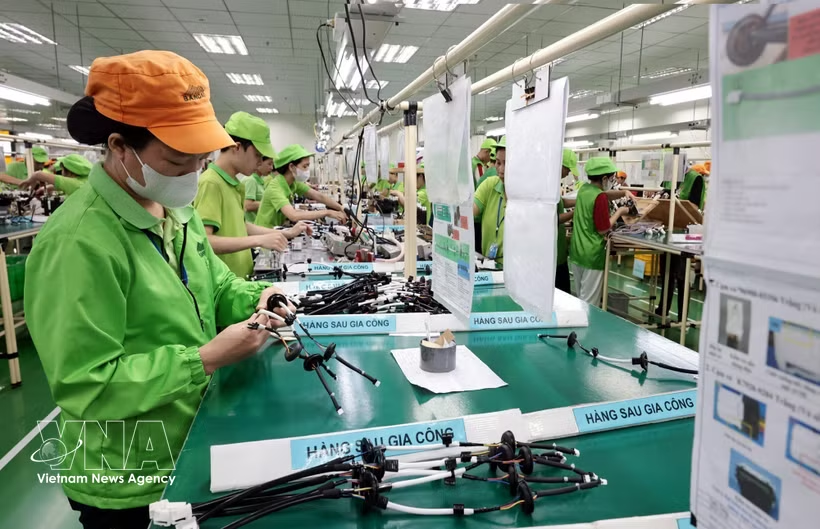
Manufacturing and processing remained the largest recipient of FDI, attracting more than 18.4 billion USD, or 53.3% of total registered capital, reinforcing Vietnam's role as a regional manufacturing hub. Real estate ranked second with 5.5 billion USD, followed by electricity, gas and water supply, and professional, scientific and technological activities.
Singapore remained Vietnam's largest source of newly licensed investment, with 7.31 billion USD, followed by the Republic of Korea, Japan, China and Hong Kong (China), highlighting the continued dominance of Asian investors.
Nguyen Quoc Viet, head of the Macroeconomic Research Group at the University of Economics under the Vietnam National University, Hanoi, said the strong FDI performance reflected sustained confidence in Vietnam's investment climate.
However, he noted that the significant gap between registered and disbursed capital indicates that translating investment commitments into actual projects will depend largely on the country's absorptive capacity, particularly infrastructure development capability, to implement large-scale projects.
He added that Vietnam also needs to diversify investment sectors and shift from quantity to quality by attracting more projects in high technology, innovation and high value-added industries.
Appropriate policies are needed to encourage foreign-invested enterprises to move into technology-intensive projects that generate stronger spillover effects for domestic businesses and increase local value creation, Viet said.
Dang Thao Quyen, Senior Lecturer in International Business at RMIT Vietnam, said Vietnam's competitive advantages are evolving. Rather than relying primarily on low labour costs and tax incentives, the country's future competitiveness will increasingly depend on structural and long-term factors, including transparent institutions, policy predictability and an investment environment capable of supporting long-term strategic investors.
If institutional reforms are implemented effectively and lead to tangible improvements in transparency and policy consistency, Vietnam could enter a new phase of FDI attraction driven not by cost advantages, but by the overall quality of its investment environment, she said.
This direction is consistent with Politburo Resolution No. 10-NQ/TW on developing the foreign-invested sector, which prioritises high-quality, efficient and sustainable FDI, stronger linkages between foreign and domestic enterprises, technology transfer, human resource development and higher localisation rates.
The Foreign Investment Agency under the Ministry of Finance stressed the need to further improve institutions, improve the investment climate, accelerate the implementation of licensed projects and prioritise investment in high technology, innovation, research and development, the digital and green economies, strengthen technology transfer and develop a highly skilled workforce./.

VIETNAM CHAMBER OF COMMERCE AND INDUSTRY
Liên Đoàn Thương Mại Và Công Nghiệp Việt Nam