VIETNAM CHAMBER OF COMMERCE AND INDUSTRY
Liên Đoàn Thương Mại Và Công Nghiệp Việt Nam
Mon, Dec 22, 2025, 15:16:00

Hai Phong FTZ: Unprecedented incentives
With the National Assembly’s recent approval of a resolution on establishing the Hai Phong Free Trade Zone, the port city has officially entered a new era of trade liberalization, deep international integration, and advanced technology.
Covering a total area of 6,292 hectares, the FTZ is arranged across three non-contiguous strategic locations, closely linked to two key economic zones: the Dinh Vu-Cat Hai Economic Zone and the Southern Coastal Economic Zone.
According to experts, Hai Phong FTZ represents unprecedented incentives. It is not merely a new model, but a strategic pathway to enhance the role and position of Vietnam and Hai Phong in particular in regional and global value chains.

Le Trung Kien, Vice Chairman of the Hai Phong People’s Committee, emphasized that this is the first FTZ model in northern Vietnam, developed based on successful international experiences while aligning with Hai Phong’s practical conditions and unique advantages.
The Hai Phong FTZ will establish an open and flexible legal corridor, facilitating the smoothest possible movement of goods and effectively addressing global supply chain challenges for enterprises.
Pham Van Thep, head of the Hai Phong Economic Zone Authority, noted that the spatial allocation of the FTZ has been meticulously planned with a clear strategy, aiming to maximize existing infrastructure, planning, and transport advantages, thereby creating a flexible, efficient, and highly adaptable FTZ ecosystem.

Bruno Jaspaert, chairman of EuroCham Vietnam, affirmed that Hai Phong possesses the core advantages needed to pioneer a new-generation FTZ model, including a deep-water port, expressway connectivity, and rail links to Europe and China, as well as integration into global supply chains.
He stated that existing investors have already contributed $28 billion and are ready to expand further if the FTZ adopts standards aligned with EU rules and benchmarks.
Sustainable development solutions for Hai Phong FTZ
Globally, more than 7,000 special economic zones and free trade zones are currently in operation. The FTZ model is increasingly expanding its functions, integrating industrial manufacturing, urban development, services, finance, high technology, and innovation.
To ensure sustainable development and maximize competitive advantages, Nguyen Anh Tuan, deputy director general of the Foreign Investment Agency under the Ministry of Finance, proposed that Hai Phong focus on attracting next-generation FDI across three key pillars, in line with the Politburo’s Resolution.

First, priority should be given to projects in semiconductors, artificial intelligence (AI), automation, research and development (R&D), and high-tech supporting industries to drive structural transformation.
Second, Hai Phong should leverage its port advantages to attract investment in logistics services, smart ports, and the development of international distribution and transshipment hubs. Finally, the city needs to promote projects that use resources efficiently, save energy, and contribute to the goal of building a green, carbon-neutral port city.
Representing foreign investors, Bruno Jaspaert recommended three core pillars for building an FTZ that meets international standards: developing a modern and transparent information portal; establishing a transparent FTZ governance model; and applying predictable, EU-style incentive frameworks.
In addition, he suggested promoting green-certified warehousing, piloting clean energy purchasing zones, offering incentives for circular manufacturing and green logistics, and applying AI/IoT to cargo management, energy optimization, and predictive maintenance. He also emphasized the development of Digital Twin systems for infrastructure planning and climate resilience.

Koen Soenens, general sales and marketing director at the Deep C Industrial Zones, added that potential investors require stability, simplified customs procedures, multimodal logistics, and modern, digitalized, green logistics solutions - all of which the Hai Phong FTZ is well positioned to deliver.
A promise for the future
The Hai Phong FTZ is a promise that Hai Phong will continue to rise as an industrial and logistics hub of northern Vietnam. With clear implementation, strong coordination, and consistent policies, Hai Phong will not only be competitive, but become an unmissable destination for global investors.
Nguyen Thanh Phuong, CEO of Sao Do Group, proposed the development of incentive mechanisms for FDI projects committed to localization, along with the establishment of a supporting industry development fund.
He also recommended implementing a Supplier Development Program to help supporting industry enterprises in Hai Phong achieve international quality management certifications (ISO/IATF), developing a digital supply-demand matching platform, and building a comprehensive supplier database (including capacity profiles, certifications, and production capabilities) to facilitate FDI investors’ searching. These are low-cost yet highly effective solutions to significantly shorten supplier selection timelines.
Vice Chairman of the municipal People’s Committee Le Trung Kien reaffirmed that rather than relying solely on tax incentives, Hai Phong is committed to building an investment environment characterized by streamlined administrative procedures and robust investor protection through breakthrough policies. Most importantly, the city government pledges to accompany enterprises, remain flexible, and continuously adapt to support business development.
Hai Phong is one of northern Vietnam’s leading manufacturing and logistics hubs. Following its recent merger with Hai Duong province, the new Hai Phong now hosts over 15 major industrial parks.
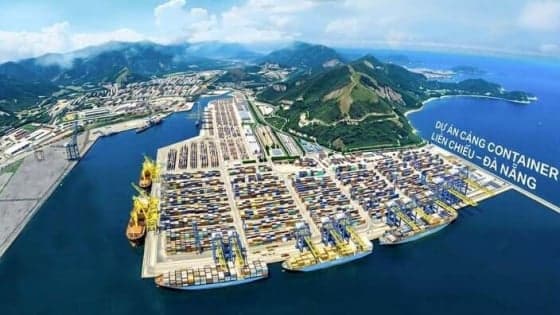
The city is also home to one of northern Vietnam’s largest deep-sea port systems, with annual cargo throughput growing at 12-15%. In 2024, its ports handled 190 million tons of goods, and the figure is expected to rise to 212 million tons by year-end.
Hai Phong currently ranks among the top three localities nationwide in attracting FDI, with total accumulated investment exceeding $45.6 billion. The establishment of the Hai Phong Free Trade Zone will serve as a new growth engine, creating a strong breakthrough for the city while generating spillover momentum for the entire Red River Delta region.
Hai Phong is one of the six centrally-governed cities in Vietnam, together with Hanoi, Danang, Hue, Can Tho, and Ho Chi Minh City.