

Tourism – a key pillar driving ASEAN’s economic growth
Assessing the overall development of tourism across Southeast Asia, Satvinder Singh, Deputy Secretary General for ASEAN Economic Community stated: “ASEAN’s tourism industry has not only rebounded strongly after the pandemic but has also become one of the key pillars driving economic recovery and growth in the region.”
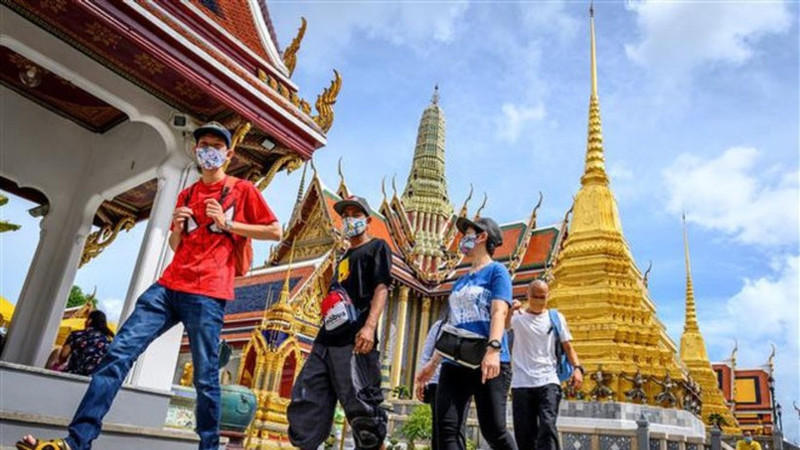
According to Singh, in 2025 ASEAN welcomed approximately 144 million international tourist arrivals, an increase of 30.4 per cent compared with 2024. Intra-ASEAN travel also recorded impressive growth, with nearly 48 million trips, underscoring the strength of regional solidarity.
In 2024, ASEAN’s tourism sector contributed nearly 400 billion USD to the regional economy, equivalent to around 10 per cent of ASEAN’s total GDP of roughly 4 trillion USD. Notably, the sector provides employment for approximately 42.5 million people, supporting the livelihoods of millions across the region.
However, Singh cautioned that the global landscape remains volatile, marked by geopolitical shifts, economic instability, the urgent need to respond to climate change and the far-reaching impacts of digital transformation. In light of these challenges, ASEAN must shift its focus from recovery to transformation in order to maintain its leading role and enhance resilience.
ASEAN’s tourism industry has not only rebounded strongly after the pandemic but has also become one of the key pillars driving economic recovery and growth in Southeast Asia
Satvinder Singh,
Deputy Secretary General for ASEAN Economic Community
The announcement of the ASEAN Tourism Sectoral Plan 2026–2030 alongside the ASEAN Tourism Marketing Strategy 2026–2030 marks a significant milestone in regional tourism cooperation. These two strategies will serve as guiding frameworks for ASEAN tourism development over the next five years, aligned with the ASEAN Vision 2045 previously adopted by regional leaders.
“Our objective is clear: to position ASEAN as a world-class destination that is not only highly competitive but also sustainable, inclusive and resilient. Achieving this requires concerted efforts and close collaboration among all member states, not merely as individual countries but as a unified destination,” Singh stressed.
A bridge between cultures and people
Regarding the ASEAN Tourism Sectoral Plan 2026–2030, Scott Morris, Vice-President for East Asia, Southeast Asia and the Pacific at the Asian Development Bank (ADB), highlighted several key priorities: resilient tourism; empowerment and capacity-building of the tourism workforce; accessible and seamless travel; digital tourism; product and market diversification; and sustainable tourism.
These priority areas demonstrate ASEAN’s strong commitment to quality growth — growth that is not measured solely in numbers, but in fostering a tourism industry that is competitive, responsible, inclusive and future-ready.
Morris emphasised that implementation is crucial at this stage. Plans and strategies only carry real value when effectively translated into practice. “This is a pivotal moment for ASEAN to leverage its favourable position, enhance its competitive advantages and assert its prominent role on the global tourism map,” he added.
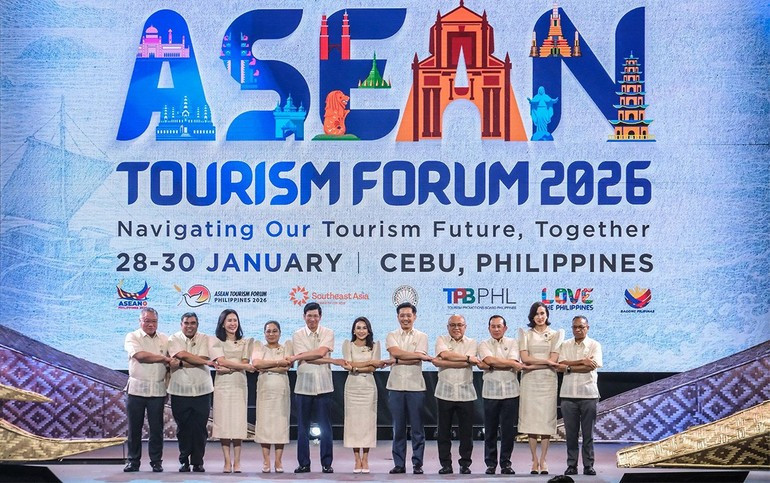
In 2026, the ASEAN Tourism Forum was held in Cebu, the Philippines, in a spirit of openness, dialogue and connectivity. Philippine Tourism Secretary Christina Garcia Frasco noted that within ASEAN, tourism is not merely an economic sector but also a bridge between cultures, connecting people and strengthening regional cohesion. The Philippines’ hosting of ATF 2026 reflects its strong commitment to advancing ASEAN tourism cooperation.
“As ASEAN Chair in 2026, the Philippines affirms that it will carry out this responsibility with humility and determination, striving for shared growth and the collective benefit of the region,” Frasco stated.
This year also marks the 45th anniversary of the ASEAN Tourism Forum, first launched in Malaysia in 1981. Over the decades, ATF has reaffirmed its role as a robust platform for cooperation, strengthening partnerships, policies and shared aspirations, and positioning tourism as a driver of socio-economic development for countries and communities across the region.
The Philippines’ ASEAN Chairmanship is guided by five strategic directions under the banner “SAIL ASEAN” (SAIL A): strengthening trade and investment connectivity; accelerating digital transformation; integrating the development agenda for micro, small and medium-sized enterprises (MSMEs); harnessing the creative economy and innovation; and promoting sustainable and inclusive economies. The Balangay boat featured in the ASEAN 2026 Chairship logo symbolises an ASEAN moving forward together in unity towards a shared future.
A key highlight of this year’s forum was the finalisation and adoption of the ASEAN Tourism Strategic Plan 2026–2030, which sets out a clear and unified roadmap to promote sustainable and inclusive tourism, enhance visitor experiences, empower businesses and strengthen ASEAN tourism’s competitiveness on the international stage.
This roadmap also reflects ASEAN’s broader direction towards innovative growth, environmentally friendly development and prioritising people’s welfare. These priorities demonstrate the power of tourism to drive growth when energised by vision and innovation.
The ASEAN Tourism Marketing Strategy 2026–2030 serves as a vital complement to the sectoral plan, positioning ASEAN as a diverse, multi-country destination that is connected and globally competitive. The strategy will support member states in defining clear development objectives and promoting ASEAN’s image to the world through data-driven marketing, digital engagement and strategic partnerships.