VIETNAM CHAMBER OF COMMERCE AND INDUSTRY
Liên Đoàn Thương Mại Và Công Nghiệp Việt Nam
Wed, Nov 18, 2026, 15:29:00
At the "Real Estate 2026" forum, themed "Activating a New Cycle: New Trends – New Strategies", organized recently in Hanoi, experts and business leaders discussed the key drivers shaping the market, capital flow prospects and business strategies for the coming period.
One of the key questions raised at the forum was whether the market had genuinely entered a new cycle or remained in a period of adjustment and rebalancing following the sharp fluctuations of previous years. More importantly, what direction will the new cycle take, and which companies will have the capacity to seize emerging opportunities?
Positive macroeconomic fundamentals as market enters a period of selection
Nguyen Duc Thuan, chairman of the Vietnam Association of Corporate Directors (VACD), said the real estate market never returns to its previous state after each cycle, but instead undergoes structural changes in its operating models and competitive requirements.
According to Thuan, five major developments are shaping the new cycle: institutional reforms; infrastructure development and urban planning; shifts in capital flows; widening disparities in corporate capabilities; and changes in customer demand and behavior.
Institutional reforms, in particular, are creating a more transparent and disciplined competitive environment. Changes to regulations governing land, housing and real estate business activities are opening up opportunities to unlock resources while imposing higher requirements on companies' compliance and implementation capabilities.

Assessing the real estate market in the broader context of the economy, BIDV chief economist Can Van Luc said Vietnam's real estate sector still had considerable room for growth. Construction and real estate business activities currently account for around 9-10% of GDP, while the sector's contribution in many other economies is typically significantly higher.
Luc said Vietnam's economy continued to enjoy positive growth prospects, with public investment, domestic private investment and foreign direct investment (FDI) remaining key growth drivers. These factors provide a foundation for real estate demand, particularly in areas experiencing rapid urbanization and industrial development.
However, he cautioned that a market recovery would not benefit all companies equally. The market is increasingly displaying a K-shaped recovery, with financially strong companies possessing clean land banks, sound legal documentation and the ability to execute projects continuing to grow, while many others remain under pressure from cash flow constraints, financing costs and debt repayment obligations.
One notable challenge is rising input costs. Average construction material prices have increased by around 6.7%, while sand and gravel prices have risen by 30-40% in some areas, with supplies even becoming scarce for construction projects. This has continued to put pressure on project development costs, while companies are not always able to raise selling prices in line with rising expenses.
Regarding capital flows, Luc said the real estate market remained heavily dependent on bank lending, while medium- and long-term funding sources were still underdeveloped relative to demand. Companies need to proactively restructure their capital sources, manage cash flows and reduce their reliance on financial leverage.
"Another notable development is the shift in investment behavior. Capital is becoming more selective, increasingly favoring projects with transparent legal status, reputable developers and tangible operational potential rather than those relying solely on expectations of future price increases," Luc said.
From price appreciation expectations to real value and actual cash flow
A key theme highlighted by speakers was the changing way in which real estate value is determined. Whereas location and expectations of price appreciation were previously regarded as the main factors underpinning a project's appeal, quality of life, income-generating potential and the vitality of residential communities are becoming increasingly important in the new cycle.
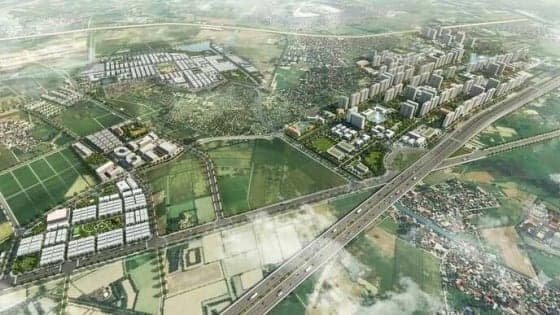
Nguyen Van Dinh, vice chairman of the Vietnam National Real Estate Association and chairman of the Vietnam Association of Realtors (VARS), said the market was shifting away from fragmented development centred on individual land plots towards a model of polycentric, multi-centered urban development linked to regional planning and transport infrastructure networks.

Dinh also said infrastructure not only shortened travel times but could fundamentally reshape urban spaces and the real estate value map. However, the presence of infrastructure alone did not guarantee sustainable property price increases in surrounding areas.
The key is whether a project can establish a residential community, supported by an ecosystem of amenities, employment opportunities and genuine economic activities. A project may enjoy a favorable location, but without residents, services or income-generating activities, it will struggle to maintain its appeal over the long term.
Sharing a similar view, Dang Phuong Hang, general director of CBRE Vietnam, said the market was entering a period of adjustment as it sought to restore balance between supply and demand. Buyers are becoming increasingly cautious and are no longer as willing to commit capital based on short-term speculative sentiment. Instead, they are paying greater attention to actual housing needs and long-term income-generating potential.
Meanwhile, Le Hoang Chau, chairman of the Ho Chi Minh City Real Estate Association (HoREA), highlighted persistent structural imbalances in the property market, with supply heavily concentrated in the high-end segment while affordable and mid-range housing is becoming increasingly scarce.
"Resolving stalled projects will help improve supply in the coming period. However, for the market to develop in a healthy and sustainable manner, institutional and policy frameworks must continue to be improved and existing bottlenecks addressed," Chau said.