VIETNAM CHAMBER OF COMMERCE AND INDUSTRY
Liên Đoàn Thương Mại Và Công Nghiệp Việt Nam
Mon, Oct 12, 2026, 16:45:00
 |
Nguyen Quang Vinh, Vice President of the Vietnam Chamber of Commerce and Industry (VCCI) and Chairman of the Vietnam Business Council for Sustainable Development (VBCSD), shared his views on business competitiveness, green requirements and VCCI’s role in supporting businesses.
Where do Vietnamese enterprises stand in terms of competitiveness and transformation?
Looking back at 40 years of Doi Moi, I believe adaptability is one key strength of Vietnamese enterprises. From an economy with limited integration, we have developed a business community increasingly capable of participating in international markets, adopting technology, and meeting rising global customer standards.
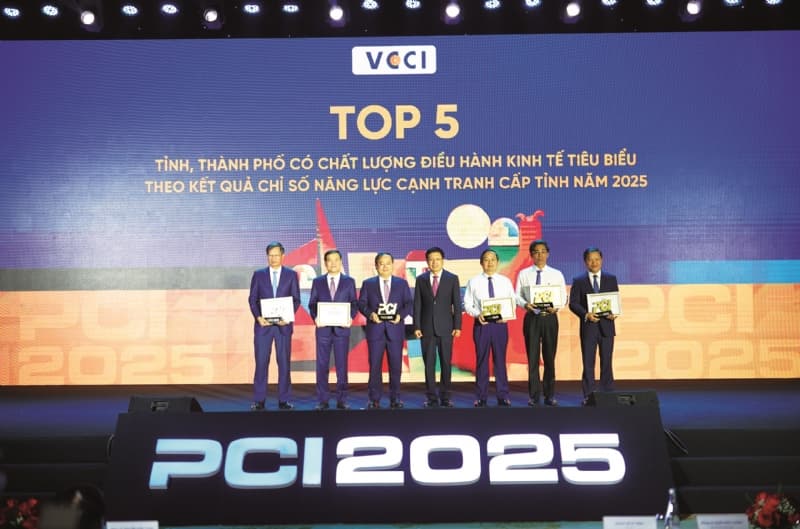
However, the demands facing enterprises today have fundamentally changed. Businesses must not only respond to market fluctuations, but also proactively strengthen competitiveness through productivity, technology, innovation, governance quality, and sustainable development. According to the Organization for Economic Co-operation and Development (OECD), Vietnam’s productivity growth slowed from 5.9% annually in 2000-2010 to 4.6% in 2010-2022; meanwhile, the 2025 Provincial Competitiveness Index (PCI) shows that businesses still face obstacles in accessing markets and resources. This indicates that there remains significant room to strengthen competitiveness.
Therefore, I believe green transition and ESG should not be viewed merely as compliance requirements, but should become economic drivers for enterprises: saving energy to cut costs, adopting technological innovation to raise productivity, and strengthening ESG governance to mitigate risks and improve access to capital, partners, and markets. When this happens, sustainable development will no longer be a separate requirement, but part of corporate strategy that creates long-term value.
This is also the spirit of Resolution 19-NQ/TW on renewing the development model: shifting strongly toward a model driven by productivity, science and technology, innovation, human resource quality, and efficient resource use. Enterprises are the direct actors that turn these orientations into greater competitiveness for the economy.

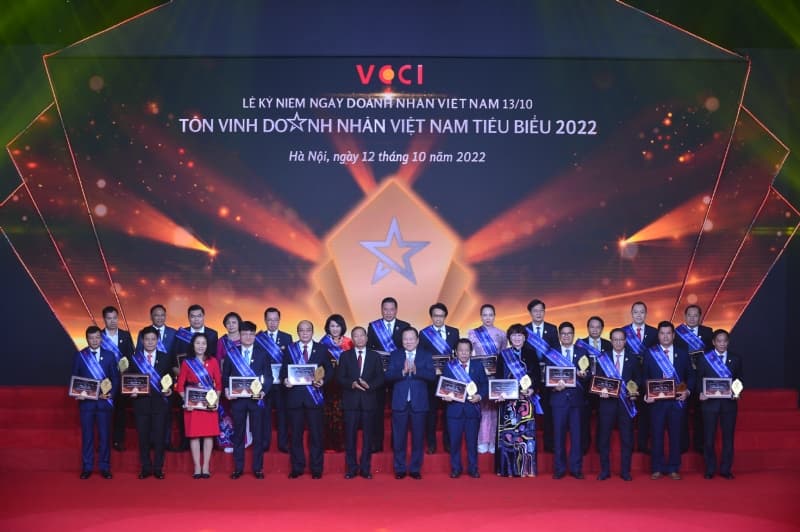
Prof. Dr. Nguyen Xuan Thang, Chairman of the Central Theoretical Council (sixth from left), and Nguyen Quang Vinh, VCCI Vice President and VBCSD Chairman (seventh from left), present flowers to business representatives in celebration of Vietnam Entrepreneurs’ Day at the Vietnam Corporate Sustainability Forum 2026
As green standards become market requirements, what should policy do to help Vietnamese enterprises, especially SMEs, meet them and move up global value chains?
First, green standards are becoming part of the rules of international trade. The European Union’s Carbon Border Adjustment Mechanism (CBAM) entered its definitive phase on January 1, 2026; meanwhile, requirements for sustainability disclosures, traceability, emissions, and supply chain responsibility in Vietnam’s other key export markets are also becoming increasingly standardized. This shows that “green” is no longer just about products, but is increasingly tied to data, measurability, transparency, and the ability to report and provide evidence. Vietnamese enterprises therefore need support not only to meet these standards, but also to build governance capabilities aligned with these new demands.
In my view, policy needs to focus on three issues. First, building a stable, transparent, and predictable institutional environment so enterprises feel confident making long-term investments in green technology, energy, and production. Second, expanding access to finance and technology for the green transition, particularly for small and medium enterprises. Businesses cannot be expected to transform at the same pace when their financial and technological capacities differ significantly. Third, and most importantly, linking the green transition to strengthening the position of Vietnamese enterprises in value chains.
With the issuance of Resolution 10-NQ/TW dated June 8, 2026, by the Politburo on developing the foreign direct investment (FDI) sector, there is an opportunity to use FDI integration to upgrade Vietnamese enterprises. The resolution focuses on improving FDI quality, strengthening linkages with domestic enterprises, developing supporting industries, promoting technology transfer, and fostering innovation.
Multinational corporations are increasingly setting high ESG, emissions, traceability, and social responsibility requirements for suppliers. If Vietnamese enterprises strengthen their capacity to meet these requirements, we will not only “overcome green barriers,” but also become higher value-added suppliers.
I believe this is the necessary approach: green standards should not be viewed merely as a barrier, but as a market signal and a driver for upgrading businesses. Renewing the development model must create an ecosystem that enables enterprises to innovate, invest, and raise productivity. Therefore, green transition, digital transformation, innovation, and value chain upgrades must be pursued as closely interconnected processes.
How will VCCI help businesses strengthen competitiveness and deepen value-chain participation?
In this new phase, I believe VCCI must continue to fulfill its two parallel roles: improving the business environment and strengthening business competitiveness.
Regarding the business environment, VCCI will continue to promote policy advisory, policy critique, and dialogue, bringing the business community’s voice into policymaking. The PCI will remain an important tool for measuring economic governance quality, driving reform, and creating a more favorable business environment. In the coming period, we also need to take a broader view of the business environment: not just facilitating business establishment and operations, but also creating conditions for enterprises to innovate, digitally transform, pursue green transition, and develop over the long term.
Regarding enterprise capability, VCCI and VBCSD will continue promoting the application of the Corporate Sustainability Index (CSI), supporting enterprises in improving governance quality, implementing ESG practices, managing emissions, and meeting international standards. More importantly, we want these tools to serve as practical management instruments that help businesses identify gaps and develop appropriate transformation roadmaps.
VCCI will also strengthen connections between Vietnamese enterprises and FDI firms, multinational corporations, financial institutions, research institutes, and international partners. The objective goes beyond sharing information to building substantive connections in technology, capital, markets, standards, and supply chains.
I particularly believe we must make a strong shift from supporting businesses to “overcome barriers” to supporting them to “seize opportunities.” The green transition creates new markets, business models, and demands. Vietnamese enterprises must build sufficient capacity to participate in these markets, rather than simply focusing on meeting buyer requirements.
I also want to stress that 40 years of Doi Moi have demonstrated the adaptability and innovative spirit of Vietnamese enterprises. The new phase requires us to develop these qualities at a higher level. Businesses should not wait until the market compels them to transform; nor should they wait until regulations take effect before taking action. Proactive transformation today is the way to prepare for tomorrow’s competitiveness.
For VCCI, we will continue to support businesses in shifting from adaptation to initiative, from compliance to value creation, and from resource-driven growth to growth powered by productivity, innovation, and quality.
I believe this is not only the path for enterprises to develop more sustainably, but also a practical way for the business community to contribute to realizing a new development model for Vietnam that is dynamic, green, inclusive, and more competitive.
Thank you very much!