VIETNAM CHAMBER OF COMMERCE AND INDUSTRY
Liên Đoàn Thương Mại Và Công Nghiệp Việt Nam
Thu, Sep 03, 2026, 14:34:00
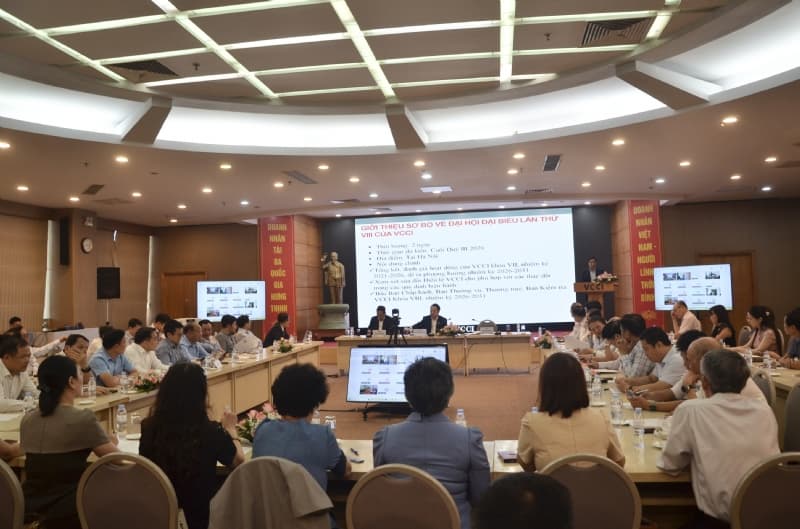
At the 13th Meeting of the VCCI Executive Committee, 7th tenure, in addition to reviewing the results of activities in the first six months of the year and discussing orientations for the 8th tenure, representatives of local business associations and enterprises focused on highlighting practical difficulties encountered in the implementation of policies.

Mr. Nguyen Huy Long, Chairman of the Lao Cai Provincial Business Association, proposed that VCCI study and standardize the organizational model for business representative organizations at the local level.
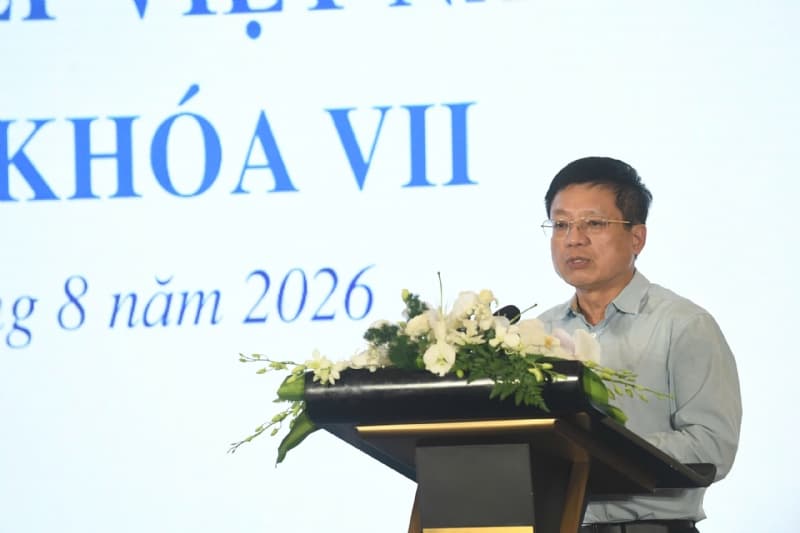
Speaking at the meeting, Mr. Nguyen Huy Long, Chairman of the Lao Cai Provincial Business Association, proposed that VCCI study and standardize the organizational model for business representative organizations at the local level, thereby strengthening linkages and improving the effectiveness of consolidating and articulating the voice of the business community.
According to Mr. Long, the names of business representative organizations vary among provinces and cities. Some operate as provincial business associations, while others are organized as trade federations or business federations. He therefore proposed that VCCI develop a common orientation at the central level to gradually standardize the organizational model at the local level.
The Chairman of the Lao Cai Provincial Business Association also called for stronger coordination and restructuring of local business associations and organizations toward establishing clearer representative focal points. This would enable enterprises’ recommendations and difficulties to be consolidated and conveyed through VCCI to the Government, ministries and sectors.
Regarding the composition of the VCCI Executive Committee for the 8th tenure, Mr. Nguyen Huy Long also proposed that VCCI reconsider the proportion of representation allocated to business association chairpersons.
According to him, the proposed inclusion of representatives from provinces and cities, regions and industries in the next-term Executive Committee is appropriate, as this approach would ensure that the voices of localities and different production and business sectors are relatively comprehensively represented.
However, the Chairman of the Lao Cai Provincial Business Association said that the proportion allocated to this group of representatives should be carefully considered. Vietnam currently has a large number of provinces, cities and industry associations, while many association chairpersons have already served one or two terms on the VCCI Executive Committee and remain committed, experienced and willing to continue contributing.
According to Mr. Long, if the proportion is set too rigidly, the number of association chairpersons represented could be reduced, despite their practical experience and close involvement in the activities of business associations and organizations. Therefore, when developing the composition of the Executive Committee for the 8th tenure, VCCI should strike a balance between expanding representativeness and making effective use of those with experience, credibility and strong commitment to association activities.
In addition, Mr. Long proposed studying a mechanism for part-time Vice Presidents representing different regions and industries, thereby strengthening links between the VCCI Executive Committee and localities, sectors and the business community.

Ms. Nguyen Thi Thanh Tam, Chairwoman of the Board of Directors and Director of Linh Duong Joint Stock Company, said that many policy-related difficulties stem from implementation at the local level and enterprises’ compliance.
Meanwhile, Ms. Nguyen Thi Thanh Tam, Chairwoman of the Board of Directors and Director of Linh Duong Joint Stock Company, expressed her support for VCCI’s orientations for the next tenure, particularly its continued focus on removing bottlenecks and difficulties facing enterprises. However, she noted that in practice, difficulties do not only stem from the Government’s regulations and policies, but also from implementation at the local level and enterprises’ own compliance.
“Have we fully and properly implemented all of the Government’s opinions and directions? I have not yet seen any results quantified, measured, reviewed and reflected through figures regarding implementation effectiveness, as well as the responsibilities and obligations of enterprises,” Ms. Tam said.
She therefore called on VCCI, in the next tenure, to coordinate with local authorities to review and clearly classify enterprises facing legitimate difficulties, operating in compliance with the law and making contributions to the community, so that efforts to address their difficulties could be prioritized. For enterprises that have not fully fulfilled their obligations or have committed violations, she said, they should be clearly classified to avoid making generalized recommendations.
“Recommendations should be screened at the enterprise level from the outset. Enterprises with good standing, operating in compliance with the law and making contributions to the community should have their legitimate rights and interests protected,” Ms. Tam emphasized.
She also said that recommendations submitted to the Government should be supported by concrete grounds, data and assessments to enhance their persuasiveness. VCCI should therefore strengthen coordination with local authorities to review practical situations, thereby ensuring that the voice representing enterprises accurately reflects the issues at hand and provides a stronger basis for the formulation and improvement of policies.

Mr. Tran Quoc Bao, Chairman of the Da Nang City Business Association, called on local business associations and VCCI to strengthen policy research and consolidate practical difficulties in order to make recommendations to competent authorities.
Speaking at the Conference, Mr. Tran Quoc Bao, Chairman of the Da Nang Business Association, said that the Association had, over the past period, consolidated business recommendations and worked with the city authorities to resolve more than 150 issues and documents related to various sectors, fields and long-standing projects. However, many projects continue to face difficulties due to obstacles arising from mechanisms, policies and legal regulations.
According to Mr. Bao, one of the major issues is the large number of projects that have remained unresolved for many years, including projects subject to Da Nang’s special mechanisms and policies under National Assembly Resolutions No. 136, No. 170 and No. 29. Despite efforts by the city and relevant departments and agencies to seek solutions, implementation remains challenging as existing legal regulations have yet to keep pace with the realities of projects that have been stalled for 10-15 years.
Notably, reassessing the financial capacity of investors in long-standing projects has also created additional bottlenecks. The business representative noted that for projects that have been underway for many years, investors have already committed capital and carried out site clearance, but subsequently faced delays due to inspections and audits. Reapplying financial capacity requirements applicable to new projects would therefore be difficult to implement in practice.
Against this backdrop, Mr. Bao called on local business associations and VCCI to strengthen policy research and consolidate difficulties and obstacles for submission to competent authorities.
He also called on the VCCI Chairman to continue promoting VCCI’s role as a focal point for connecting local business associations and consolidating issues beyond their jurisdiction for submission to the Government and the National Assembly. According to him, addressing individual “hotspots” without resolving systemic and policy-related bottlenecks could result in recurring obstacles.
In response to recommendations from localities and business associations, VCCI Chairman Ho Sy Hung emphasized the need to renew the approach to collecting and consolidating business feedback. Accordingly, members of the VCCI Executive Committee and local business associations should proactively collect and consolidate difficulties and submit them to the VCCI Standing Committee.
In particular, feedback should clearly identify the specific regulation, legal document and provision causing difficulties, as well as the amendments required, rather than being presented in general terms. This would provide VCCI with a sufficient basis to consolidate, analyze and propose solutions to the Government and the National Assembly.
Alongside efforts to remove legal barriers, VCCI affirmed that it would continue to accompany localities and businesses through programs supporting economic development, facilitating access to finance, promoting green production and advancing digital transformation. The VCCI Chairman called on relevant units to further develop their recommendations in writing and submit them to the VCCI Standing Committee for consolidation and timely use in policy advocacy efforts in the coming period.