VIETNAM CHAMBER OF COMMERCE AND INDUSTRY
Liên Đoàn Thương Mại Và Công Nghiệp Việt Nam
Tue, Oct 13, 2026, 09:43:00
On the afternoon of September 21, the 7th Regional Logistics Forum 2026, themed “Creating New Development Space for Logistics in the Red River Delta,” took place at the Hai Phong City Conference and Performing Arts Center. The Forum was directed by the Vietnam Chamber of Commerce and Industry (VCCI) and the Hai Phong City People’s Committee, and jointly organized by the Business Forum Magazine, the Hai Phong Department of Industry and Trade, the Vietnam Association of Logistics Service Enterprises, and the Hai Phong Logistics Association.
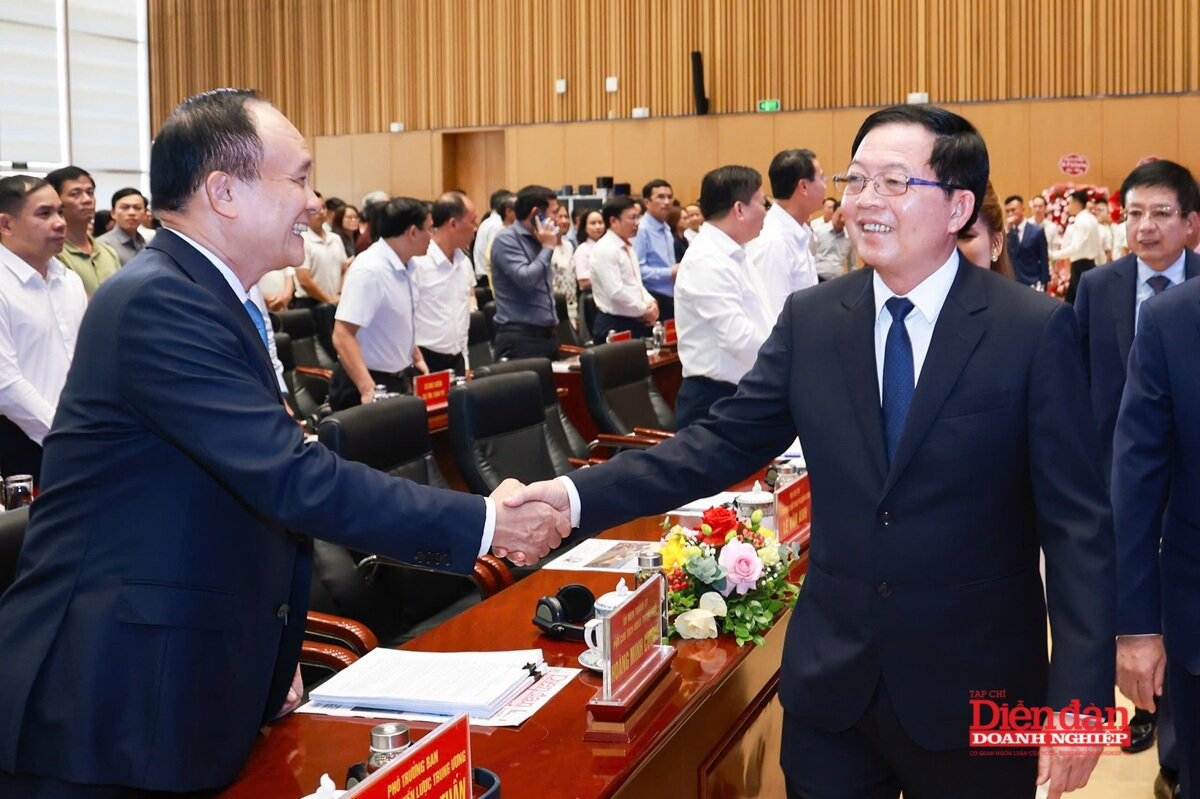
The 7th Regional Logistics Forum 2026, themed “Creating New Development Space for Logistics in the Red River Delta,” was honored to welcome and receive the keynote guidance remarks from Deputy Prime Minister Ho Quoc Dung.
Attending the 7th Regional Logistics Forum from central-level leaders and ministries were Mr. Ho Quoc Dung, Member of the Central Committee of the Communist Party of Vietnam and Deputy Prime Minister of the Socialist Republic of Vietnam; Mr. Nguyen Ngoc Tuan, Deputy Head of the Central Policy and Strategy Commission; Mr. Tran Anh Tien, Deputy Minister-Chairman of the Government Office; along with leaders of departments and agencies under central ministries and agencies.
Representing the leadership of Hai Phong City were Mr. Le Ngoc Chau, Member of the Central Committee of the Communist Party of Vietnam, Secretary of the Hai Phong Party Committee and Head of the Hai Phong National Assembly Delegation; Mr. Do Thanh Trung, Deputy Secretary of the Hai Phong Party Committee and Chairman of the Hai Phong City People’s Committee; Mr. Hoang Minh Cuong, Vice Chairman of the Hai Phong City People’s Committee; along with leaders of the Hai Phong Party Committee, People’s Council, People’s Committee, departments, agencies and localities.
Representing the Vietnam Chamber of Commerce and Industry (VCCI) were Mr. Ho Sy Hung, President of VCCI; and Mr. Hoang Quang Phong, Vice President of VCCI.
Representing leaders of provinces, cities and localities were Mr. Le Van Anh, Vice Chairman of the Quang Ninh City People’s Committee; Mr. Le Quang Hoa, Vice Chairman of the Hung Yen Provincial People’s Committee; and Mr. Nguyen Thanh Cong, Vice Chairman of the Son La Provincial People’s Committee.
Representing international organizations were Mr. Dao Trong Khoa, Vice President of the International Federation of Freight Forwarders Associations (FIATA) and Chairman of the Vietnam Logistics Business Association (VLA); Mr. Stéphane Graber, Director General of FIATA; Mr. Brunon Jaspaert, Chairman of the European Chamber of Commerce in Vietnam (EuroCham); and Mr. Federico Vasoli, Chairman of the Italian Chamber of Commerce in Vietnam (ICHAM), together with representatives of international organizations and associations.
Representing the Organizing Committee were Mr. Nguyen Hoang Long, Director of the Hai Phong Department of Industry and Trade; Mr. Nguyen Linh Anh, Editor-in-Chief of Business Forum Magazine; Mr. Nguyen Duy Minh, Vice Chairman of the Vietnam Logistics Business Association; and Mr. Tran Tien Dung, Chairman of the Hai Phong Logistics Association.
The Forum also brought together representatives of domestic and international organizations and associations, experts, businesses and investors; representatives of major corporations and enterprises in the fields of seaports, transportation, logistics and supply chains; as well as representatives from research institutes and universities. Representatives of central and local news agencies, newspapers and television broadcasters were also present to attend and cover the Forum.
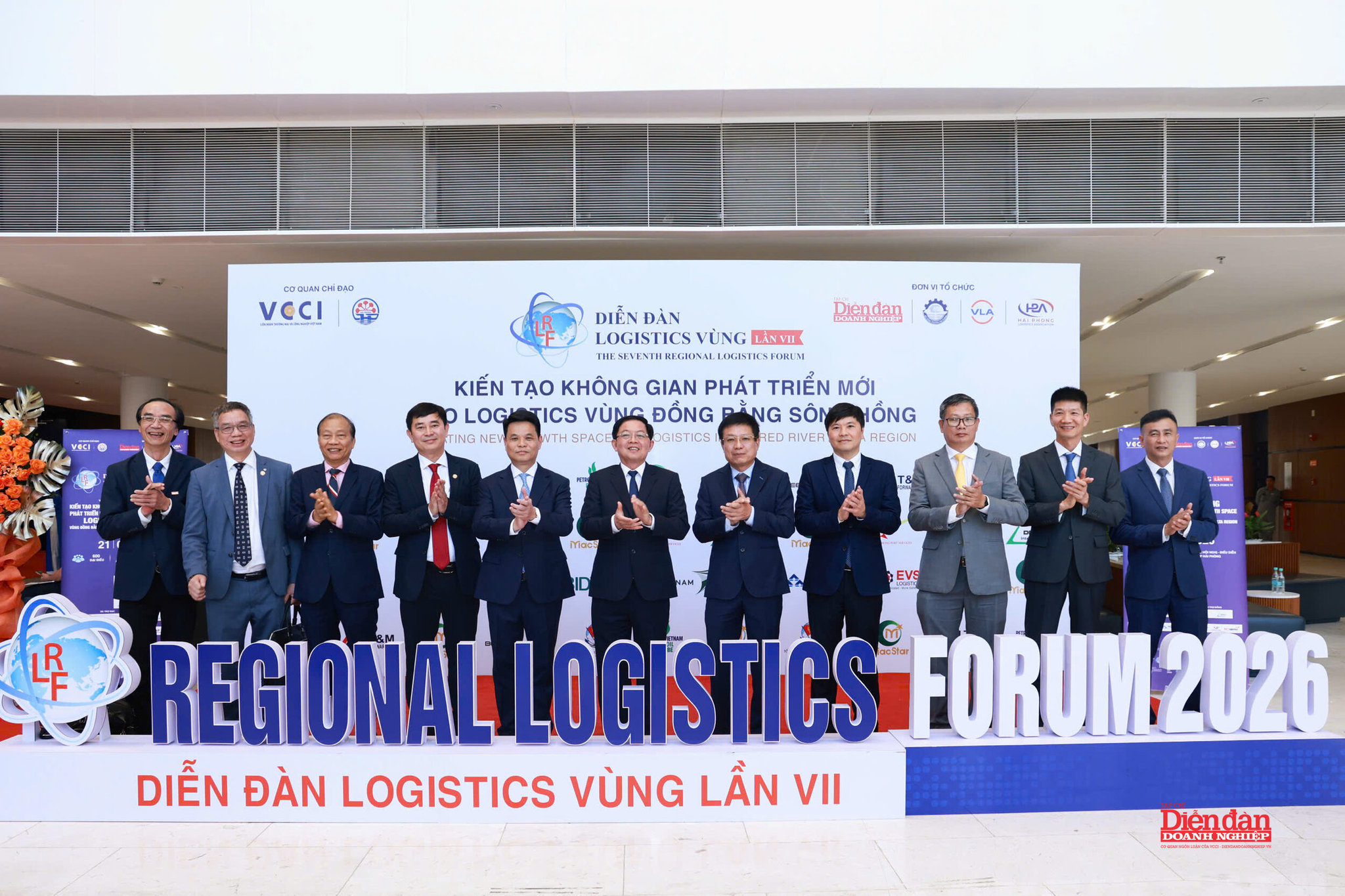
Mr. Ho Quoc Dung, Member of the Central Committee of the Communist Party of Vietnam and Deputy Prime Minister of the Socialist Republic of Vietnam (sixth from left); Mr. Ho Sy Hung, President of the Vietnam Chamber of Commerce and Industry (VCCI) (fifth from right), and other delegates pose for a commemorative photo.
In his opening remarks at the Forum, VCCI President Ho Sy Hung said that on August 28, 2026, the Politburo issued Resolution No. 27-NQ/TW on regional development and the organization of national development space in the new period. The Resolution sets out the development objective for the Red River Delta as a fast-growing, sustainable and inclusive region comprising six provinces and cities: Hanoi, Hai Phong, Quang Ninh, Bac Ninh, Hung Yen and Ninh Binh, based on maximizing the strengths and competitive advantages associated with the cultural identity of each region and locality.
“The objectives set out in Resolution No. 27-NQ/TW affirm that by 2030, the Red River Delta will strive to achieve an average GRDP growth rate of around 10% per year and focus on developing such sectors as culture, electronics, digital transformation, space technology, artificial intelligence, automobiles and electrical appliances. Logistics is also specifically emphasized. Thus, the development orientation for the Red River Delta has been affirmed at the highest level, while highlighting the need for linkages among localities, including in logistics,” President Ho Sy Hung said.
According to President Ho Sy Hung, the challenges facing logistics development stem not only from the specific structural and geographical characteristics of the Red River Delta, but also reflect an inevitable trend in international markets and the practical requirements arising from the development of Vietnam’s logistics sector in recent years.
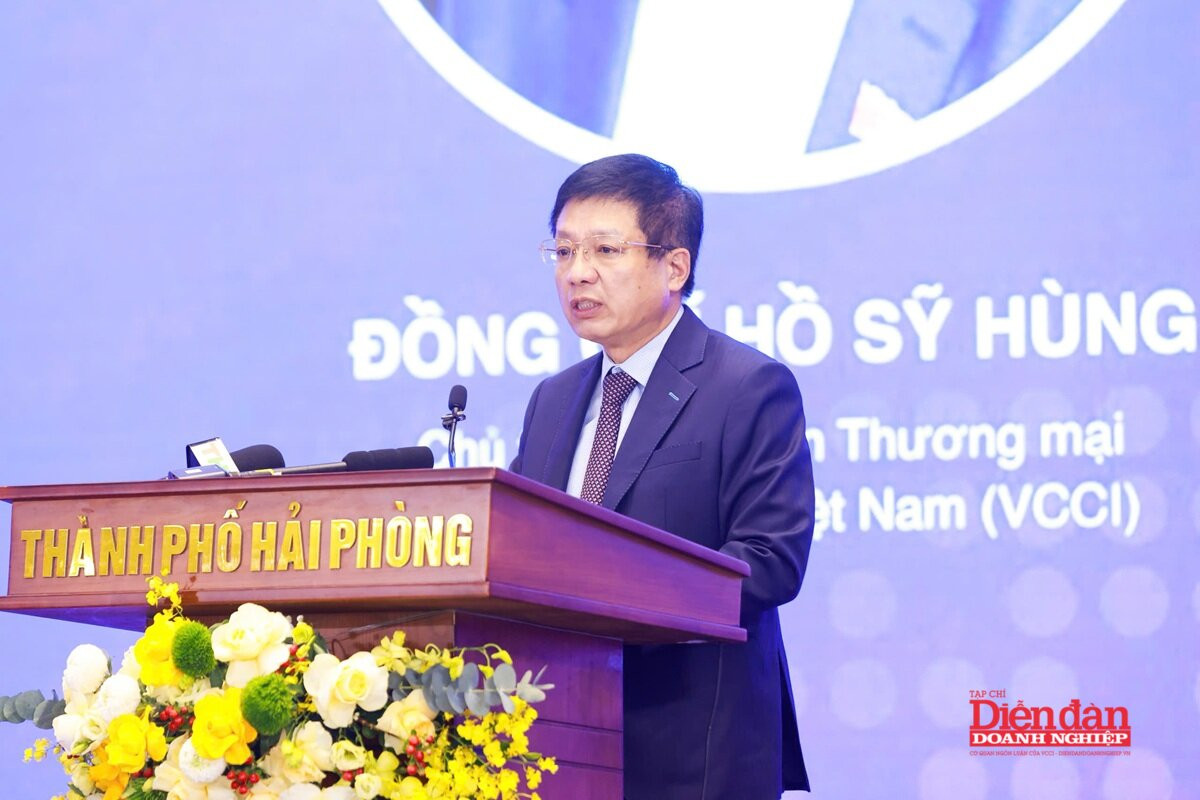
VCCI President Ho Sy Hung delivers opening remarks at the 7th Regional Logistics Forum 2026.
Vietnam’s logistics sector has experienced strong growth, averaging 14–16% annually, more than twice the average GDP growth rate. The Vietnamese logistics market is estimated at approximately USD 45–50 billion, equivalent to around 10% of GDP and 5% of the services sector. In 2023, Vietnam was ranked by international organizations among the Top 10 emerging logistics markets, fourth in ASEAN and 40th globally in the Logistics Performance Index (LPI).
These results demonstrate that Vietnam is well positioned to further develop its logistics sector and expand its international logistics services market, supported by infrastructure, investment trends and human resources aligned with international standards.
According to President Ho Sy Hung, as the gateway connecting the northern region with the rest of the country and the world, the Red River Delta has continued to affirm its position as an important logistics growth hub of Vietnam.
From this perspective, VCCI is pleased to join Hai Phong City and relevant agencies and associations in organizing the Forum under the theme “Creating New Development Space for Logistics in the Red River Delta.” The theme is consistent with the regional development orientations set out in Resolution No. 27-NQ/TW, while also responding to the practical requirements of Vietnam’s logistics sector today.
“The world is witnessing significant restructuring of supply chains. Today, businesses make decisions based not only on labor or land costs, but investors are increasingly paying attention to infrastructure quality, connectivity, supply reliability, digital capabilities, environmental standards and institutional quality. This places new requirements on logistics. Logistics is no longer simply a cost associated with operational chains or transportation, but has become part of a country’s competitiveness,” President Ho Sy Hung emphasized.
Accordingly, President Ho Sy Hung expressed his hope that the Forum would focus its discussions on four key areas and provide practical recommendations for Party and State agencies, as well as associations, to promote logistics development in the region in the coming period:
First, further accelerate efforts to improve the business environment for logistics. Businesses need good infrastructure, but they also need simplified procedures, stable policies, and transparent, efficient and predictable implementation.
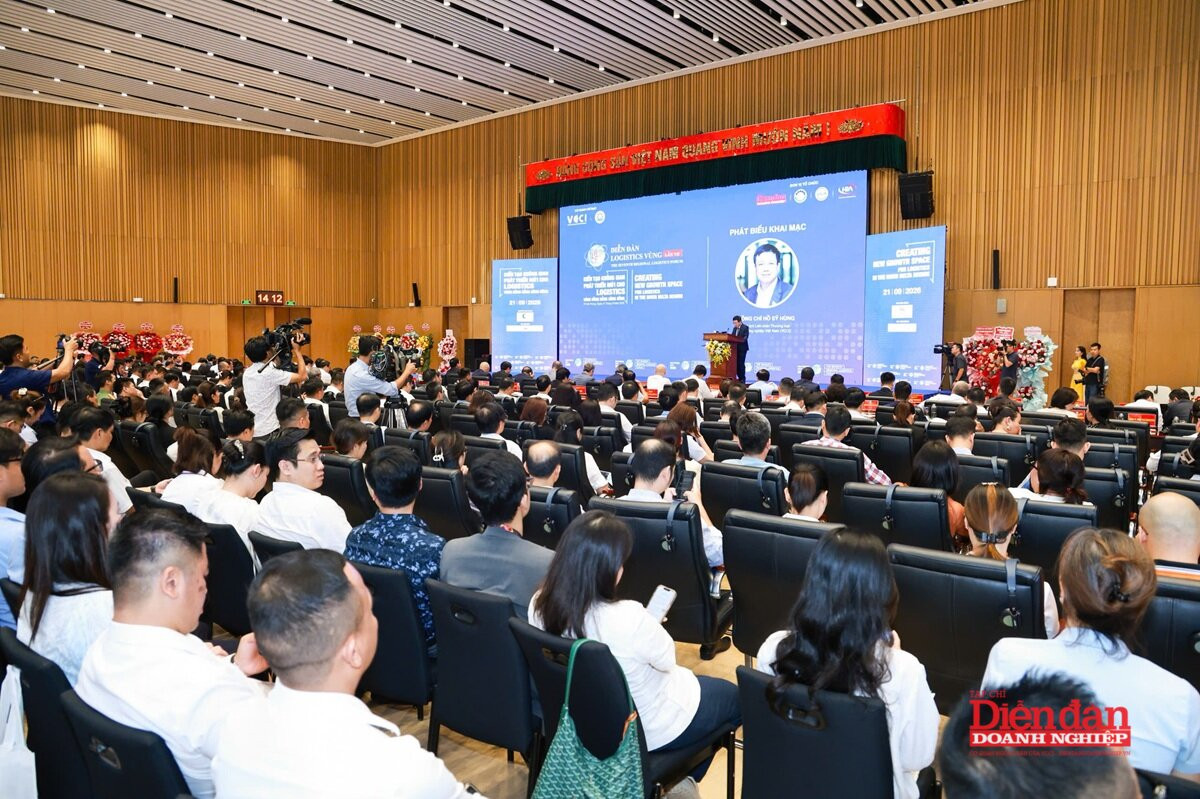
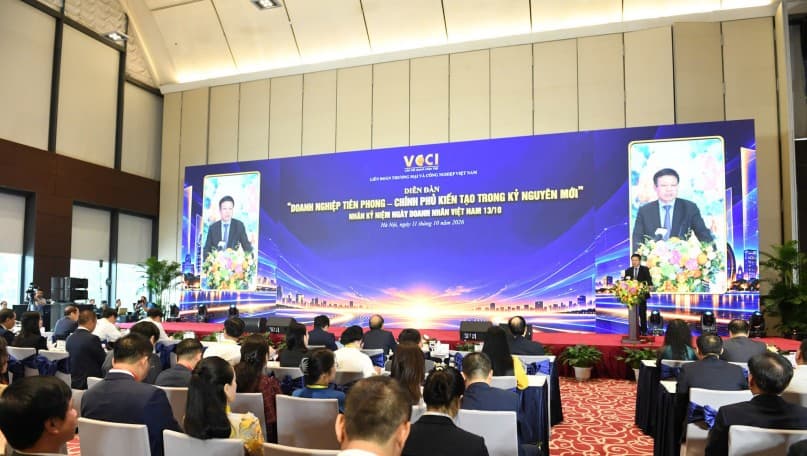
The 7th Regional Logistics Forum 2026, themed “Creating New Development Space for Logistics in the Red River Delta,” took place at the Hai Phong City Conference and Performing Arts Center on the afternoon of September 21.
According to President Ho Sy Hung, every hour that goods have to wait represents a cost; an overlapping procedure is also a cost; and a broken connection between road and rail, inland waterways or maritime transport also becomes a cost for businesses. Ultimately, all these costs are passed on to the costs of the economy as a whole. Therefore, improving the business environment for logistics needs to be viewed across the entire value chain, from planning, investment, seaports, transportation, customs and specialized inspections to warehousing, e-commerce transactions and payment activities.
Second, logistics must become a pioneering sector in green transformation and sustainable development.
President Ho Sy Hung noted that green logistics is no longer an option. For exporters, it is increasingly becoming a prerequisite for accessing major markets participating in international supply chains. Requirements related to carbon emissions, energy, resource efficiency, ESG and supply chain transparency are becoming increasingly stringent and transparent. Logistics is one of the key components of this process.
A green supply chain requires greener transportation, more efficient warehousing, greener seaports, better route optimization and, in particular, the ability to measure emissions. Participating in green supply chains will therefore help Vietnamese businesses move into higher-value segments in line with international trends.
Third, logistics must be connected with industries and businesses must be linked into an ecosystem.
According to President Ho Sy Hung, logistics cannot develop in isolation from production and trade. Addressing logistics challenges therefore requires going deeper into individual industry value chains, reflecting the specific characteristics of each sector and, at a higher level, developing professional and specialized logistics models tailored to those characteristics.
Fourth, logistics must become a tool to help Vietnamese businesses integrate more deeply into the global economy and make better use of FTAs (Free Trade Agreements).
President Ho Sy Hung said that Vietnam currently has an extensive network of free trade agreements, but signing FTAs is only about opening doors. Whether businesses can walk through those doors depends on many factors, including production capacity, standards, market entry capabilities and, in particular, logistics infrastructure.
“These are the four areas that we hope the delegates will focus on discussing and from which they will develop meaningful and practical recommendations for both the business community and State agencies,” President Ho Sy Hung affirmed.
According to President Ho Sy Hung, Resolution No. 27-NQ/TW represents a shift in thinking, moving from a perspective centered on individual local economies toward a development space for a unified regional economy. The Resolution also affirms this approach by placing localities within an integrated development ecosystem, in which each province and city is assigned specific functions, advantages and positions within the shared value chain.
In this regard, the Resolution identifies Hai Phong as a locality that should leverage not only its strong industrial development achievements over the past 10 years, but also its strengths in seaports and logistics.
The Red River Delta accounts for 33.3% of the country’s GDP, with Hai Phong alone accounting for 5.3%. This demonstrates the important role Hai Phong has played in the region’s value chains and development process in recent years.
President Ho Sy Hung expressed his expectation that, with Hai Phong’s current organizational arrangements, governance reforms and, in particular, the selection of optimal personnel, the city’s orientation and planning for logistics development will become clearer.
“We understand that the city’s leaders have committed to creating all favorable conditions for the development of logistics in Hai Phong. Hai Phong has sufficient space and potential for development, particularly logistics development in accordance with relevant standards. These are not merely Vietnamese standards, but new international standards that enable global integration.
For the past 63 years, VCCI has consistently accompanied the development of the business community, particularly Vietnamese logistics businesses. We operate under the principle of ‘Accompanying, pioneering and delivering concrete results.’
“Alongside establishing the VCCI Logistics Working Group to promote the community of logistics service businesses in Vietnam, we have also coordinated with associations, including the Vietnam Logistics Business Association (VLA), and localities over the past 10 years to organize numerous logistics development forums across the country, develop logistics strategies for localities, and establish major forums in Hai Phong, Quang Ninh and other cities in the Red River Delta,” President Ho Sy Hung said.
President Ho Sy Hung expressed his desire to continue accompanying the Hai Phong business community and receive support and priority from the leadership of Hai Phong City. The logistics business community should continue to innovate its management practices and strengthen value-chain linkages, while promoting self-reliance, resilience, innovation and cooperation to advance the logistics sector onto the global stage.
“Through the 7th Red River Delta Regional Logistics Forum 2026, we believe that practical results will be achieved, particularly by opening up a space for policy dialogue, sharing practical experience, discussing growth-related issues and proposing breakthrough solutions for the new period. Businesses attending the Forum will have opportunities to identify suitable partners to jointly establish local production networks and promote smarter regional production areas with greater efficiency,” President Ho Sy Hung said.
The VCCI President affirmed that VCCI will continue working with the business community and localities to follow up on the initiatives, recommendations and proposals discussed, turning them into tangible results in practice.