VIETNAM CHAMBER OF COMMERCE AND INDUSTRY
Liên Đoàn Thương Mại Và Công Nghiệp Việt Nam
Sat, Nov 14, 2026, 16:11:00

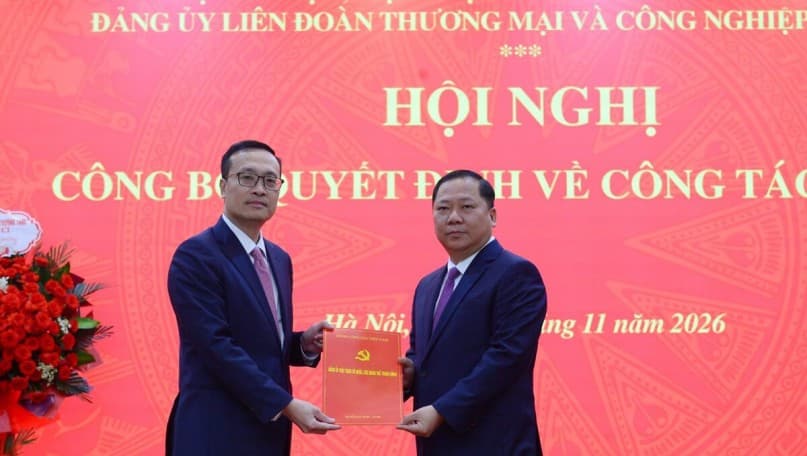
Mr. Nguyen Quang Vinh (MBA), Vice President of the Vietnam Chamber of Commerce and Industry (VCCI) and Chairman of the Vietnam Business Council for Sustainable Development (VBCSD).
According to the VCCI Vice President and VBCSD Chairman, sustainable business should not be viewed merely through the lens of corporate responsibility or regulatory compliance. Rather, it must first and foremost be approached as a strategic vehicle to elevate the quality of growth and generate long-term value. Particularly for an open economy like Vietnam’s, the capacity to meet rigorous environmental, social, governance (ESG), and transparency requirements is increasingly critical for maintaining client and partner relationships and securing a foothold in global supply chains.
As future growth drivers become increasingly tied to productivity, innovation, integration into value chains, and resource efficiency, how can sustainable business unlock new avenues of growth for Vietnamese enterprises?
According to the OECD's Economic Survey of Vietnam 2025, Vietnam’s labor productivity grew at an average annual rate of 4.6% between 2010 and 2022, down from 5.9% in the 2000–2010 decade. This underscores that lifting productivity and resource efficiency must remain central to the country’s growth model moving forward.
This recommendation was echoed by representatives from ADB Vietnam at the Vietnam Corporate Sustainability Forum (VCSF) 2026, hosted by VCCI and VBCSD in early October. They emphasized: "Productivity must become the core engine of our new growth model. As the room for mobilizing additional labor, capital, and land narrows, growth must be driven by every worker creating higher value, every unit of capital being utilized more efficiently, and resources flowing toward higher-productivity sectors, businesses, and activities."
Therefore, the critical objective is not simply for companies to adopt a greater number of sustainable development initiatives. Instead, it is about embedding these principles into core decision-making: where to invest, which technologies to innovate, how to organize production, and what value to deliver to customers, employees, and society. Doing so enhances corporate resilience, seizes market opportunities, and fosters long-term, robust growth.
In your view, what operational shifts must Vietnamese enterprises prioritize to effectively harvest growth opportunities from sustainable business? What policy support and business ecosystem conditions are required, and how are VCCI and VBCSD contributing to this transformation?
First and foremost, businesses must shift from a mindset of merely making commitments to actively governing their transition through concrete targets, data, and measurable outcomes. Every company needs to identify the material issues relevant to its business model, spanning energy, raw materials, emissions, workforce quality, governance, and supply chain integrity, and then build an actionable roadmap tailored to its resources while monitoring implementation performance.
The Vietnam Corporate Sustainability Forum (VCSF) serves as an effective dialogue platform where state management agencies, domestic and international partners, and the business community exchange strategic directions and best practices in sustainable development.
PwC’s ESG Progress Tracker 2025, which surveyed 174 Vietnamese enterprises, revealed that while 61% have formal ESG strategies in place, only 44% have fully operationalized these initiatives to drive genuine value creation. This gap highlights that the core challenge lies not in awareness, but in the capability to translate strategic orientation into substantive action.
Consequently, businesses must treat data management, emissions tracking, transparency, and supply chain accountability as core competencies in corporate governance.
Achieving this requires a stable, transparent, and predictable institutional environment, alongside expanded access to finance, technology, and human capital—particularly for small and medium-sized enterprises (SMEs). More importantly, the green transition must be coupled with upgrading the positioning of Vietnamese firms within global value chains through closer integration with foreign direct investment (FDI) enterprises, multinational corporations, and financial institutions.
The issuance of Resolution No. 10-NQ/TW (dated June 8, 2026) on the development of the foreign-invested economic sector and Resolution No. 19-NQ/TW on renewing Vietnam’s development model jointly demand higher growth quality, enhanced investment efficiency, and the amplification of technology and innovation.
This provides a vital foundation to shift from a pure resource-attraction model toward creating genuine added value, strengthening domestic business linkages, and championing sustainability while fostering a favorable legal environment that sharpens corporate competitiveness.

The Vietnam Corporate Sustainability Forum (VCSF) serves as an effective dialogue platform where state management agencies, domestic and international partners, and the business community exchange strategic directions and best practices in sustainable development.
On behalf of VCCI and VBCSD, our role extends far beyond advocacy and raising awareness; we act as a connector, driving policy dialogue and supporting businesses in execution capacity-building. Through targeted training programs, forums, experience-sharing initiatives, partner matchmaking, and policy recommendations, VCCI and VBCSD strive to help shape a responsible business ecosystem where companies can access knowledge, technology, and best practices to transform collectively.
The 2026 Corporate Sustainability Index (CSI) Programme is scheduled to announce the Top 100 Sustainable Enterprises this December. Could you share the significance of the CSI for Vietnamese businesses on their sustainability journey?
CSI 2026 marks the 11th consecutive year that VCCI, anchored by VBCSD, has spearheaded this programme. Over the past decade, we have witnessed a profound shift in the mindset and actions of the business community toward sustainable development. Moving beyond a primary focus on legal compliance and baseline corporate social responsibility (CSR), a growing number of enterprises are proactively embedding ESG factors into their business strategies, risk management frameworks, and long-term investment planning.
Specifically, across its 10 preceding editions, the programme has recorded over 4,500 direct enterprise participations and more than 10,000 instances of companies referencing and utilizing the Corporate Sustainability Index (CSI) set for self-assessment, governance enhancement, and strategic planning. This serves as a vital bedrock for further disseminating sustainable business practices across the corporate landscape.
We anticipate that the CSI will increasingly be leveraged by companies as a substantive governance tool, rather than serving merely as an evaluation or reporting exercise. By understanding their strengths, gaps, and areas for improvement, enterprises can take a proactive stance in their transition, reinforce stakeholder trust, and unlock enhanced market and capital access.
By scaling the adoption of the CSI framework, we hope the Programme will continue to serve as a platform for continuous learning and improvement - a space where businesses engage in healthy competition while sharing experiences and supporting one another to progress together.
Broadening access for micro-enterprises and SMEs will also generate a multiplier effect across entire supply chains, cementing sustainability as standard practice throughout the Vietnamese business community, much like pioneering value-chain leaders such as SABECO, Vinamilk, Nestlé Vietnam, Traphaco, Coca-Cola Vietnam, Unilever Vietnam, HEINEKEN Vietnam, and C.P. Vietnam are already doing today.
Thank you very much, sir!