VIETNAM CHAMBER OF COMMERCE AND INDUSTRY
Liên Đoàn Thương Mại Và Công Nghiệp Việt Nam
Wed, Jul 29, 2026, 09:21:00
Ha Tinh remains steadfast in its strong political commitment to ensuring sustainable social security. By recognizing social insurance (SI) and health insurance (HI) as core pillars of the social security system, the province not only protects workers’ rights and interests but also lays a solid foundation for sustaining its rapid economic growth.
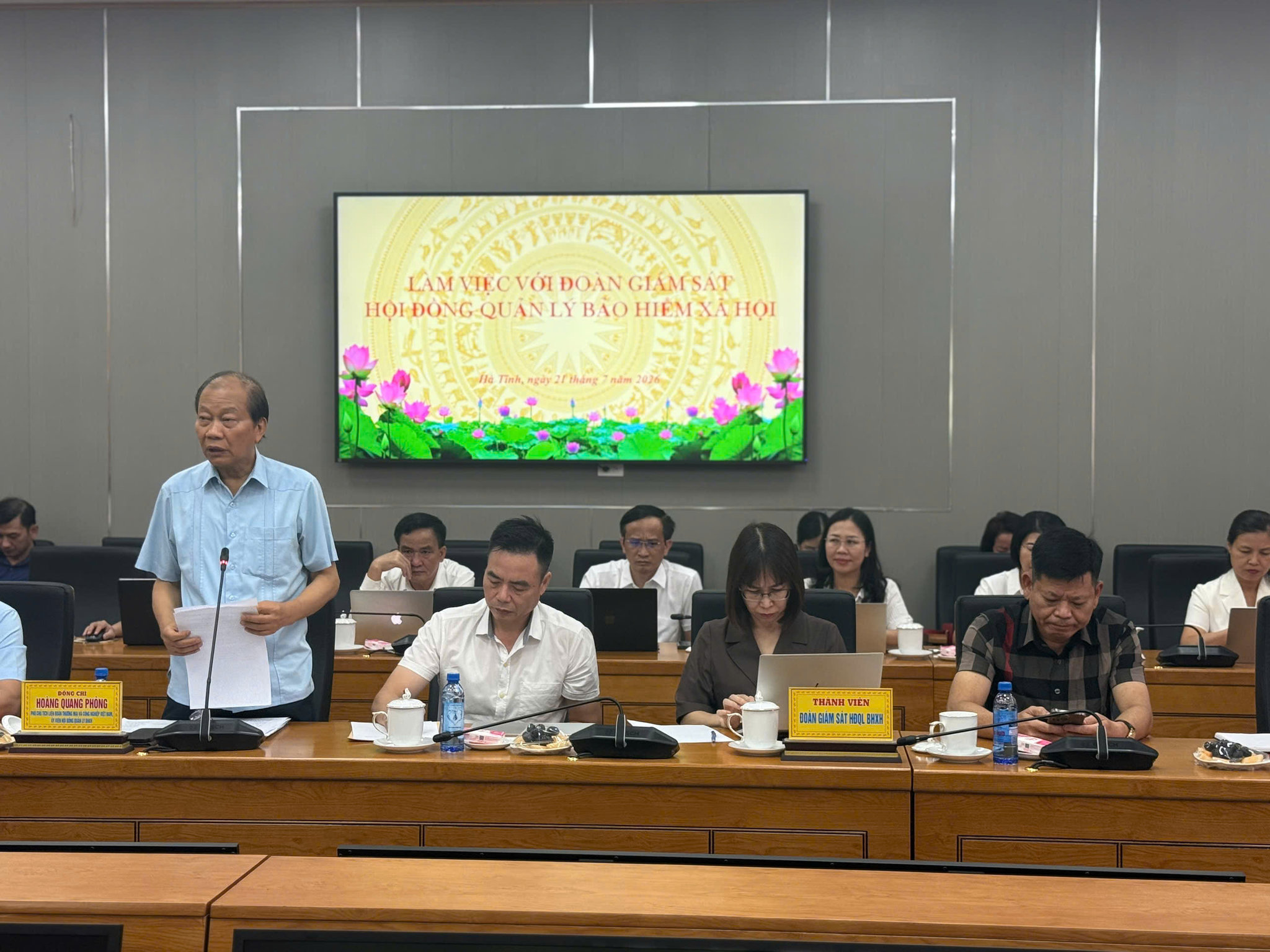
Mr. Hoang Quang Phong, Vice President of the Vietnam Chamber of Commerce and Industry (VCCI), Member of the Management Council of Vietnam Social Security (VSS), and Head of the Working Delegation, speaks at the working session on social insurance in Ha Tinh. (Photo: Nguyet Ha)
Insurance is a Pillar of the Social Security System
According to the leadership of Ha Tinh Province, recognizing social insurance (SI), health insurance (HI), and unemployment insurance (UI) as fundamental pillars of the national social security system, the Ha Tinh Provincial People's Committee has consistently directed and implemented these policies through a comprehensive legal and regulatory framework, coupled with practical and effective governance measures.
With the close guidance of the Central Government and provincial authorities, the proactive efforts of the Ha Tinh Social Security Agency, and the effective coordination among relevant departments, sectors, and local administrations, the implementation of SI, HI, and UI policies has achieved significant results. Health insurance coverage has been maintained at over 95% of the population, while nearly 35% of the working-age labor force participates in the social insurance system. Participants' benefits have been fully safeguarded, and 99.99% of pension and social benefit payments are now made through individual bank accounts, placing Ha Tinh among the leading localities nationwide.
In addition, the province has continued to strengthen its healthcare network and progressively improve the quality of medical examination and treatment services, thereby better meeting the healthcare needs of its residents. Health insurance assessment and claim management have also been enhanced, contributing to the protection of participants' legitimate rights while ensuring the proper, safe, and efficient use of the Health Insurance Fund.
Ha Tinh is also among the country's leading provinces in authenticating participant data against the National Population Database, with a verification rate of 99.99%. Furthermore, 100% of health insurance-contracted medical facilities have adopted patient registration using chip-based Citizen Identity Cards or the VNeID application, significantly improving service quality for both citizens and businesses.
Despite these achievements, the province continues to face a number of challenges. These include a high proportion of informal workers, the predominance of small and resource-constrained enterprises, and the continued complexity of social insurance contribution arrears.
Identifying Practical Bottlenecks
On the morning of July 21, the Ha Tinh Provincial People's Committee held a working session with the Delegation of the Management Board of Vietnam Social Security to review the implementation of policies and legislation on social insurance (SI), health insurance (HI), and unemployment insurance (UI) across the province.
Addressing the meeting, Mr. Hoang Quang Phong, Vice President of the Vietnam Chamber of Commerce and Industry (VCCI), Member of the Vietnam Social Security Management Board, and Head of the Delegation, emphasized that the mission aimed to assess the implementation of policies and directives against assigned performance targets. The review also seeks to identify and replicate innovative and effective practices while highlighting existing shortcomings in order to propose recommendations for policy improvements at the national level.
The VCCI Vice President urged the province to clarify the factors contributing to the relatively low participation rate in voluntary social insurance despite its considerable growth potential. He also called for an assessment of the effectiveness of the Steering Committees for the implementation of social security policies at the commune and ward levels following the transition to the two-tier local government model. In addition, he stressed the need to identify effective measures to control health insurance-funded medical expenditure, noting that during the first six months of 2026, healthcare providers had already utilized 55.3% of the province's annual health insurance budget allocation.
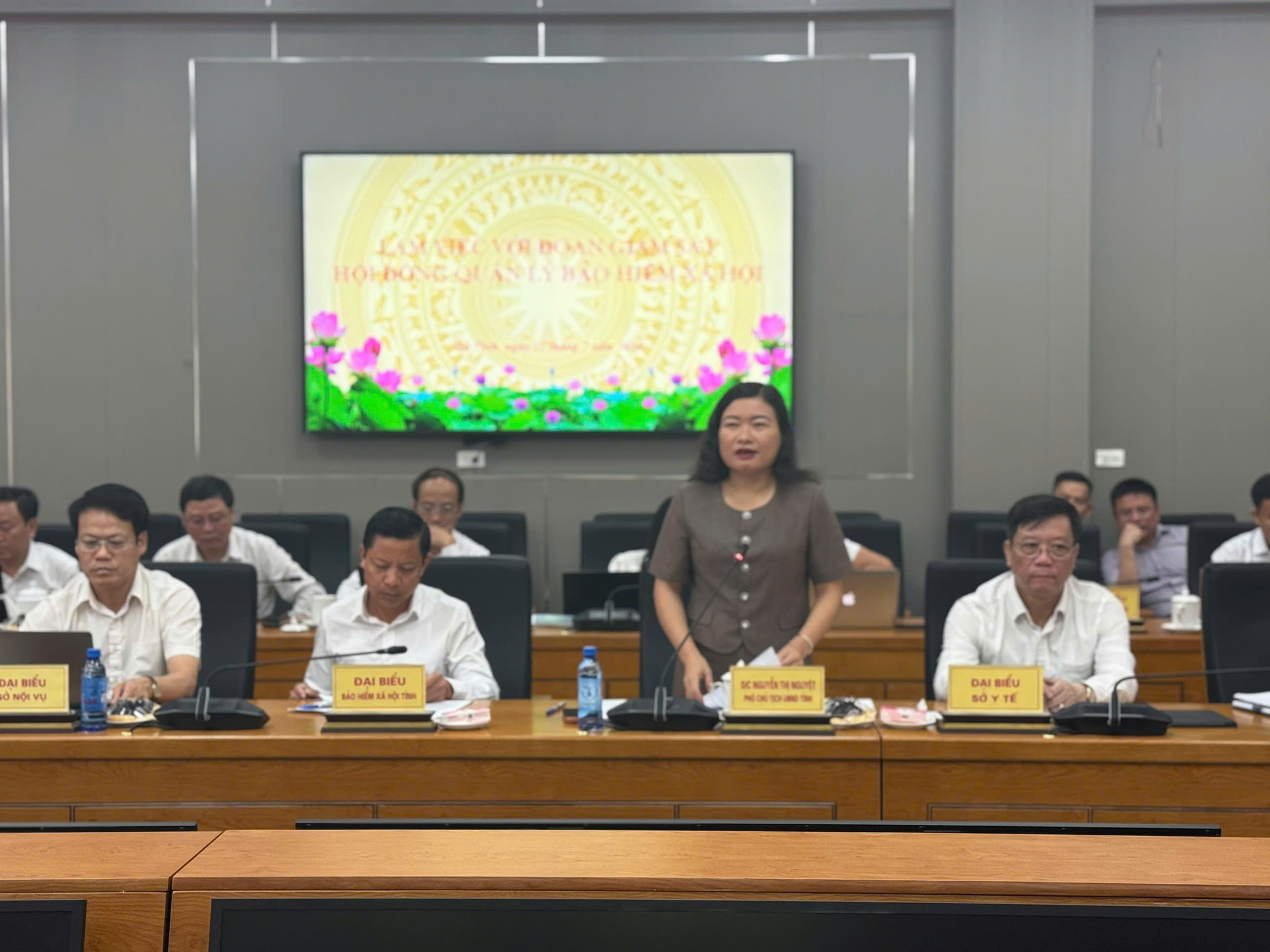
Mrs. Nguyen Thi Nguyet, Vice Chairwoman of the Ha Tinh Provincial People's Committee, addresses the working session. (Photo: Nguyet Ha)
At the working session, Mrs. Nguyen Thi Nguyet, Vice Chairwoman of the Ha Tinh Provincial People's Committee, stated that the meeting provided an important opportunity for the province to conduct a comprehensive and objective assessment of the implementation of policies on social insurance (SI), health insurance (HI), and unemployment insurance (UI).
Mrs. Nguyen Thi Nguyet affirmed that the province would seriously implement the recommendations put forward by the Delegation in order to further improve the quality and effectiveness of policy implementation. In the coming period, Ha Tinh will focus on vigorously implementing Plan No. 51/KH-UBND on expanding social insurance participation through 2030 and Plan No. 406/KH-UBND on achieving universal health insurance coverage. The province will also strengthen measures to address contribution arrears and evasion, effectively implement support policies for vulnerable groups, enhance oversight of health insurance-funded medical expenditures, and take firm action to prevent fraud and abuse of the Health Insurance Fund.
The provincial leadership also called on the Central Government to continue improving the legal and policy framework to better support participants in the voluntary social insurance scheme, promptly issue unified guidance on the reimbursement of health insurance-covered medical expenses to address practical implementation challenges, and allocate health insurance budgets in line with local needs.
During the meeting, representatives of provincial departments and agencies engaged in open discussions on a range of issues related to social security policy implementation, including health insurance coverage, insurance participation, and the protection of workers' insurance rights.
According to the Ha Tinh Provincial Federation of Labor, businesses have shown growing interest in ensuring insurance coverage for their employees. Enterprises with established trade unions have generally implemented insurance policies effectively. However, many small and medium-sized enterprises continue to face challenges in fulfilling their insurance obligations due to operational and financial constraints.
Determined to Create Breakthroughs in the New Phase
Providing details on key tasks and solutions for the coming period, Mr. Nguyen Van Dong, Director of Ha Tinh Social Security, stated that the agency would continue to promote the role of Steering Committees for the implementation of social insurance (SI) and health insurance (HI) policies at all levels, while regularly reviewing progress in line with resolutions of the Provincial People's Council and decisions issued by the Government.
Ha Tinh Social Security will resolutely implement Plan No. 51/KH-UBND dated February 4, 2026 (implementing Resolution No. 403/NQ-CP) and Plan No. 406/KH-UBND dated June 21, 2026 (implementing Decision No. 844/QD-TTg on the implementation of Directive No. 52-CT/TW), with the aim of achieving the targets for expanding social insurance participation and achieving universal health insurance coverage by 2030.
Ha Tinh Social Security will coordinate with the Provincial Public Security, Provincial Tax Department, and Provincial Federation of Labor to strictly handle prolonged cases of delayed or evaded insurance contributions in accordance with Official Dispatch No. 9883/UBND-VX2. The agency will also effectively implement Resolution No. 182/2025/NQ-HDND on supporting social insurance and health insurance contributions for poor households, near-poor households, and households engaged in agriculture, forestry, and fisheries with average living standards. At the same time, it will proactively propose new support mechanisms funded by the local budget or mobilized through social resources.
The social security sector will continue maintaining the rate of pension payments made via ATM accounts at nearly 100% and accelerate the integration and connection of the National Population Database. Regarding health insurance-covered medical examination and treatment, Ha Tinh Social Security will closely coordinate with the Department of Health to direct medical facilities in strengthening control over the prescription of medicines, medical supplies, and technical services, resolutely preventing fund abuse and minimizing unusually high-frequency medical visits in order to ensure the optimal management and use of the Health Insurance Fund.
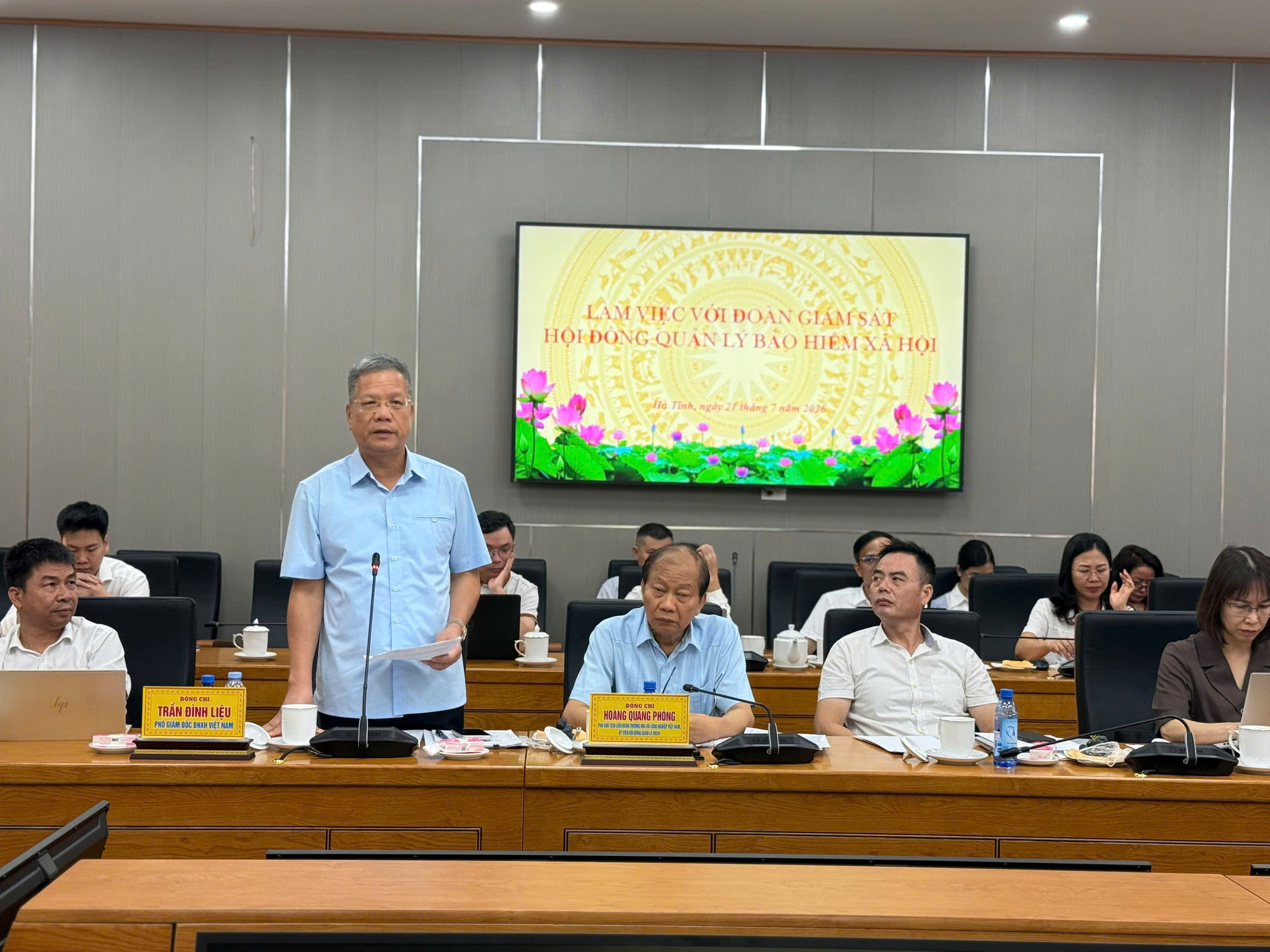
Mr. Tran Dinh Lieu, Deputy Director General of Vietnam Social Security, speaks at the working session. (Photo: Nguyet Ha)
In addition, Ha Tinh Social Security put forward a number of important recommendations to central authorities, including: reviewing and amending the Law on Social Insurance No. 41/2024/QH15 to ensure greater fairness, flexibility, and modernization; conducting an early review of Resolution No. 28-NQ/TW of the 12th Party Central Committee on social insurance policy reform in order to promptly issue new directives for the next development phase; and promulgating legal documents that provide specific mechanisms for the comprehensive settlement, freezing, and reduction of outstanding insurance debts owed by enterprises that have gone bankrupt, dissolved, permanently ceased operations, or become incapable of payment.
At the working session, Mr. Tran Dinh Lieu, Deputy Director General of Vietnam Social Security, requested Ha Tinh Social Security to continue taking a proactive approach in policy implementation. He also proposed that the Provincial People's Committee assign clear targets to each locality and continue directing efforts to enhance accountability in promoting universal social security coverage.
In his concluding remarks, Mr. Hoang Quang Phong, Vice President of the Vietnam Chamber of Commerce and Industry (VCCI), emphasized that the 2025 Provincial Competitiveness Index (PCI) Report, which assesses the quality of provincial governance, shows that Ha Tinh is currently performing at an above-average level. Among the component indicators, two assessments of Ha Tinh Province are particularly noteworthy: 69.7% of respondents agreed that the Ha Tinh Provincial People's Committee demonstrates flexibility within the legal framework to create a favorable business environment; and 66.67% agreed that the Provincial People's Committee is dynamic and innovative in addressing newly emerging issues.
The VCCI Vice President stated that, according to feedback from businesses in Ha Tinh, the provincial Social Security agency has made significant efforts in expanding coverage, advancing digital transformation, and enhancing transparency in management, particularly achieving a 0% rate of informal costs.
However, business assessments indicate that the level of inconvenience and the frequency of inspections in the field of social insurance remain slightly higher than the national average, suggesting that further improvements are still needed.
"Therefore, it is necessary to further simplify administrative procedures, strengthen online guidance for enterprises and participants, standardize inspection activities based on risk-management software, maintain regular dialogues, and promptly address obstacles arising during the implementation process," Mr. Hoang Quang Phong noted.