VIETNAM CHAMBER OF COMMERCE AND INDUSTRY
Liên Đoàn Thương Mại Và Công Nghiệp Việt Nam
Thu, Sep 03, 2026, 14:26:00
The event was attended by Mr. Nguyen Van Thang, Member of the Party Central Committee and Deputy Prime Minister; Mr. Nguyen Phi Long, Member of the Party Central Committee, Standing Deputy Secretary of the Party Committee of the Vietnam Fatherland Front and Central-level mass organizations, and Vice President of the Central Committee of the Vietnam Fatherland Front; representatives of ministries and sectors; leaders of leading economic groups; leaders of local business associations; and outstanding startup entrepreneurs from across the country.
Mr. Hoang Cong Doan, Chairman of the Board of Directors of Song Thao Investment Joint Stock Company, was entrusted with the position of Chairman of the Council. The establishment of the VCCI National Council for Innovative Entrepreneurship is expected to bring new momentum and create more practical support opportunities for Vietnam’s startup community in the coming period.
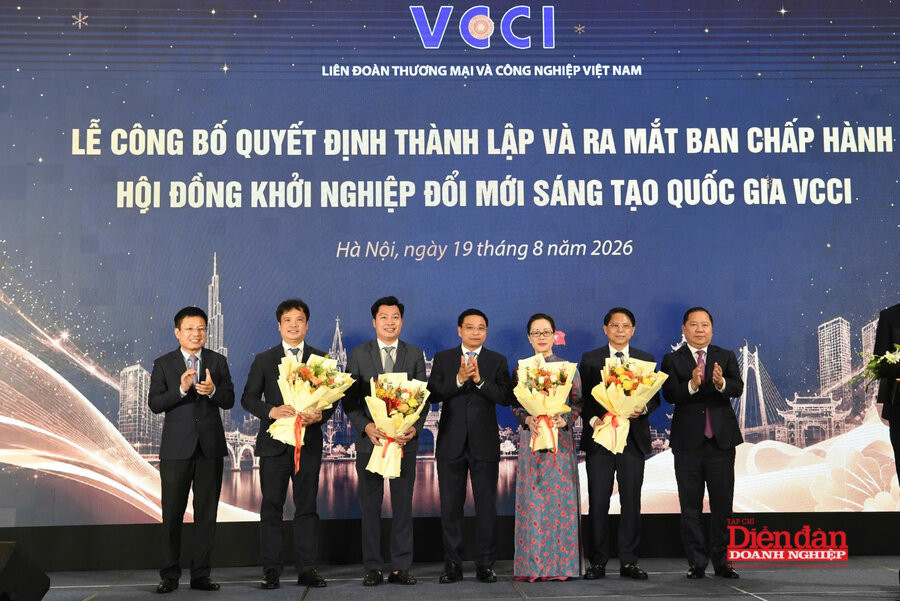
VCCI President Assoc. Prof. Dr. Ho Sy Hung (far left), Member of the Party Central Committee and Deputy Prime Minister Nguyen Van Thang (center), and Mr. Nguyen Phi Long, Member of the Party Central Committee, Standing Deputy Secretary of the Party Committee of the Vietnam Fatherland Front and Central-level mass organizations, and Vice President of the Central Committee of the Vietnam Fatherland Front (far right), congratulate the VCCI National Council for Innovative Entrepreneurship.
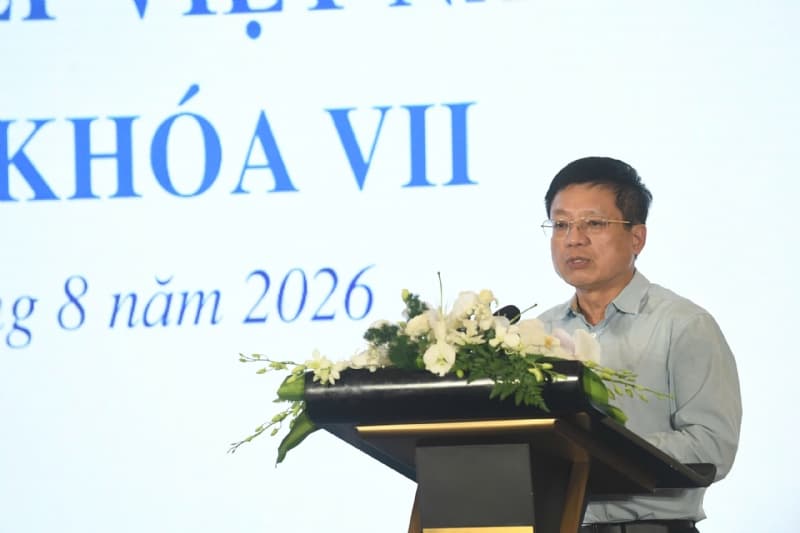
Speaking at the ceremony, Deputy Prime Minister Nguyen Van Thang emphasized the increasingly important role of science and technology, innovation, digital transformation and the private sector in the new growth model.
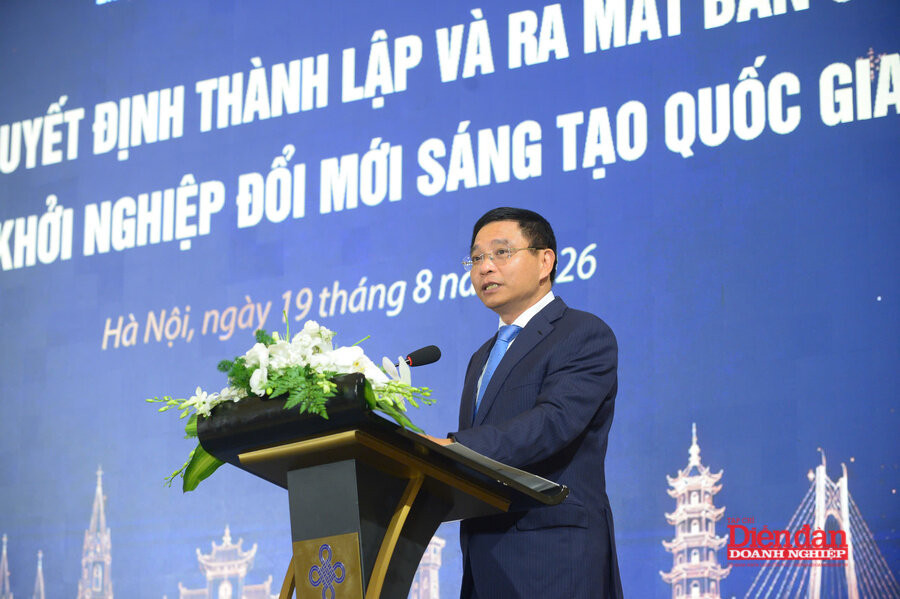
Member of the Party Central Committee and Deputy Prime Minister Nguyen Van Thang
According to the Deputy Prime Minister, the overarching approach should be to shift decisively from a management mindset toward an enabling development mindset, placing businesses at the center and creating favorable conditions for the private sector to grow.
Assessing VCCI’s establishment of the Council as a practical step, the Deputy Prime Minister said that the Council’s value should be demonstrated through concrete issues it can help businesses resolve, resources it can connect, and policies it can help improve.
The Deputy Prime Minister called on the Council to focus on five key priorities.
First, the Council should genuinely become an effective channel for gathering and articulating the voice of the innovative startup business community. It should stay closely connected to practical realities and promptly identify bottlenecks related to institutions, capital, markets, technology, intellectual property, data, human resources and administrative procedures. It should proactively research and propose specific and feasible solutions to the Government, ministries, sectors and localities. Recommendations should be accompanied by proposed solutions, contributing to translating the spirit of Resolution No. 68-NQ/TW and the State’s policies into practice.
Second, the Council should strongly promote VCCI’s role as a connector and establish a business-led innovation network. It should closely connect startups with large enterprises, economic groups, research institutes, universities, experts, scientists, investment funds, credit institutions and international partners. Large enterprises should be encouraged to commission projects, invest in, mentor, test and use products and services developed by startups, thereby bringing research outcomes and innovative ideas to the market.
Third, the Council should focus on providing support to enable startups to grow. It should help enterprises strengthen management capacity, build brands and intellectual property assets, access capital and markets, and enhance their capabilities in digital transformation, research and development, and product commercialization. The ultimate goal should be to foster an increasing number of innovative and technology enterprises capable of rapid growth, mastering technologies, participating in global value chains and expanding internationally.
Fourth, startup activities should be oriented toward addressing the country’s major challenges and tapping into new growth drivers. Innovative entrepreneurship should be closely aligned with the practical needs of the economy and sectors with significant development potential, such as artificial intelligence, semiconductors, data, biotechnology, financial technology, green technology, new energy, the circular economy, high-tech agriculture and digital transformation. Innovation must be translated into productivity, economic efficiency, new products and new value.
Fifth, the Council’s operations must be substantive, professional, transparent and results-oriented. Immediately following the launch ceremony, VCCI and the Council’s Executive Committee should urgently develop an action program and operational plan with clear objectives, tasks, deliverables and responsibilities, while selecting several priority initiatives capable of delivering tangible results at an early stage. Each program should answer four questions: What support will businesses receive? What resources will be mobilized? What difficulties will be addressed? And what will the final outcomes be?
The Deputy Prime Minister affirmed that the Government has consistently identified enterprises and entrepreneurs as the central force in the country’s development process. He also expressed his expectation that the Council would become a core hub for connecting resources, contributing to the growth of Vietnamese enterprises, enabling them to master technologies and expand into international markets.
Assoc. Prof. Dr. Ho Si Hung, VCCI President, emphasized that the establishment of the National Council for Innovative Entrepreneurship comes at a time when science and technology, innovation, digital transformation and private-sector development have been identified by the Party as key drivers of national development. This represents a practical step toward implementing VCCI’s Action Program to carry out Resolution No. 68-NQ/TW on private-sector development and Resolution No. 57-NQ/TW on breakthroughs in the development of science and technology, innovation and national digital transformation.
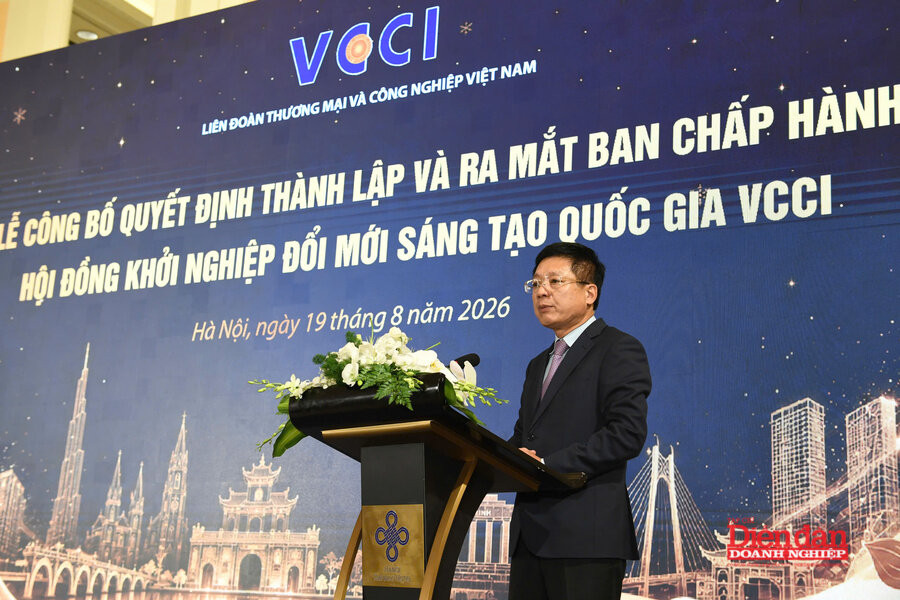
VCCI President Ho Sy Hung affirmed that the establishment of the VCCI National Council for Innovative Entrepreneurship underscores VCCI’s commitment and responsibility to achieving the goal of having 2 million enterprises nationwide by 2030.
Therefore, the business community needs not only to grow in scale but also to proactively master technologies and innovate management models to improve productivity and create new value. The establishment of the Council represents a concrete step in fulfilling VCCI’s responsibility and directly contributing to the goal of having 2 million operating enterprises nationwide by 2030, equivalent to 20 enterprises per 1,000 people, with at least 20 large enterprises participating in global value chains.
To effectively implement the directions provided by the Deputy Prime Minister, VCCI President Ho Si Hung called on the Council to organize and implement its activities based on three key orientations.
First, the Council must serve as a hub for bringing together and connecting resources for innovation. It should effectively connect enterprises with research institutes, universities, experts, investors, financial institutions and domestic and international partners; bringing knowledge, technology, capital and markets closer to enterprises and contributing to the development of a strong Vietnamese startup community capable of effectively participating in global value chains.
Second, the Council must place the improvement of the quality and effectiveness of innovative startups at the center of its activities. Its operations should be driven by enterprises’ practical needs, promoting technology adoption, management model innovation, commercialization of innovations, market development, and stronger linkages between large enterprises and small and medium-sized enterprises. The Council should support innovative startups in achieving rapid and sustainable growth and participating effectively in the Global Startup Business Network.
Third, the Council must become an effective channel for reflecting practical realities and making high-quality policy recommendations. Through its network of enterprises and Council members, it should promptly identify barriers to entrepreneurship and innovation and propose specific and feasible solutions to VCCI and competent authorities. These efforts will contribute to improving the institutional environment, unlocking resources, encouraging an innovative spirit within the business community, and building a sustainable national startup ecosystem.
Affirming that the value of a council lies not in its name or organizational scale but in the tangible value it creates, the VCCI President expressed his expectation that the Council’s leadership and members would soon reach agreement on its operating mechanisms, identify priority tasks and effectively mobilize social resources.
For its part, the VCCI Standing Committee pledged to continue accompanying the Council, creating favorable conditions for its operations and connecting the Council’s activities with VCCI’s entire network of branches and enterprises nationwide. The aim is to gradually establish the Council as a reputable hub for innovation initiatives, contributing to enhancing the competitiveness and position of Vietnamese enterprises.
Speaking upon accepting his new responsibilities, Mr. Hoang Cong Doan, Chairman of the VCCI National Council for Innovative Entrepreneurship, expressed his sincere appreciation to the VCCI Standing Committee for its trust in assigning him the role. He also acknowledged and committed to implementing the directions and guidance provided by Government leaders and the VCCI President regarding the Council’s activities.
According to Mr. Doan, being entrusted with this responsibility is both an honor and a significant responsibility for himself and the Council’s members, particularly as science and technology, innovation and private-sector development are being accorded a particularly important position in the country’s development strategy.
“The Council is determined to be an action-oriented organization, putting enterprises at the center and taking practical results as the measure of its performance,” Mr. Hoang Cong Doan emphasized.
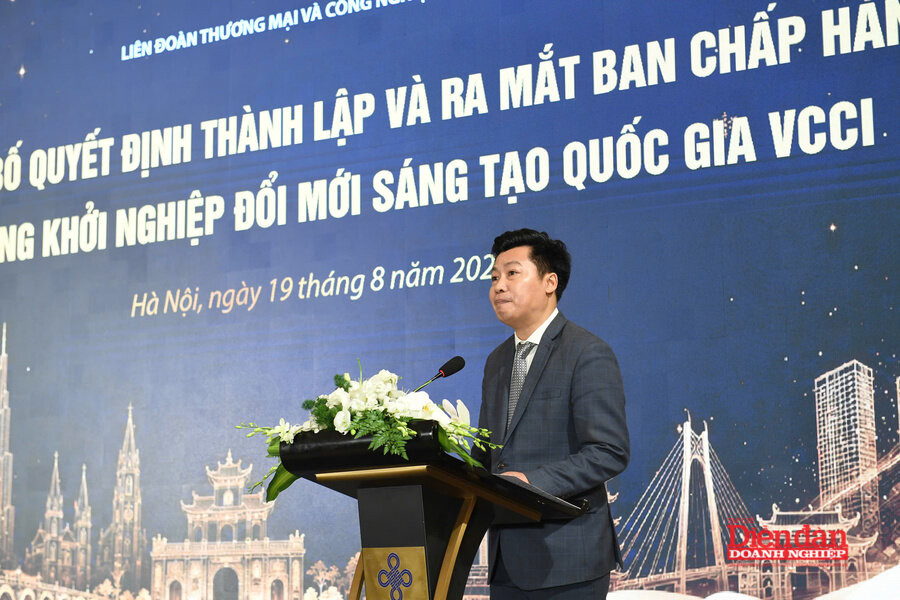
Mr. Hoang Cong Doan, Chairman of the VCCI National Council for Innovative Entrepreneurship, pledged to work closely with Council members and make every effort to deepen the Council’s activities at an early stage and create tangible value for the business community.
Accordingly, the Council will focus on connecting and mobilizing resources for innovative entrepreneurship, while strengthening linkages between enterprises and regulatory agencies, research institutes, universities, experts, investors, financial institutions, and domestic and international networks.
On behalf of the Council, Mr. Hoang Cong Doan, Chairman of the Council, pledged to work with its members and make every effort to fully and effectively carry out the tasks assigned by the VCCI Standing Committee, bringing the Council’s activities into greater depth at an early stage and creating tangible value for the business community.
At the same time, the Council expressed its hope for continued attention from Party and State leaders, close coordination with ministries, sectors and localities, and the continued support of the business and entrepreneur community, experts, scientists, investors, and domestic and international partners.
In addition, the Council will promote the integration of science, technology and innovation into business operations, support the commercialization of innovations, develop new business models, and enhance the productivity and competitiveness of Vietnamese enterprises.
The Council will also strengthen its role in policy advisory, consultation and review by proactively consolidating issues arising from practical realities and recommending solutions to remove bottlenecks, thereby contributing to creating a more favorable environment for entrepreneurship and innovation.
“The effectiveness of the Council’s activities must be demonstrated through concrete results: resources connected, enterprises supported, innovations implemented, and difficulties and barriers recommended for resolution,” the Chairman of the Council affirmed.