VIETNAM CHAMBER OF COMMERCE AND INDUSTRY
Liên Đoàn Thương Mại Và Công Nghiệp Việt Nam
Tue, Jun 02, 2026, 11:35:00
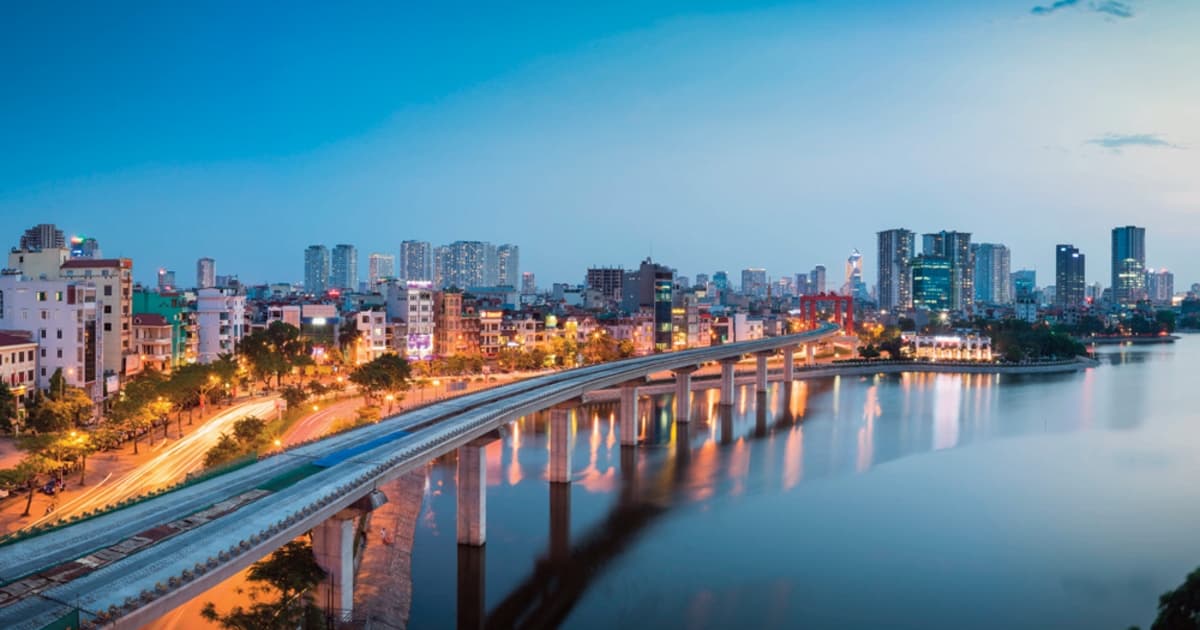
Metro Line 1, which connects Ben Thanh Hub in the former District 1 to Suoi Tien Depot in the former Thu Duc city on HCMC’s outskirts, has become a new symbol of public transportation in Vietnam's largest city and is gradually changing commuting habits.
Yet many commercial spaces within central stations remain unoccupied, highlighting broader challenges in implementing transit-oriented development (TOD).
Retail areas designed for convenience stores, cafes, service outlets and advertising at stations such as Ben Thanh, Opera House and Ba Son have yet to be fully brought into operation.
 Metro Line 1 in Ho Chi Minh City, southern Vietnam. Photo courtesy of Mobile World.
According to the Ho Chi Minh City Department of Construction, commercial, service and advertising activities within metro stations are necessary to improve passenger amenities, enhance the efficiency of public infrastructure, and generate additional revenue for the city.
However, because these areas are located within an operating railway system, authorities must ensure compliance with safety, fire prevention, evacuation, security and passenger flow requirements before commercial operations can proceed.
On March 31, the city approved a plan to develop a management framework for commercial use of Metro Line 1 infrastructure assets. The line's operating company is currently finalizing proposals for leasing commercial space, advertising facilities, and ancillary areas.
While the cautious approach is considered necessary from an operational perspective, urban development experts say the vacant commercial spaces point to a larger issue: Ho Chi Minh City has yet to establish a fully functioning economic ecosystem around its metro stations.
Metro as an economic hub
Urban planners note that successful transit-oriented development extends far beyond the construction of rail infrastructure.
Architect Ngo Viet Nam Son has repeatedly argued that metro projects should be integrated with broader urban planning strategies, including residential development, supporting infrastructure and economic activities along transit corridors.
According to Son, metro systems should function not only as transportation networks but also as multi-purpose urban hubs that support population redistribution, urban restructuringm and economic activity.
This reflects the core principle of modern TOD, where stations serve as focal points linking transportation, housing, employment, retail and community services.
Neil MacGregor, CEO of Savills Vietnam, said successful TOD models around the world generate value well beyond individual transportation or real estate projects.
"When public transport is integrated with retail, office space, housing, public amenities and lifestyle services, the value created extends beyond property development to the formation of entirely new economic and community centers," he said.
This approach helps explain why major stations in cities like Tokyo and Hong Kong and in the island state of Singapore have evolved into some of the most dynamic commercial districts in their respective urban economies.
In Tokyo, stations such as Shinjuku, Shibuya and Tokyo Station function simultaneously as transportation hubs, business districts and major retail destinations, generating steady customer flows for surrounding businesses.
Hong Kong's well-known "Rail + Property" model has transformed metro stations into the core of mixed-use developments combining residential, office, hotel and retail components. Revenue generated from surrounding real estate has become an important source of funding for public transportation investment.
In Bangkok, where urban rail systems were introduced later, BTS Skytrain stations rapidly evolved into commercial hubs through integrated pedestrian networks connecting shopping centers and office developments.
The common feature across these models is that stations are not treated as stand-alone infrastructure projects but as the center of broader economic ecosystems capable of creating jobs, attracting investment and stimulating consumption.
TOD ambitions still taking shape
Observers say Ho Chi Minh City remains in the early stages of that transition.
The lack of commercial activity at many Metro Line 1 stations is not merely a question of foregone rental income. It reflects the fact that surrounding economic functions have yet to be fully activated.
The Department of Construction said it is currently impossible to estimate future revenue from station-based commercial activities because the operating framework has not yet been approved. Revenue projections will depend on factors including available space, service categories, rental rates, and operating periods.
At the same time, the city's transportation ambitions extend far beyond a single metro line.
Ho Chi Minh City is simultaneously pursuing multiple strategic infrastructure projects, including urban rail links to Long Thanh International Airport, ring roads, regional expressways, the North-South high-speed railway and a future metro network spanning hundreds of kilometres.
These plans have intensified discussions around TOD as a long-term urban development strategy.
Globally, TOD has evolved through several stages. Early models focused primarily on transportation functions, while later generations incorporated retail, office space, housing and public amenities. The latest concepts envision stations as 24-hour urban centers integrating transportation with commerce, culture, tourism and lifestyle experiences.
One example under consideration is the proposed Thu Thiem station urban complex, which would integrate transportation services with airport-related functions such as remote airline check-in and baggage transfer directly to Long Thanh International Airport. The concept aims to increase visitor dwell time, encourage spending, and generate additional economic value.
Urban planners caution that achieving such ambitions will require more than building rail lines and purchasing trains.
Success will depend on coordinated land-use planning, residential and commercial development, public spaces, and mechanisms for capturing the value created by transportation infrastructure.
The Department of Construction said it plans to develop a broader framework for commercial and service operations at metro stations based on lessons learned from Metro Line 1.
For Ho Chi Minh City, officials and experts say the ultimate measure of success will not simply be passenger numbers or kilometres of rail built, but whether metro stations evolve into new urban economic centers where people choose not only to travel through, but also to work, shop and spend time.