VIETNAM CHAMBER OF COMMERCE AND INDUSTRY
Liên Đoàn Thương Mại Và Công Nghiệp Việt Nam
Wed, Dec 03, 2025, 14:45:00
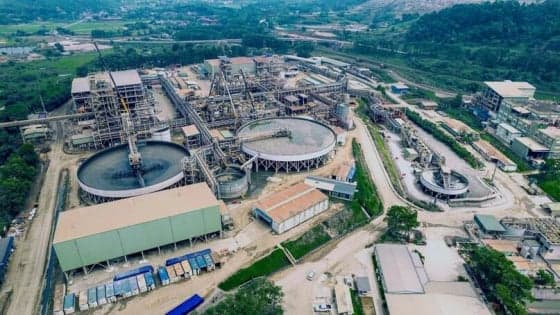
 Products at a Hoa Phat Group factory. Photo courtesy of the company.
Supply issues as a result of the typhoons also contributed to inflationary pressures, with input costs up sharply and firms raising their selling prices as a result.
Andrew Harker, economics director at S&P Global Market Intelligence, noted that the pick-up in growth seen in October was largely sustained through to November as the Vietnamese manufacturing sector looks to be enjoying a positive end to the year. While rates of expansion in output and new orders eased, firms took on extra staff at a stronger pace in order to deal with workloads.
"Growth was recorded despite reports of disruption to supply chains and production lines caused by stormy weather in recent weeks. There is the potential, therefore, for continued growth in the months ahead as firms catch up with delayed projects," he commented.
The S&P Global Vietnam Manufacturing Purchasing Managers' Index (PMI) posted 53.8 in November, down slightly from 54.5 in October but still signalling a solid monthly improvement in business conditions in the manufacturingsector.
Operating conditions have now strengthened in five consecutive months. A third successive monthly increase in new orders helped to drive production growth again in November, although rates of expansion in both output and new business eased from October.
New export orders, meanwhile, increased at a faster pace, with the rate of growth quickening to a 15-month high. Demand from mainland China and India improved in particular.
Some firms reported that typhoon conditions during November had limited production growth, but output nonetheless increased for the seventh month running. The severe weather conditions mainly impacted supply chains and the ability of manufacturers to complete work on time.
Suppliers' delivery times lengthened markedly, and to the largest extent since May 2022. Meanwhile, firms posted a rise in their backlogs of work for the second consecutive month.
Moreover, the rate of accumulation was the sharpest since March 2022. Outstanding business accumulated despite a second successive monthly rise in employment as firms responded to higher output requirements. Staffing levels increased modestly, but to the largest extent in almost a year-and-a-half.
According to respondents, new staff were often hired on a full-time basis. In some cases, manufacturers used existing inventories to help fulfil orders, resulting in a further reduction in stocks of finished goods, and one that was more pronounced than in the previous survey period.
Another impact of the typhoons was to contribute to higher costs for raw materials as supply was restricted. Input prices increased sharply, and at the second-fastest pace since July 2024, despite the pace of inflation easing from October.
The rate of output price inflation also softened in November, but remained solid as firms passed on higher input costs to their customers. Firms increased their purchasing activity for the fifth month running in November as output requirements rose.
Moreover, the rate of expansion quickened to a four-month high. Stocks of inputs also increased, accumulating for the second successive month. The rise was only slight, however, as inputs were often used to support production.
Expected improvements in new orders and hopes for calmer weather conditions supported optimism in the year-ahead outlook for output. Close to half of respondents predicted arise in production, with overall sentiment hitting a 17-month high.
Standard Chartered in late October raised its Vietnam GDP growth forecast to 7.5% for 2025 from the previous 6.1%, and to 7.2% for 2026 from 6.2%, following HSBC's revising up its prediction to 7.9% (from 6.6%) and 6.7% (from 5.8%), respectively.
The government aims to enlarge the national economy by 8.3-8.5% for 2025. GDP grew 7.85% in the first nine months. The figure was the second-highest levels in 11 years, except for 2023 which saw a strong surge post the pandemic.