VIETNAM CHAMBER OF COMMERCE AND INDUSTRY
Liên Đoàn Thương Mại Và Công Nghiệp Việt Nam
Wed, Apr 29, 2026, 15:24:00
.jpg)
On April 27, 1963, on behalf of the Council of Government, Prime Minister Phạm Văn Đồng signed Decision No. 58-CP approving the charter, officially marking the establishment of the Chamber of Commerce of the Democratic Republic of Vietnam. Since then, April 27, 1963 has become a historic milestone for Vietnam’s economy and business community, recognized as the founding and traditional day of the Vietnam Chamber of Commerce and Industry (now the Vietnam Chamber of Commerce and Industry – VCCI).
Bringing business realities into policymaking
In economics, institutions are considered the “resource of all resources.” A transparent and open mechanism is often more valuable than direct financial support. With this awareness, VCCI has consistently positioned itself as a proactive bridge, bringing business realities into the making of policies and laws.
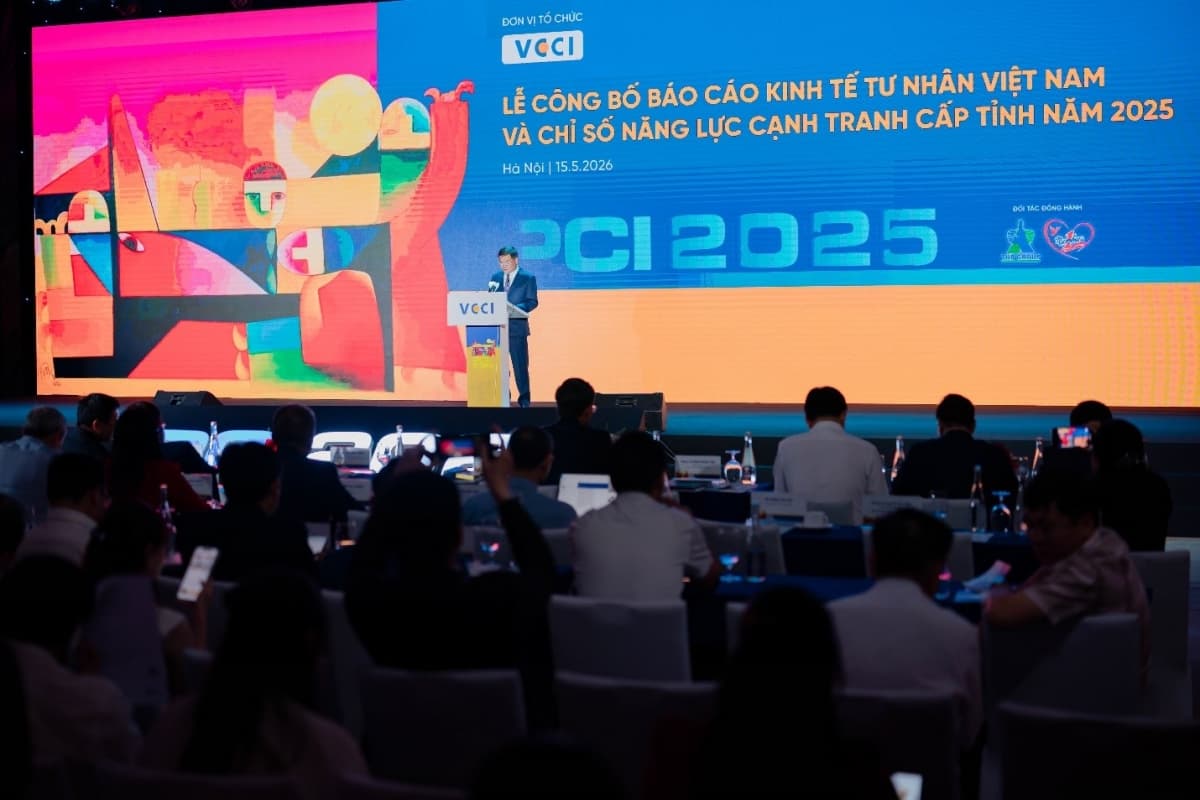
In practice, over its 63 years of development, VCCI has maintained the publication of the Provincial Competitiveness Index (PCI) for more than 20 years. Over this period, PCI has evolved beyond a simple ranking into a “barometer” reflecting public sentiment and business health across 63 provinces and cities (now 34).
Each year, with participation from over 10,000 enterprises, PCI has driven a remarkable wave of administrative reform nationwide. Concepts such as “informal costs,” “legal institutions,” and “local government dynamism” have become benchmarks for self-assessment and improvement at the provincial level. Beyond local governance, VCCI has also played a key role in shaping foundational laws such as the Enterprise Law, Investment Law, and revised Land Law.
In the past five years alone, VCCI has contributed thousands of comments to draft legal documents, helping eliminate hundreds of overlapping business conditions. Notably, VCCI proposed removing conditional business requirements for 21 sectors and abolishing procedures related to overseas investment approval and registration under the revised Investment Law.
In addition, VCCI has advocated a range of systemic reforms, emphasizing a shift from a “management” mindset to a “facilitation” approach, with businesses placed at the center. A key principle is moving from pre-inspection to post-inspection.
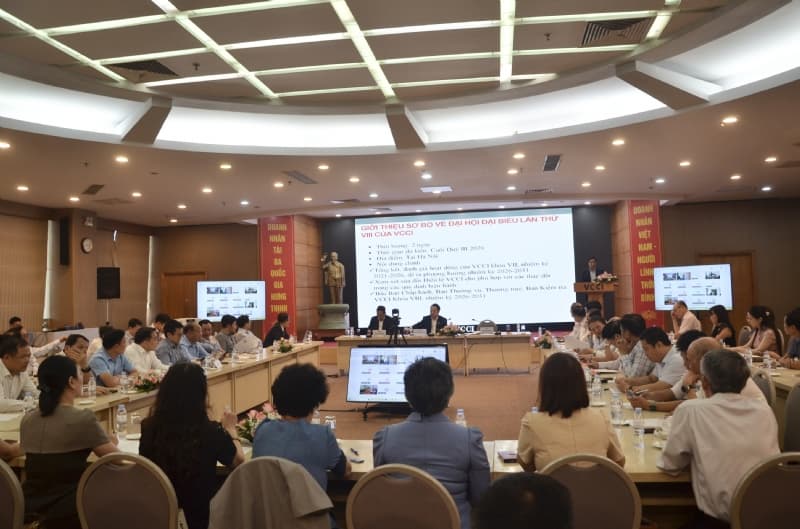
In 2025 alone, VCCI reinforced its role as a “bridge” by contributing feedback to 446 draft legal documents and organizing 52 workshops, conferences, and dialogues on legal and policy development, with participation from over 5,300 enterprises. Beyond numbers, VCCI has focused on pressing issues such as the Value-Added Tax Law and Land Law. Its voice has generated immediate impact, exemplified by Official Dispatch No. 63/CĐ-TTg issued by the Prime Minister following the release of PCI and PGI 2024.
As a member of the Prime Minister’s Advisory Council on Administrative Procedure Reform, VCCI has persistently advocated the removal of “sub-licenses” that constrain entrepreneurial creativity, contributing to Vietnam’s steady improvement in global business environment rankings.
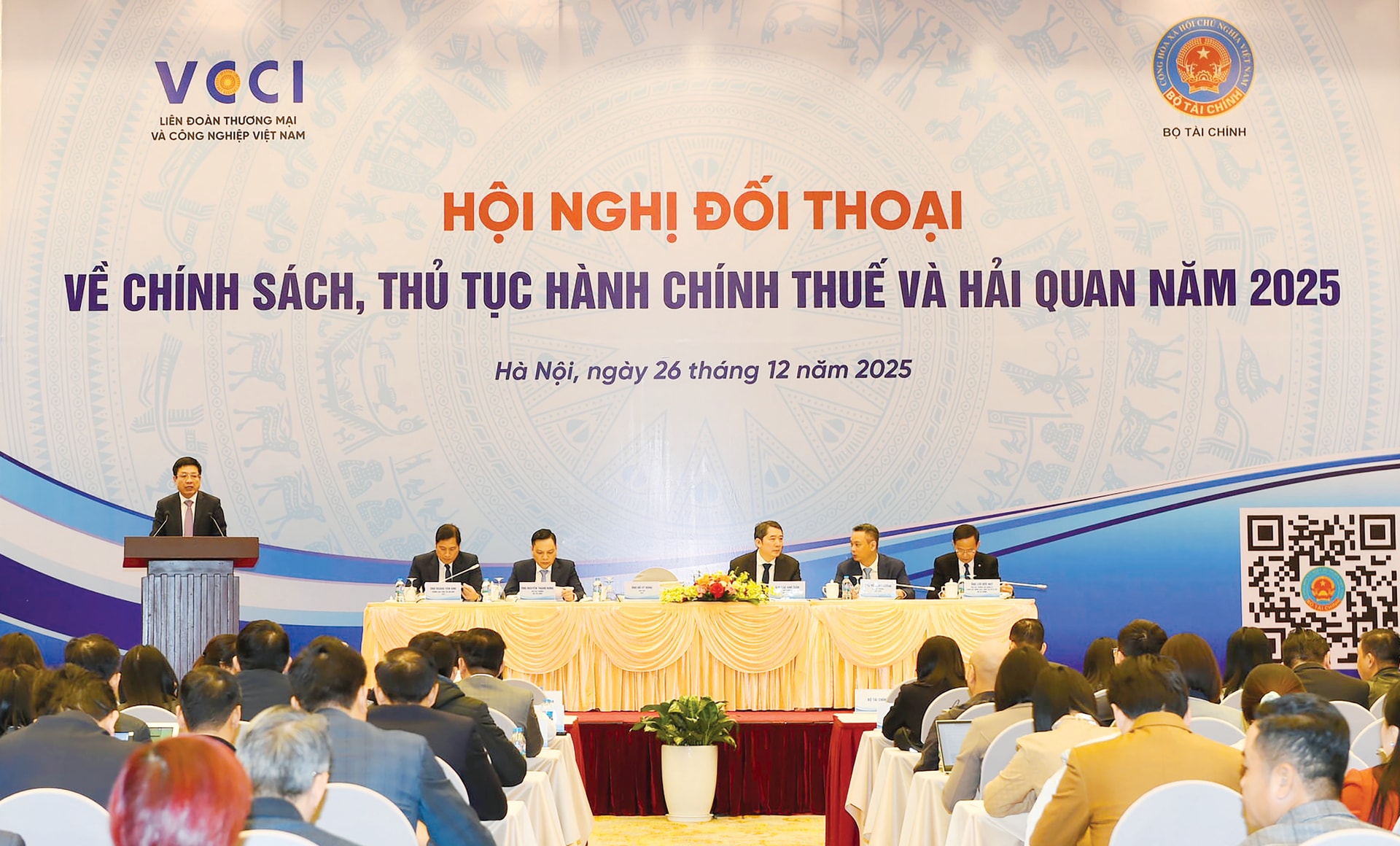 VCCI President Ho Sy Hung speaking at the conference on policy dialogue and administrative procedures in taxation and customs, jointly organized by the Ministry of Finance and VCCI.
A “navigator” on the journey of integration
If institutions are internal strength, international integration is the external force driving Vietnam’s breakthrough. Over the past 63 years, VCCI has consistently acted as a “navigator,” guiding Vietnamese enterprises to global markets.
In 2025 alone, VCCI organized 43 outbound delegations involving 271 Vietnamese enterprises to explore markets, attend international forums, and seek investment opportunities. It also hosted 213 inbound delegations with nearly 1,700 foreign enterprises to foster cooperation with Vietnamese businesses. Additionally, VCCI organized 227 trade and investment promotion events (including online formats), attracting more than 26,300 participants.
VCCI regularly conducts trade and investment promotion activities, supporting Vietnamese enterprises in penetrating major markets such as Japan and South Korea, as well as emerging markets in Africa.
Amid Vietnam’s participation in next-generation free trade agreements such as CPTPP, EVFTA, and RCEP, VCCI has gone beyond awareness-raising to active implementation support. It has established business councils such as Vietnam–EU, Vietnam–US, and Vietnam–Japan to create direct dialogue channels with leading global partners.
Through business forums organized alongside high-level visits, hundreds of memoranda of understanding (MoUs) worth tens of billions of USD have been signed.
VCCI has also enhanced Vietnam’s international standing by successfully serving as ASEAN BAC Chair, organizing the ABAC III Meeting with the participation of the State President, and hosting the APEC CEO Summit—bringing the voice of Vietnam’s business community into global economic agendas.
A notable example in 2025 was VCCI’s joint letter with AmCham Hanoi to the U.S. Secretary of Commerce, representing both Vietnamese and U.S. businesses in Vietnam, urging a delay in reciprocal tariff measures proposed by the Trump administration.
More recently, when the U.S. Trade Representative (USTR) initiated large-scale investigations under Section 301(b) of the Trade Act of 1974 involving multiple countries including Vietnam, VCCI submitted comments affirming that there is no systemic overcapacity in Vietnam’s production and no evidence of forced labor in export manufacturing.
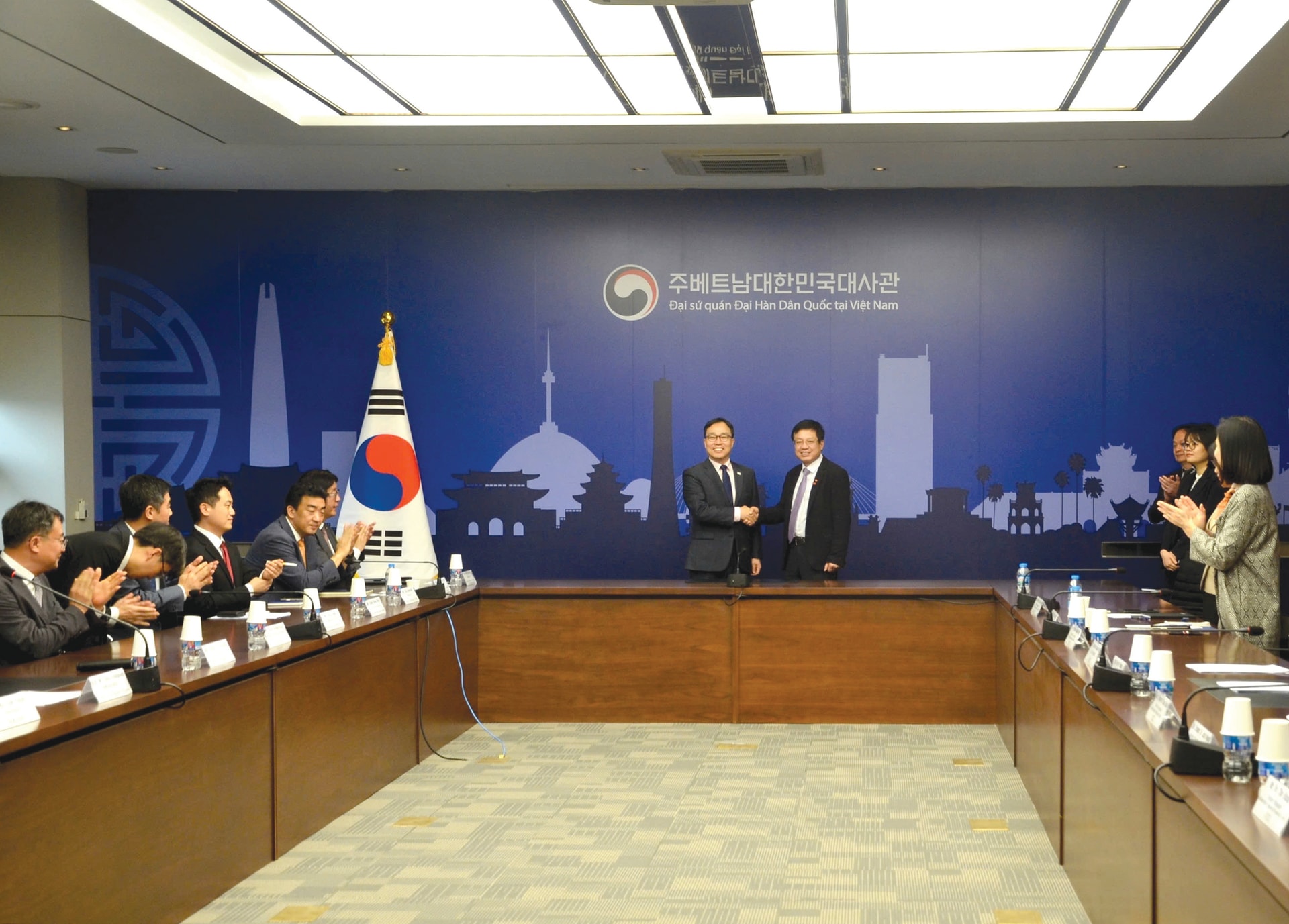 Delegation of VCCI led by President Ho Sy Hung working with Korean Ambassador Choi Young-sam and representatives of Korean associations and businesses in Vietnam.
Elevating business culture
Alongside institutional development and international integration, building a business community with strong ethics and culture aligned with global standards is a strategic priority for achieving Vietnam’s 2045 development vision.
Resolution No. 41-NQ/TW of the Politburo emphasizes building a business culture rooted in national identity while absorbing global best practices. Resolution No. 68-NQ/TW on private sector development and other key resolutions form a unified framework guiding sustainable and rapid growth of Vietnam’s business community.
Developing business ethics and culture is both an urgent and long-term strategic task. By 2045, Vietnam aims to have a business community with internationally competitive ethics and culture, shared values, and a strong national business identity that enhances soft power and competitiveness.
As the national representative of the business community, VCCI has actively implemented initiatives to promote business ethics and culture, including the program “Promoting business ethics and culture among Vietnamese entrepreneurs for 2024–2030,” with the dissemination of six core ethical principles as a central focus.
In today’s evolving economic landscape, ethical business practices and strong corporate culture are fundamental to sustainable development. Enterprises that uphold ethical standards, comply with laws, and prioritize credibility have built long-term competitiveness, strengthened public trust, and mitigated risks in global integration.
Continuing the journey of aspiration
Never before has the political commitment to high growth and sustainable development been as strong as it is today. Double-digit growth targets have been set and supported by a series of breakthrough resolutions.
Resolution 68-NQ/TW on private sector development serves as a guiding framework, affirming its role as a key growth driver while calling for the removal of barriers and biases, and the creation of a fair and transparent business environment. Complementary resolutions on science and technology, innovation, digital transformation, international integration, and legal reform form a comprehensive policy system opening new opportunities for Vietnamese enterprises.
After 63 years of development, amid global economic headwinds and geopolitical uncertainties, VCCI’s responsibilities have become even greater.
As the national representative organization, VCCI commits to continue being a sharp policy advocate, ensuring that all policies reflect market realities and eliminate the mindset of “if it cannot be managed, it should be banned”; an effective connector, linking Vietnamese enterprises with global supply chains; and an inspiration driver, promoting entrepreneurship, innovation, and digital transformation within the business community.The past 63 years are a source of pride, but the future is the true goal. With the spirit of “Unity – Discipline – Innovation – Development,” VCCI will continue to be a trusted “extended arm” of the Party and the State, and a reliable companion to the business community, contributing to Vietnam’s aspiration to become a developed nation by 2045.
[In 2025, VCCI reinforced its role as a “bridge” by contributing to 446 draft legal documents and organizing 52 workshops and dialogues on legal and policy development, with over 5,300 participating enterprises.]