VIETNAM CHAMBER OF COMMERCE AND INDUSTRY
Liên Đoàn Thương Mại Và Công Nghiệp Việt Nam
Sat, Nov 21, 2026, 23:55:00
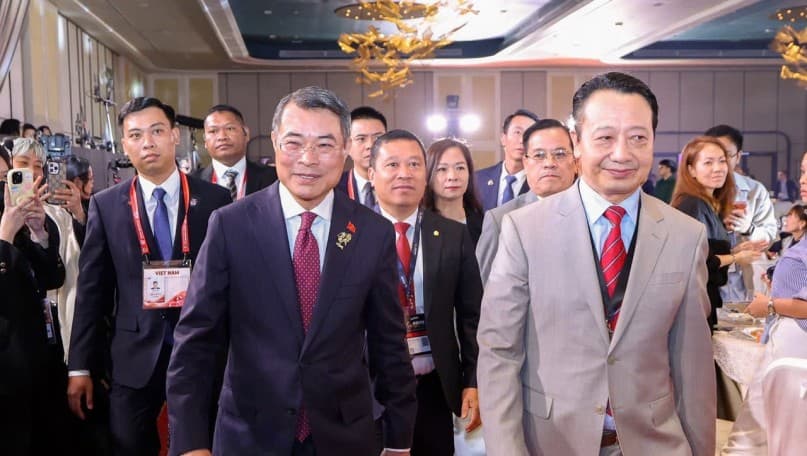
Attendees included Mr Hoang Quang Phong, Vice President of VCCI; Dr Nguyen Duc Hien, Deputy Head of the Central Policy and Strategy Commission; Mr Huynh Chi Nguyen, Vice Chairman of the Ca Mau Provincial People’s Committee; Mr Huynh Anh Tuyen, Deputy Head of the Representative Office of the Ministry of Industry and Trade in the Central–Southern region; Mr Nguyen Thong Nhat, Director of the An Giang Department of Industry and Trade; Mr Nguyen Huu Nam, Deputy Director of VCCI’s Ho Chi Minh City branch; Dr Pham Viet Thuan, Director of the Ho Chi Minh City Institute for Natural Resources and Environmental Economics; Dr Bui Trong Vinh, Director of the Research Institute for Sustainable Energy (RISE); and Mr Bui Van Thinh, Chairman of the Lam Dong Wind and Solar Energy Association (LDWSEA).
The gathering also brought together representatives from departments and agencies in Ho Chi Minh City, Dong Nai, Tay Ninh, Ca Mau and An Giang, the Southern Startup Advisory Council, business associations and entrepreneurs. Notably, it drew board chairs, chief executives and representatives from energy and related sectors, alongside project developers, financial institutions, investment funds and investors across Ho Chi Minh City and the south.

Panel speakers (from left): Mr Huynh Chi Nguyen, Vice Chairman of the Ca Mau Provincial People’s Committee; Dr Nguyen Duc Hien, Deputy Head of the Central Policy and Strategy Commission; Mr Hoang Quang Phong, Vice President of VCCI; and journalist Pham Hung, Deputy Editor-in-Chief of Business Forum magazine, moderating the session.
A rare bright spot amid a global energy “storm”
Opening the forum, VCCI Vice President Hoang Quang Phong sketched a turbulent picture of global energy markets in 2026. Citing figures from the Vietnam Energy Security Report 2026 published by the Ministry of Industry and Trade, he noted that the global energy system has just lived through one of its sharpest shocks in decades.
A six-month blockade of the Strait of Hormuz pushed Brent crude to a peak of $118.35 a barrel. Compounding the squeeze, record heatwaves and a severe El Nino sent electricity demand soaring, while full-year hydropower output is projected to fall by roughly 18.5 billion kWh compared with 2025.
The fallout across that chain of shocks was sweeping: by 9 November 2026, 102 of the 177 countries surveyed, or 57.6%, were experiencing energy distress. Against that bleak backdrop, just 13 countries maintained stability, and Vietnam is proud to sit among that small cohort, having broadly secured power and fuel supplies to support socioeconomic development.
Yet Mr Phong was candid that these gains do not mean the risks have been put to bed. National energy security still faces entrenched domestic challenges. Reliance on imported supply and international shipping lanes remains high, while fuel reserve capacity falls short of targets. In particular, load demand in the north continues to face heavy strain, even as progress on many power-generation and transmission projects lags behind operational needs.

Mr Hoang Quang Phong, Vice President of VCCI, addressing the forum.
Green transition pressure: No room on the sidelines
Looking ahead, Vietnam’s energy demand will inevitably rise in step with GDP growth. Mr Phong argued that scaling up new and renewable energy is the linchpin for closing supply gaps.
Compared with conventional power, newer energy sources offer clear advantages in shorter build times, increasingly competitive costs and lighter environmental footprints. More than that, they offer a vital route for Vietnam to curb dependence on imported fossil fuels, advance toward carbon neutrality and help exports clear stringent carbon border rules from the European Union.
Placing the business community at the heart of this shift, Mr Phong stressed that Vietnam’s pledge to reach net-zero emissions by 2050 brings heavy pressure, yet also substantial upside for firms willing to move early. In practice, from textiles and apparel under direct scrutiny from overseas buyers to industrial construction and startups, manufacturing mindsets are shifting decisively toward green growth and the circular economy.
Many industrial operators now build rooftop solar into factory designs from the drawing board. Alongside larger enterprises, a wave of energy startups is gathering pace, promising to make the national energy transition more agile and innovative if linked effectively with investment capital.
Summing up the reality on the ground, Mr Phong delivered a pointed message to executives: riding the energy transition is no longer an optional play, it has become a condition of survival and growth for Vietnamese businesses in an unforgiving global trade environment.

Delegates and business representatives attending the forum.
Removing bottlenecks to unlock resources
While private-sector momentum is unmistakable, Mr Phong acknowledged the practical hurdles companies face as they decarbonise: steep upfront capital costs, long payback periods, and a lack of cohesive policy frameworks and fit-for-purpose green finance instruments.
To turn the ambition of a modern, safe, efficient and resilient energy system, capable of adapting to shifting technology and markets, into reality, Mr Phong said Vietnam needs an integrated action plan.
Alongside refining institutions and policy and expanding transmission infrastructure, management must prioritise innovation, the adoption of new technologies, mobilising social capital, and scaling public–private partnerships (PPPs).
Praising Business Forum Magazine for convening the “Energy for Sustainable Development” forum, Mr Phong expressed hope that the event would serve as a practical bridge linking policy, technology and the market. Through frank dialogue between regulators, investors and businesses, he said, the gap between macro-level direction and on-the-ground execution can narrow, turning promising opportunities into concrete projects that underpin long-term energy security and sustainable national growth.